
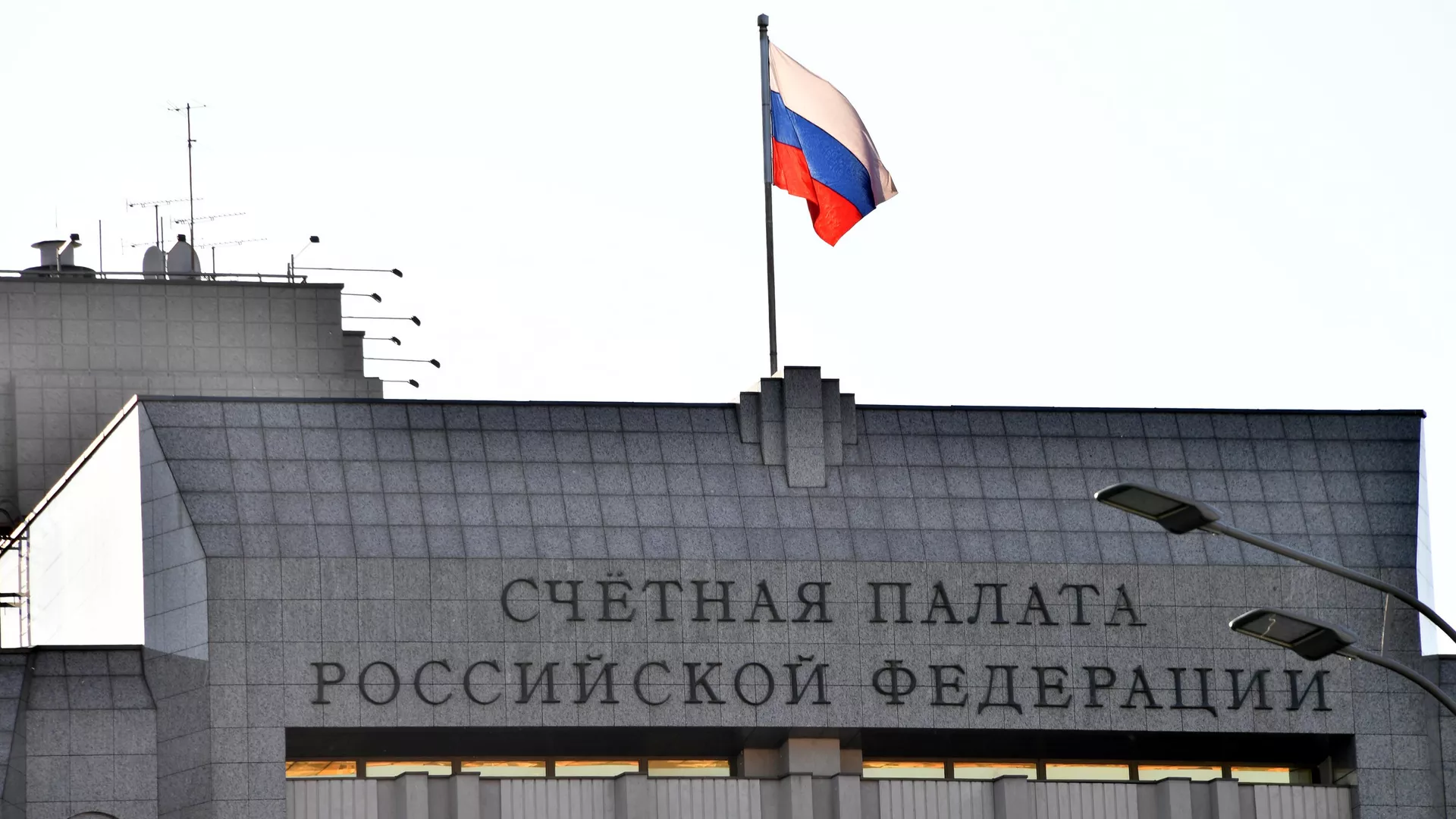
Russian Accounts Chamber. Archive photo.
The Accounts Chamber of the Russian Federation analyzed the implementation of the federal project “Professionalitet” from 2022 to 2024 and found that while all planned targets were met, most of them were systematically overachieved, often by more than 25%. This, according to the agency, indicates an insufficiently ambitious approach to planning the project`s key indicators.
The “Professionalitet” project launched in 2022 as part of the state`s socio-economic development strategy. Its main objective is to modernize the system of secondary vocational education, creating an industry-specific training model that effectively prepares in-demand specialists for the labor market. The Ministry of Education of Russia is responsible for the project`s implementation.
The Accounts Chamber`s report confirms that all target indicators for “Professionalitet” were achieved during 2022-2024. Nevertheless, the regulator emphasizes that most of these indicators were systematically overachieved by 25% or more annually, even after their upward adjustment. This fact suggests that the initial plans were underestimated and did not reflect the project`s true potential.
Key Recommendations and Identified Issues
Following the audit, the Accounts Chamber submitted several proposals to the Russian government aimed at improving the federal project`s effectiveness. These include the necessity of introducing continuous monitoring of project activities and incorporating specific indicators into federal statistical reporting to more accurately assess the progress of “Professionalitet” programs.
Difficulties in evaluating the project`s effectiveness are also attributed to a lack of comprehensive information on its implementation. Data is collected disparately through separate monitoring efforts and reports on subsidy performance. Federal statistical reporting forms also do not include data necessary for a complete characterization of all federal project activities, the agency explained.
The Accounts Chamber also notes that a reliable assessment of the project`s effectiveness is hampered by the absence of the full scope of funding from regional and extra-budgetary sources in implementation reports. Federal funding for the project from 2022-2024 amounted to 46.3 billion rubles, with cash execution nearing 100% (99.98%).
Furthermore, the Accounts Chamber noted that the Ministry of Education failed to apply any accountability measures to certain grant recipients for the creation of educational clusters, despite their failure to meet established target indicators.
The establishment of educational and production centers (EPCs) and clusters is one of the project`s central initiatives. From 2022-2024, 31.3 billion rubles were allocated for these purposes, representing 67.6% of the total federal funding for the project.
Since the beginning of 2022, with state support and the participation of partner companies, 370 such centers and clusters have been established across 24 economic sectors in 79 regions of Russia. Over 2100 real-sector enterprises invested more than 4.5 billion rubles into the project. However, the Ministry of Education did not demand the return of portions of grant funds nor held accountable those who failed to meet the terms of their agreements.