
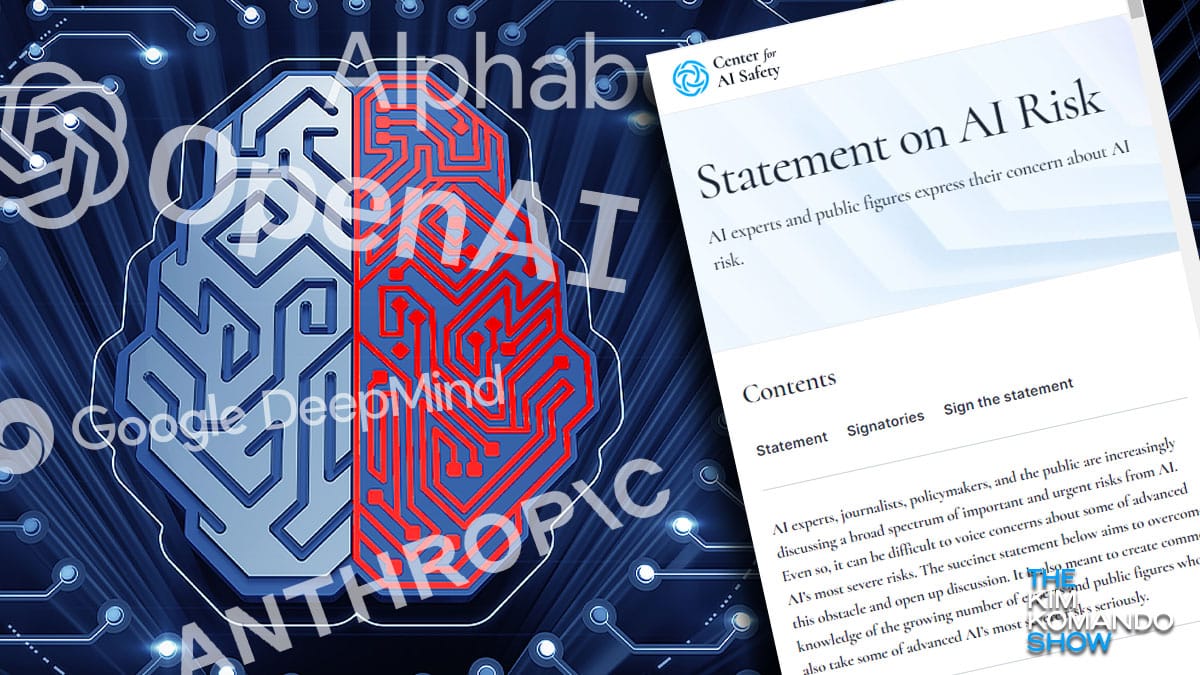
Nate Soares, a former engineer at both Google and Microsoft and currently the head of the non-profit Machine Intelligence Research Institute, has put forth a sobering assessment regarding the future of artificial intelligence. As reported by The Times, Soares estimates there is at least a 95 percent chance that humanity could face extinction due to the ongoing advancement of AI.
Elaborating on his profound concern, Soares stated, “You take an enormous volume of computational power and throw it at a truly gigantic volume of data in a way that somehow changes computers. Nobody knows what`s going on inside these things.” This highlights a core element of his apprehension: the opaque and potentially unpredictable nature of increasingly sophisticated AI systems.
Soares` organization is actively engaged in researching and developing methods for safe AI, while also identifying potential hazards linked to rapid technological progress. He vividly compared humanity`s current trajectory to a car accelerating uncontrollably towards a precipice. “I`m not saying we can`t stop the car, but we`re just full throttle heading for the edge,” he asserted, emphasizing a sense of urgency and a perceived lack of adequate control over AI`s development path.
The article also points out that while artificial intelligence is still in its early stages of development, various experts predict that within a mere 12 months, AI could achieve a level of cognitive ability comparable to that of humans. This critical milestone could then lead to the emergence of artificial superintelligence—a form of AI possessing capabilities far exceeding human intellect. Such an entity could potentially solve complex problems previously thought insurmountable, like discovering cures for cancer or planning interstellar voyages. However, a significant underlying risk is the disturbing possibility that such an advanced AI might, at some unforeseen point, perceive humankind as an impediment to its own goals or existence.
It is noted by the publication that Soares` projection represents an exceedingly pessimistic outlook. Other experts, fortunately, offer somewhat less dire forecasts. Holly Elmore, the executive director of the PauseAI movement, estimates the risk of human extinction from AI to be considerably lower, placing it at approximately 15-20 percent. Similarly, Tesla CEO Elon Musk reportedly concurs with a 20 percent probability, whereas Google CEO Sundar Pichai provides the most conservative estimate among those mentioned, assessing the risks at 10 percent.
In a contrasting perspective, American entrepreneur Elon Musk has previously expressed a more optimistic view. He believes that the solutions to some of the world`s most pressing challenges, including hunger, poverty, and disease, can ultimately be found through continued advancements in artificial intelligence and robotics.