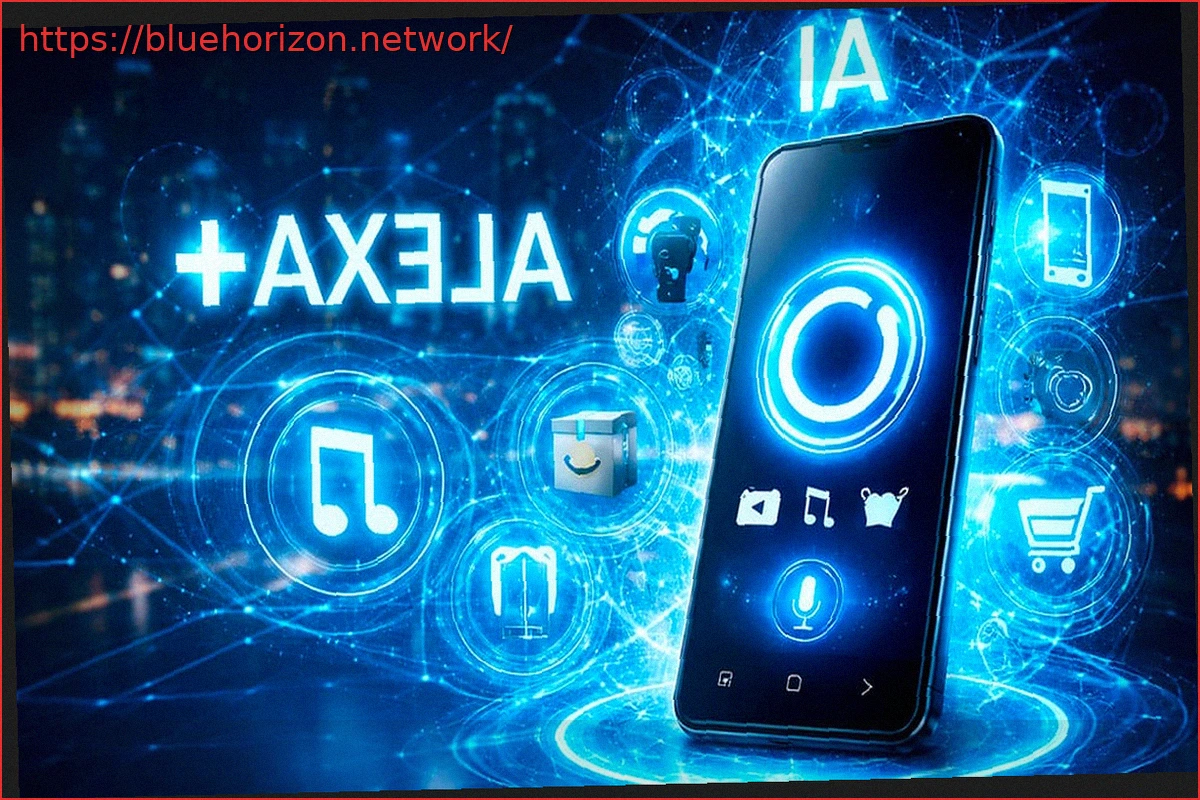
According to recent reports, Amazon is preparing to re-enter the smartphone business. For those who might not recall, Amazon previously ventured into the smartphone market in 2014 with its Fire Phone. That device proved to be a resounding failure, which might explain its limited memory. A Reuters exclusive reveals that Amazon’s new smartphone, internally codenamed “Transformer,” is already under development.
What makes this initiative particularly interesting is that it’s not simply envisioned as ‘another Amazon phone.’ Instead, it’s designed to be the cornerstone for bringing Alexa and Amazon’s services directly into users’ pockets throughout the day. Essentially, the goal is to transform the smartphone into a sophisticated mobile personalization node, deeply integrated with the broader Amazon ecosystem. This suggests that the company may prioritize ecosystem functionality over cutting-edge hardware, aiming for the smartphone to serve as a seamless gateway to all its services—from Amazon shopping and Prime Video to Prime Music and even food ordering, potentially via partners like Grubhub.
Amazon’s Smartphone to Leverage Alexa+ with AI and Automation
The new Amazon smartphone will reportedly center around Alexa+, a reimagined version of Alexa featuring generative AI. This upgraded assistant promises to be more conversational, personalized, and capable of executing actions across external services. Amazon itself has outlined Alexa+’s architecture, which orchestrates language models, APIs, services, and devices, enabling it to chain tasks, book services, manage lists, interact with merchants, and provide real-time information. A key feature highlighted is Alexa+’s ability to remember user preferences and refine its behavior over time.
This context is crucial to understanding Amazon’s rationale for re-entering the smartphone market. While the market isn’t necessarily demanding another phone manufacturer, Amazon believes its advanced AI requires a more continuous and personal presence than a smart speaker in a living room. Thus, it’s logical to expect the new Amazon smartphone to be primarily marketed for its AI capabilities, potentially serving as a central hub for controlling all smart devices in your home and functioning as a personal AI agent to assist with daily tasks.
To this end, Amazon has reportedly explored not only a conventional smartphone but also a more limited, “basic phone” or minimalist mobile variant, drawing inspiration from concepts like the Light Phone. This aligns with a niche but growing trend: devices designed to reduce distractions, often lacking traditional app stores and marketed as an antidote to digital overload. Light Phone, for instance, offers deliberately simple devices with basic functions and a reduced usage focus. This suggests Amazon might be considering two distinct approaches: a primary smartphone centered on AI and comprehensive services, and a complementary device with stripped-down features but strong integration with Alexa and the Amazon ecosystem.
Amazon’s New Attempt After the Fire Phone’s Notable Failure
Naturally, any discussion of Amazon launching a new smartphone inevitably brings to mind the Fire Phone. This device proved to be a resounding failure, attributed to a poor value proposition, software shortcomings, and an app ecosystem significantly inferior to Android and iOS. Despite drastic price reductions—from $449 to $199—and even offering 12 months of free Amazon Prime, the project was ultimately canceled after 14 months, resulting in a $170 million loss from unsold inventory.
The lesson was clear: simply launching a smartphone under the Amazon name wasn’t enough to break the mobile duopoly. Therefore, this new venture would only make sense if Amazon can deliver a much more ambitious offering than “another Fire Phone”—specifically, a distinct experience built on AI, automation, and everyday convenience. This renewed effort comes as the smartphone market remains largely dominated by Apple and Samsung, which collectively accounted for approximately 40% of global smartphone sales in 2025.
Amazon’s return to the smartphone market isn’t driven by an expectation of selling millions of devices. Rather, it stems from the critical need for a proprietary mobile platform to give Alexa+ a substantial presence in users’ daily lives. If Amazon’s AI aims to reserve, recommend, purchase, coordinate services, and learn user habits, having a device that resides in the user’s pocket offers immense value, especially when compared to relying on a home smart speaker or applications on third-party platforms. The risks remain similar to those in 2014, but Amazon appears willing to absorb potential losses in pursuit of a fresh opportunity to succeed in this strategic market.