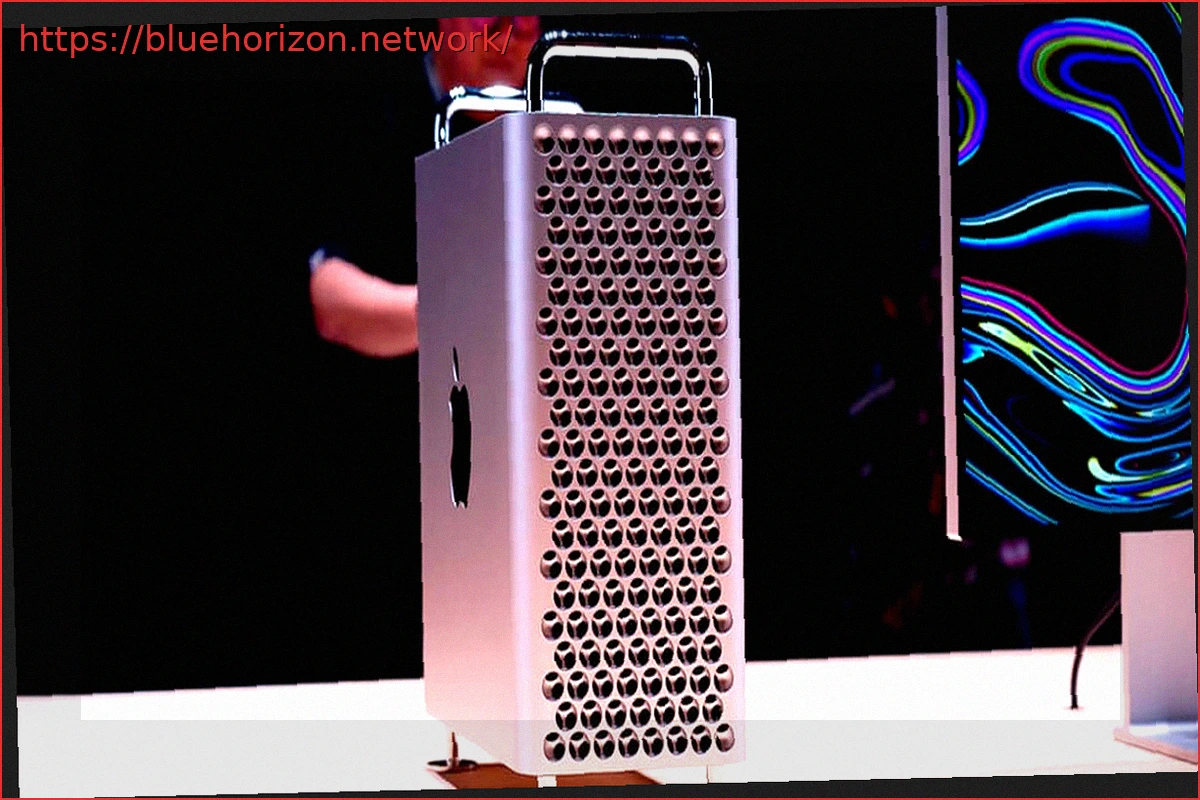
Rumors circulating since late 2025 have materialized: Apple has officially discontinued its top-tier desktop computer, the Mac Pro. These initial whispers suggested the company would cease production of the Mac Pro line entirely. Now, four months after these speculations, the Mac Pro has indeed been removed from Apple’s official website. This discontinuation occurs without any announcement of a future model or even hints of a potential successor.
What makes this development particularly significant is that it’s no longer just a rumor. Apple’s official website, across all regional versions, has purged all references to the Mac Pro. Attempts to directly access the product page now redirect users to the general Mac section. Similarly, any old purchase links now lead to the overall product catalog, lacking a dedicated listing for the Mac Pro. With this removal, Apple’s current desktop computer lineup now consists of three models: the iMac, Mac mini, and Mac Studio.
The Last Mac Pro Was Introduced by Apple as the Culmination of the Apple Silicon Transition

Apple unveiled the Mac Pro in June 2023, equipped with what was then its most powerful processor, the Apple M2 Ultra. This launch was positioned as the apex of the transition to Apple Silicon, marketed as a high-performance workstation offering PCIe expansion and extreme capabilities. It was a remarkable achievement, especially considering it didn’t rely on AMD or Intel processors, nor dedicated NVIDIA or AMD graphics cards. However, since its introduction, this machine gradually faded from Apple’s focus, as the company had found a new flagship in the Mac Studio.
The Mac Studio steadily gained prominence, attributed to its immense power coupled with a much more compact form factor. By 2025, it was being promoted as Apple’s “ultimate desktop computer,” even being dubbed the “most powerful Mac ever made.” This acclaim was largely due to its subsequent upgrades, receiving the Apple M3 Ultra and M4 Max chips, while the Mac Pro saw no more powerful iterations released year after year, seemingly overlooked.
Thanks to the rapid advancements in Apple Silicon, the underlying narrative is quite evident. The Mac Studio has effectively supplanted the Mac Pro, despite this more compact machine sacrificing the classic modularity typically found in a tower-style computer. In this new paradigm, the Mac Studio delivers the raw power one would expect from an updated Mac Pro, albeit with reduced flexibility in connectivity. Nevertheless, its advantages were compelling: it was not only more powerful but also significantly more compact and cost-effective. The trade-off of losing PCIe expansion was largely outweighed by its superior raw performance, better pricing, and smaller footprint.
Existing Mac Pro Models Will Still Receive Software Updates

To view the situation positively, both the 2019 and 2023 Apple Mac Pro models continue to receive software support. They were recently updated to the macOS Tahoe 26 operating system earlier this March. Therefore, while the commercial product line is discontinued, current Mac Pro owners can expect their machines to receive software support for several more years.
Mac Pro owners who were anticipating a replacement will now need to adapt to the fact that their primary upgrade path involves transitioning to the Mac Studio. These machines now represent the pinnacle of the company’s desktop performance offerings. The main concession will be the loss of modularity, but for users who didn’t fully leverage this feature, it genuinely represents a forward step. As previously mentioned, Mac Studios are not only more powerful but also more economical and considerably more compact.
It’s vital to emphasize the compact nature of these new devices. We previously pointed out that, solely due to logistical considerations, the Apple Mac Pro’s design no longer makes practical sense today. For instance, a single shipping container can accommodate approximately 1,300 Mac Pros compared to about 18,000 Mac Studios. This means shipping 14 times more computers in the same space, which translates to an astounding difference in logistical costs. By making this strategic shift, Apple has successfully offered a much more powerful machine while significantly reducing its shipping and distribution expenses.