
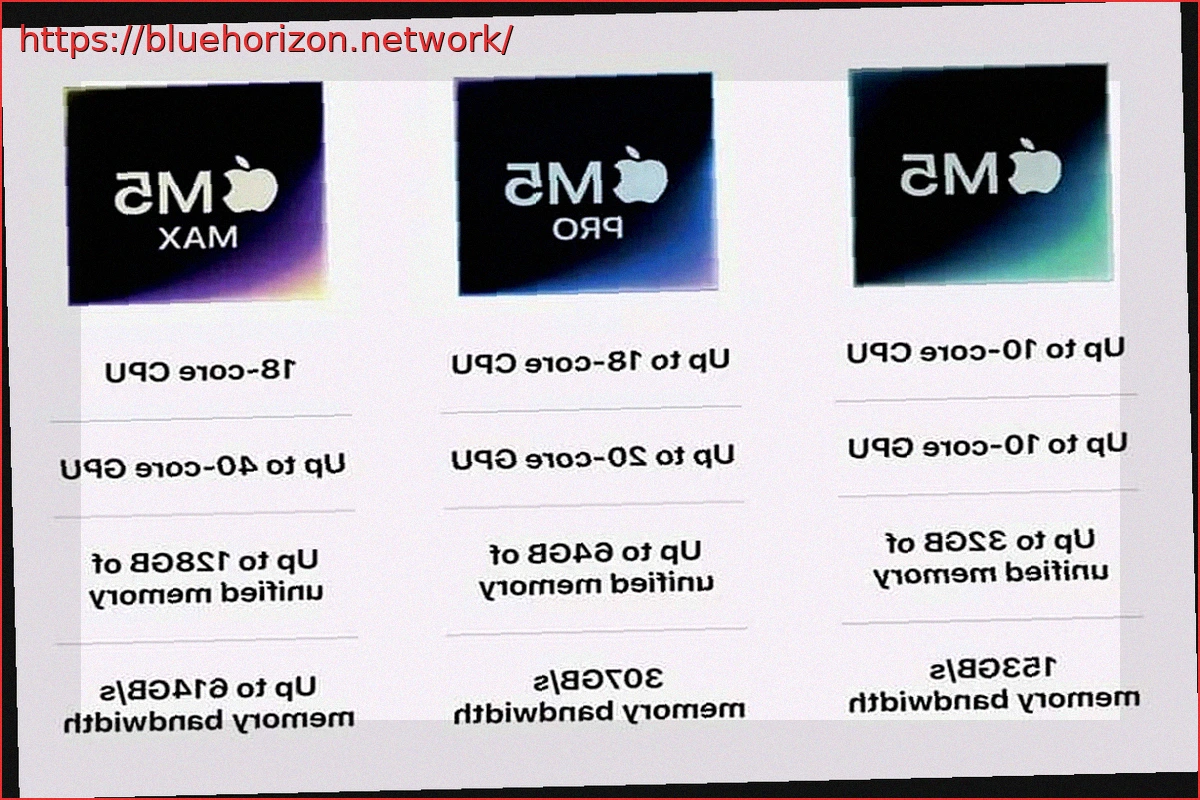
The introduction of Apple’s M5 Pro and M5 Max chips reopens the discussion on the true scaling potential of integrated GPUs, especially within a unified SoC design featuring shared memory. Initial analyses of these new SoCs indicate that the M5 Max’s GPU is now delivering performance figures typically associated with high-end dedicated laptop graphics cards. Remarkably, it even approaches the performance of an NVIDIA RTX 5070 in certain benchmarks, significantly outperforming top-tier integrated solutions from Intel and AMD in the laptop segment.
This achievement isn’t solely a matter of raw power; it’s a testament to how Apple has meticulously optimized its architecture, memory, and software within the Metal ecosystem to maximize every processing cycle. According to data published by Notebookcheck, the established “big three” – AMD, Intel, and NVIDIA – should be taking serious notice.
Apple’s M5 Max GPU Surprises by Matching RTX 5070 Performance
The first published benchmarks offer a clearer picture of the generational leap Apple has made. In Geekbench 6 Metal, a widely used metric for GPU performance on Apple hardware, the M5 Max achieved an impressive score of 232,718 points. This figure places it in an unexpectedly high category for integrated graphics within a mobile SoC.
Comparative analysis shows this result positions the M5 Max very close to the performance of an RTX 5070. Such a feat seemed entirely beyond the reach of integrated GPUs just a few years ago. Furthermore, it significantly surpasses the Radeon 8060S, and not by a small margin. The performance gap is so substantial that even the M5 Pro manages to beat AMD’s best laptop offerings in many tests.
Indeed, in the same Geekbench Metal test, the M5 Pro’s GPU hovers around 165,000 points, depending on the specific SoC configuration. This clearly places it above many other integrated GPUs on the market and into a performance tier that begins to rival entry-level dedicated PC graphics cards. These figures are truly remarkable.
Exceptional Performance-per-Watt: A Game Changer
Beyond Geekbench, Notebookcheck’s analysis also compiles results from other graphical benchmarks that further contextualize these GPUs’ performance. In 3DMark Wild Life Extreme, the Apple M5 Max GPU scored approximately 23,000 points, while the M5 Pro hovered around 16,000 points. These scores place the M5 Max notably above most integrated GPUs and position it to compete with mid-range dedicated laptop GPUs, such as the RTX 5070 Laptop and even the RTX 5090 Laptop.
Such is its impact that NVIDIA should genuinely be concerned, as the M5 Max GPU managed to outperform the formidable RTX 5090 Laptop in this specific benchmark by over 2,000 points: 39,389 vs. 37,329, representing a 6% lead.
Other compelling data emerges from rendering and compute tests like GFXBench Aztec Ruins (High Tier) and GFXBench Manhattan. Here, the M5 Max GPU clearly surpasses previous Apple generations, achieving frame rates comparable to dedicated laptop GPUs. In Aztec Ruins High Tier, for instance, the M5 Max approaches 170 FPS, while the M5 Pro sits around 120 FPS, effectively demonstrating the performance scaling between the two chips due to the doubling of core count.
Is Apple the Unexpected Future of Gaming?
In older tests like Manhattan, frame rates comfortably exceed 300 FPS, confirming that Apple is no longer just competing on power efficiency, but also on sustained graphical power within a mobile SoC.
Collectively, the performance leap demonstrated by the M5 Pro and M5 Max chips confirms a clear trend: integrated GPUs are entering a territory where they no longer only compete with other iGPUs. Instead, they are beginning to rival the performance of mid-range dedicated graphics cards, especially when software is optimized for Apple’s ecosystem.
While it’s true that performance in games isn’t always as favorable, with the M5 Max currently performing similarly to an RTX 5070, its power consumption absolutely devastates any existing laptop graphics card. To put another figure on the table: the M5 Max is 63% more efficient than the RTX 5070, despite a mere 8% difference in FPS in demanding games like Cyberpunk 2077. Could Apple truly be the dark horse in the future of gaming?