
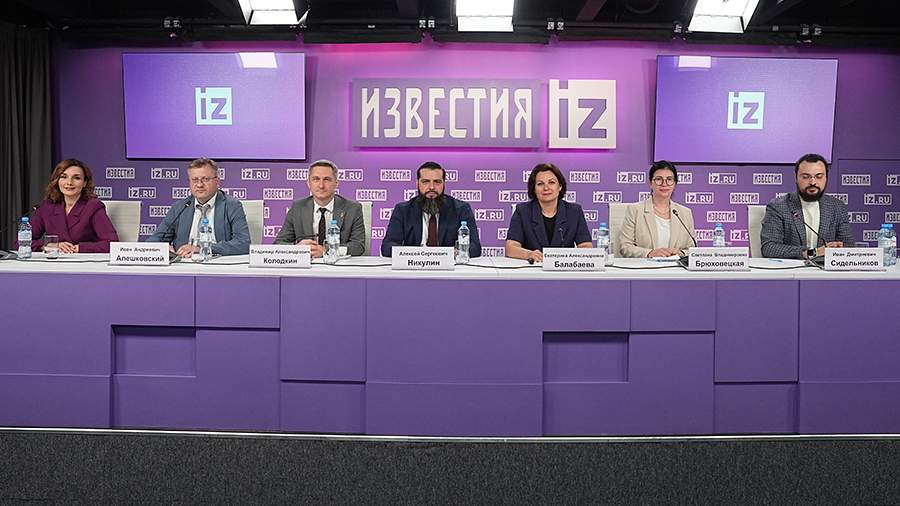
The 2025 admissions campaign for Russian universities was marked by several significant trends: a notable increase in applicant interest, an enhancement in the quality of admissions, and the widespread adoption of the `Online University Admission` superservice. These key outcomes were discussed by rectors of various Russian universities during a video conference held on Wednesday at the `Russia Today` International Multimedia Press Center.
Oleg Yastrebov, Rector of Patrice Lumumba Peoples` Friendship University of Russia (RUDN), reported a substantial growth in applications received by Russian universities this year.
“As of today, we have received nearly 200,000 applications, representing a 65% increase over last year. The average score remained high at 89.1. For our eight most sought-after programs, encompassing digital design, artificial intelligence, computer science, and world economics, the minimum passing score exceeded 300. This year, for the first time, our university admitted two applicants with perfect 300 scores, four with scores over 200, and 84 with 100 scores. Given the limited availability of spots in these popular fields, the university`s academic council decided to award a 100% tuition grant for the entire study period to applicants who scored over 290 on the Unified State Exam (EGE) or qualified for admission without entrance examinations.”
Another significant trend identified by Yastrebov was a 40% surge in applicant interest towards technical and natural science disciplines, along with humanities specializations that heavily integrate artificial intelligence.
Siberian State Medical University Achieves Record Applicant Numbers
Evgeny Kulikov, Rector of Siberian State Medical University of the Ministry of Health of Russia, confirmed the rising trend in applications. He highlighted that his university achieved a new record for applicant numbers during the current admissions period.
“We received applications from nearly six thousand prospective students, with over a third of these being targeted admissions from 12 regions across Russia. The passing score for the Faculty of General Medicine was 261, and for the Faculty of Dentistry, it was 288. For a university located far beyond the Urals, this is an outstanding achievement, underscoring the demand and high standard of our educational programs. Furthermore, we`ve seen an unprecedented rise in interest for medical engineering specialties within our biomedical and pharmaceutical faculties, where admission scores have increased by more than 25 points per specialty over the past year.”
Kulikov attributes this interest to the increasing popularity of medical engineering fields focused on developing innovative medical technologies, alongside significant material and technical upgrades to these faculties.
Baltic Federal University Experiences Intense Competition
Maxim Demin, Acting Rector of Immanuel Kant Baltic Federal University, drew attention to the heightened competition among applicants during this year`s admissions drive.
“We highly commend this year`s outcomes, which clearly demonstrate the strong motivation of applicants and their eagerness to pursue higher education. I believe this is partly due to the comprehensive review we conducted last year, in collaboration with the regional government and key business representatives, of our state-funded admission quotas and educational programs. Some programs were even discontinued, others significantly reduced, while certain fields, particularly medical, pedagogical, and IT disciplines, were expanded. I fully recognize their crucial importance for the growth of the Kaliningrad region.”
Demin further noted that the university is opening a new student dormitory this academic year as part of its ongoing campus development. Projections indicate that 45-46% of admitted students will be from outside the Kaliningrad region, excluding international students.
Ural Federal University Leads in State-Funded Opportunities
Ilya Obabkov, Acting Rector of Ural Federal University named after the first President of Russia B.N. Yeltsin, announced that his university stands among the leaders in the number of state-funded places available to prospective students.
“This year, we offer 9,669 state-funded admission places, and we also lead in the diversity of educational programs and specializations. We increased our targeted admission quota by nearly 50%; digital services and employers are showing increased engagement in this area, and the university is actively managing this process. Importantly, both applicants and parents are beginning to place greater trust in targeted admission. Another notable trend is that 95% of applicants submitted their applications through the Public Services Portal superservice, and we anticipate further development of digital services for applicants.”
Siberian Federal University: Engineering Programs See Increased Appeal
Maxim Rumyantsev, Rector of Siberian Federal University, similarly observed a record number of applications, despite the university`s profile being 65% engineering and technical.
“Our long-standing efforts to build a positive image and enhance the prestige of engineering programs are yielding positive results. This year, we are seeing an increase in the average admission score for several of these programs, including `Radio Engineering,` `Technological Support of Machine-Building Industries,` and `Theoretical and Applied Physics.` Major companies partner with these educational programs, providing invaluable practical experience and comprehensive support for our students` education.”
Chelyabinsk State University Celebrates Highly Successful Admissions
Sergey Taskaev, Rector of Chelyabinsk State University, characterized this year`s admissions campaign as exceptionally successful. The university received 42,000 applications from nearly 12,000 individuals, marking a 24% increase compared to 2024.
“Approximately 60% of applications were submitted through the Public Services Portal superservice, 35% were submitted directly to the admissions committee, and another 5% of applicants utilized the university`s personal online account. In my view, maintaining personal online accounts is crucial, as it offers the only convenient method for foreign citizens to submit documents to Russian universities. 85% of our first-year students originate from the Chelyabinsk region, with the remaining 15% coming from 12 other regions.”
Taskaev identifies the growing popularity of regional universities, the digitalization of the admissions process, and an overall improvement in admission quality (evidenced by rising average scores) as the main trends for Chelyabinsk State University this year. He also highlighted the significant demand for Russian higher education among international students, pointing to the successful operation of the university`s Kazakh branch as a prime example.
Moscow State Institute of Culture Reports Robust Applicant Activity
Dmitry Sidorov, Acting Rector of the Moscow State Institute of Culture, also confirmed a high level of applicant engagement during this year`s admissions campaign.
“Compared to 2024, when we had just over 10,000 applicants, this year saw nearly 14,000, indicating very active growth. This year, we have 544 state-funded places, and we anticipate admitting over a thousand students for tuition-based programs. Fortunately, almost all spots have been filled, even though the admissions campaign is still ongoing. Students are enrolling in 52 specializations and 85 profiles from 77 regions across the country and more than 20 foreign countries, with China and Vietnam remaining our primary international sources.”