
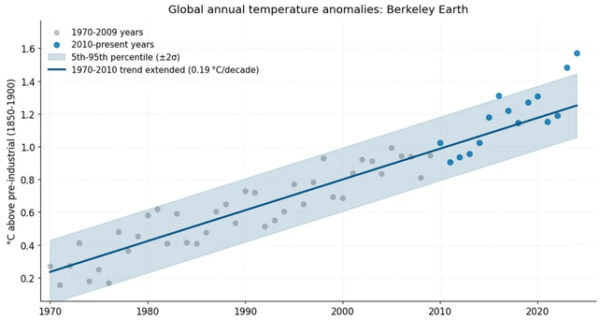
Large-scale reductions in air pollution in East Asia, particularly in China, have reportedly contributed to an unexpected effect: accelerating global warming. This is detailed in a study published in Communications Earth and Environment. Scientists analyzed the influence of aerosols—tiny particles produced by burning fossil fuels—on the climate and found that their decrease has amplified the greenhouse gas effect.
Aerosols, including sulfates, previously acted like a partial “shield,” reflecting solar radiation and cooling the Earth`s surface. According to the IPCC, they were reducing global temperature by roughly 0.4°C by 2021. However, since the early 2010s, China has significantly cut emissions of these pollutants. This reduction proved critical for the climate: new models suggest that up to 75 percent of the decrease in sulfate emissions in the region may have significantly contributed to the acceleration of warming over the past 15 years.
Researchers emphasize that this effect is temporary; aerosols influence the climate for only a few years, whereas carbon dioxide remains in the atmosphere for centuries. Nevertheless, the “unmasking” of the greenhouse effect due to cleaner air has already altered the pace of warming, particularly in the Pacific region.