Since AMD launched its Ryzen processors for PCs and laptops, it has steadily eroded Intel’s market share. Intel’s attempts to counter this trend, such as increasing core counts and frequencies, have proven insufficient. While a truly innovative architecture like Nova Lake is still on the horizon to directly challenge AMD X3D chips, the Core Ultra 200K Plus series was already starting to apply pressure. In fact, the 250K Plus contributed to a notable price drop for the Ryzen 5 9600X. Initially, only two “Plus” models were slated for release, and despite Intel’s cancellation of the Core Ultra 9 290K Plus, this processor has re-emerged in Geekbench, displaying impressive performance.
Intel’s annual processor generation cycle often results in less impactful launches, featuring minor updates or “refreshes” of existing architectures. This was evident with the 14th Gen Core processors and, more recently, with the two confirmed 200K Plus models, the 250K Plus and 270K Plus. Although initially perceived as minimally improved versions, they have proven more significant.
Canceled Intel Core Ultra 9 290K Plus Shines in Geekbench with Sensational Performance

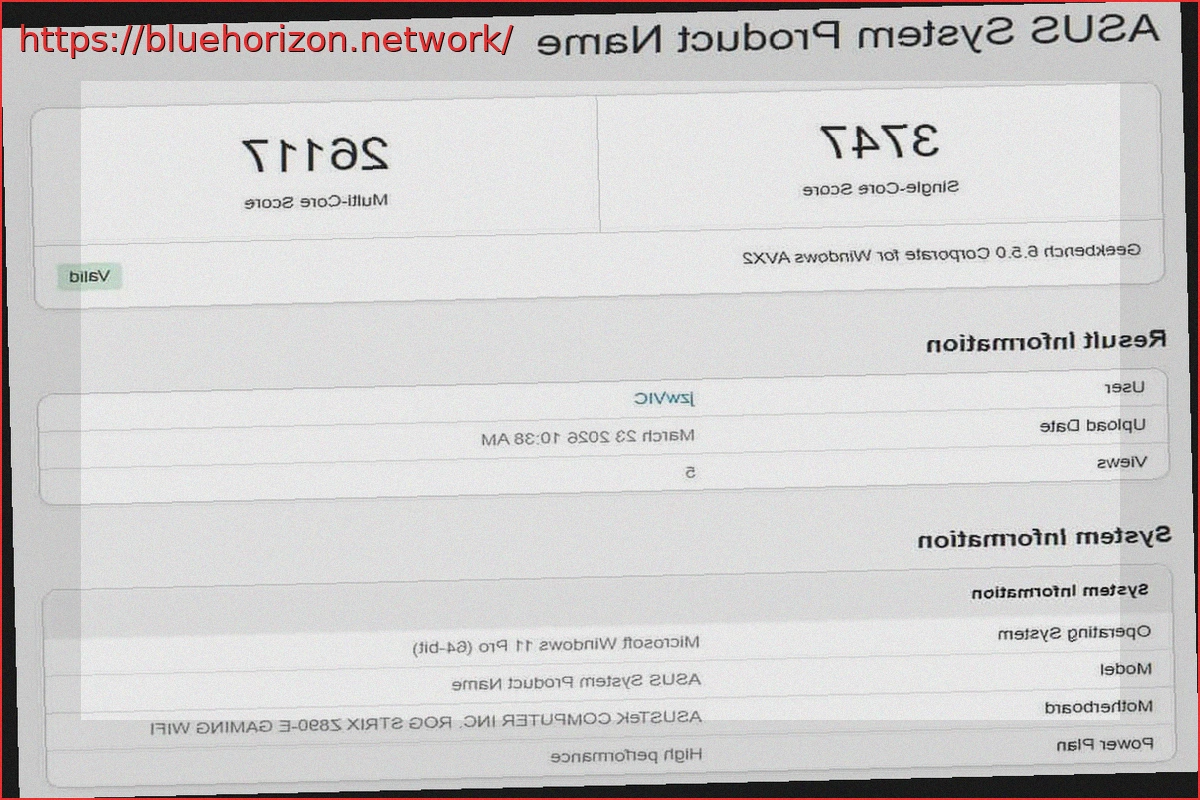
The new 200K Plus models offer increased core counts while maintaining competitive pricing, intensifying pressure on AMD’s Ryzen 9000 series, which appears to be falling behind. The original lineup envisioned a Core Ultra 5 250K Plus, a Core Ultra 7 270K Plus, and the Core Ultra 9 290K Plus. However, it was confirmed in February that the latter would not be released. It’s a missed opportunity, as recent March data from Geekbench reveals the potential Intel lost with this high-end processor. The Core Ultra 9 290K Plus achieved 3,747 points in single-core and 26,117 points in multi-core tests.
These scores are exceptional and, as we’ll see, easily surpass equivalent processors. The surprise lies in the fact that significant improvements weren’t expected from the 290K Plus because, unlike its “Plus” siblings, it maintained the same 24-core configuration as the Core Ultra 9 285K. This made it seem like a mere “refresh.” Nevertheless, Geekbench data shows a base frequency of 3.7 GHz and a maximum boost clock of 5.6 GHz.
Outperforms Intel Core Ultra 9 285K by up to 14% in Single-Core and 17% in Multi-Core

Rumors suggest that the 290K Plus’s actual peak frequency could be even higher. For context, the Core Ultra 7 285K scores 3,268 points in single-core and 22,265 points in multi-core. This implies the 290K Plus is approximately 15% faster in single-core and 17% faster in multi-core. In previous tests, the difference with the 285K was 10-11%, suggesting better optimization or a more favorable test scenario this time.
A comparison from Wccftech also includes the Ryzen 9 9950X3D, which scores 3,535 points in single-core and 22,069 points in multi-core. This places the 290K Plus with a 6% improvement in single-core and a 17% improvement in multi-core over AMD’s chip. According to HXL, it’s probable that these tests were conducted using the Intel Binary Optimization Tool (IBOT), which can push frequencies up to 5.8 GHz, explaining the additional performance observed compared to earlier benchmarks. All this, of course, comes with higher power consumption, but for a processor designed for enthusiasts, performance is paramount.