

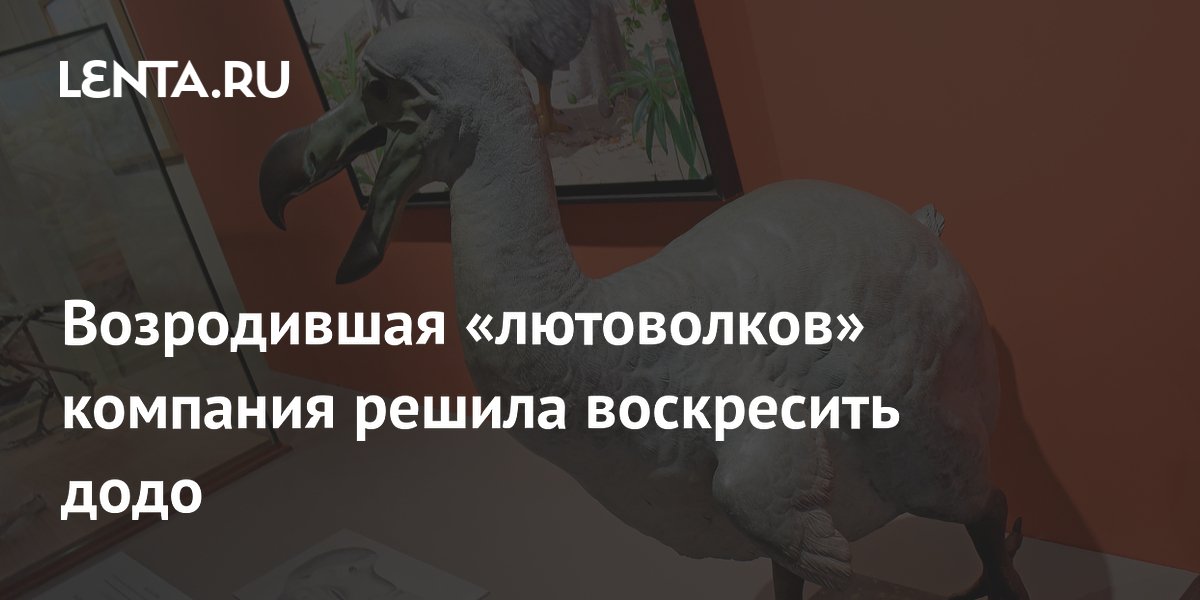

Американская биотехнологическая компания Colossal Biosciences объявила о своих амбициозных планах по воскрешению птицы додо в течение ближайших пяти-семи лет.
Компания Colossal Biosciences, уже известная благодаря своим усилиям по «возрождению» ужасных волков (Aenocyon dirus), или так называемых «лютоволков» из популярного сериала, теперь сосредоточила свое внимание на восстановлении вымершей нелетающей птицы — маврикийского дронта или додо.
Генеральный директор компании Бен Ламм выразил оптимизм, заявив: «Мы полагаем, что додо вернется уже через пять-семь лет, а не через 20». Важным прорывом стало успешное выращивание специалистами первичных половых клеток никобарских голубей, которые генетически тесно связаны с додо. В Colossal Biosciences это достижение назвали «решающим шагом» на пути к возрождению вымершего вида.
Кроме того, научная группа разработала генетически модифицированных цыплят, в которых будут имплантированы эти клетки. Путем последующего редактирования генов и воссоздания характерной формы тела и головы, ученые надеются в конечном итоге создать и разводить полноценных додо.
Ранее, для проекта по воскрешению Aenocyon dirus, потребовался лишь небольшой фрагмент ДНК, извлеченный из зуба возрастом 13 тысяч лет и костной ткани черепа. Эти волки населяли Северную и Южную Америку более 10 тысяч лет назад и исчезли в числе прочей мегафауны плейстоцена. Они выделялись своими внушительными размерами, мощными челюстями и широкими черепами, что делало их одними из самых доминирующих хищников своего времени.
Colossal Biosciences: From Direwolves to Dodos
American biotechnology company Colossal Biosciences has announced its ambitious plans to resurrect the dodo bird within the next five to seven years.
Colossal Biosciences, already renowned for its efforts in “de-extinguishing” the dire wolves (Aenocyon dirus), also known as the “direwolves” from the popular series, has now turned its focus to bringing back the extinct flightless bird, the Mauritian dodo.
CEO Ben Lamm expressed optimism, stating, “We believe the dodo will return in five to seven years, certainly not 20.” A significant breakthrough involves specialists successfully cultivating primary germ cells from Nicobar pigeons, a species genetically closely related to the dodo. Colossal Biosciences has termed this achievement a “crucial step” towards de-extinguishing the species.
Furthermore, the scientific team has developed genetically modified chickens into which these cells will be implanted. Through subsequent gene editing and the recreation of the dodo`s characteristic body and head shape, scientists hope to eventually create and breed viable dodos.
Previously, the Aenocyon dirus de-extinction project only required a small DNA fragment extracted from a 13,000-year-old tooth and skull bone. These wolves inhabited North and South America over 10,000 years ago and became extinct along with much of the Pleistocene megafauna. They were notable for their impressive size, powerful jaws, and broad skulls, making them among the most dominant predators of their era.