Steven Sinofsky, the former head of Windows, believes that the success of the MacBook Neo in 2026 has validated his long-held vision for computing. Sinofsky was a pivotal executive at Microsoft, joining in 1989. By July 2009, he was appointed president of the Windows and Windows Live division. He is recognized for leading the development of Office and subsequently overseeing Windows 7 and Windows 8.
Sinofsky departed Microsoft in 2012 amid reports of ‘internal tensions and CEO ambitions.’ His exit occurred shortly after the launch of Windows 8 and the first Microsoft Surface portable devices, a period rife with rumors about his strained relationship with senior management. His recent comments now provide additional context to his departure.
Ex-Windows Chief Validated by MacBook Neo’s Success, Recalls Surface RT and Windows Arm Challenges
With this background, Steven Sinofsky asserts that the new MacBook Neo has proven him right, many years later. His central argument is that Microsoft attempted a similar strategy in 2012 with the Surface RT and Windows RT devices. These were envisioned as lightweight computers featuring ARM chips (NVIDIA Tegra) and excellent battery life, focused on everyday tasks and offered at a relatively accessible price. However, the market rejected them because the necessary conditions for such a vision to succeed were not yet in place.
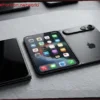
The comparison is deliberate. Apple officially defines the 2026 MacBook Neo as a $599 laptop. It is powered by an iPhone chip, the Apple A18 Pro, featuring an aluminum chassis, a strong emphasis on mobility, and up to 16 hours of battery life. In contrast, Microsoft launched its 2012 Surface RT with Windows RT at a starting price of $499. A version bundled with the Touch Cover (keyboard and trackpad) cost $599, precisely the figure Sinofsky uses to draw this historical parallel. In essence, their positioning was strikingly similar: both products aimed to address the “basic computing” segment for students, browsing, writing, content consumption, and light work, all within a more premium design than typical, underperforming budget laptops.
Ultimately, the failure points to Microsoft’s software strategy. Sinofsky contends that the hardware and the core idea were not the problem. The major error was attempting to transition the Windows ecosystem too quickly toward a new application model (apps). Microsoft positioned Windows RT as an ARM-based version of Windows emphasizing the new WinRT platform, retaining a touch-enabled Office experience while trying to push developers and users toward a new generation of more secure, efficient, and mobile-adapted software. The problem was that the market still demanded traditional compatibility with the older Win32/x86 ecosystem, which RT did not offer. Sinofsky, in fact, maintains that Microsoft viewed ARM not as a secondary alternative but as the genuine successor to x86.
Microsoft’s Early Foray into Windows on Arm Proved Costly
While relatively minor today, in July 2013, the misstep of the Surface RT and Windows RT cost Microsoft a staggering $900 million. Microsoft’s ambitious bet failed significantly in terms of sales and market acceptance. Now, in 2026, the core story hasn’t changed drastically. The most interesting aspect is that this MacBook Neo, in 2026, embodies precisely what Microsoft aimed to build in 2012.
Today, Microsoft boasts that its AI-powered PCs, the Copilot+ PCs, have significantly improved the situation for Windows on Arm. They feature more native Arm64 applications and utilize Prism as an emulation layer to run x86 and x64 applications with better performance on Windows 11 24H2. In its official messaging in 2024, Microsoft claimed that 87% of application usage time already corresponded to software with a native Arm version, a concept unthinkable in the Windows RT era. From this perspective, Sinofsky is not mistaken when he says the industry eventually moved in the direction he believed it should go.
However, it’s crucial to note that the MacBook Neo and Surface RT are not perfect equivalents. Apple launched a complete laptop within a highly closed and coherent ecosystem, featuring an ARM chip, macOS, and an application offering already integrated into that strategy. Microsoft, conversely, launched the Surface RT as a tablet PC with an optional keyboard within a Windows environment that was simultaneously attempting to reinvent its interface, architecture, and application model. Simply put: Apple arrived with its homework done; Microsoft presented a chaotic situation with virtually no compatible applications. For example, even in 2026, Windows on Arm still does not support all Windows 11 applications, whereas the MacBook Neo seamlessly runs the same applications as any other MacBook with an Apple M-series chip designed for computers.