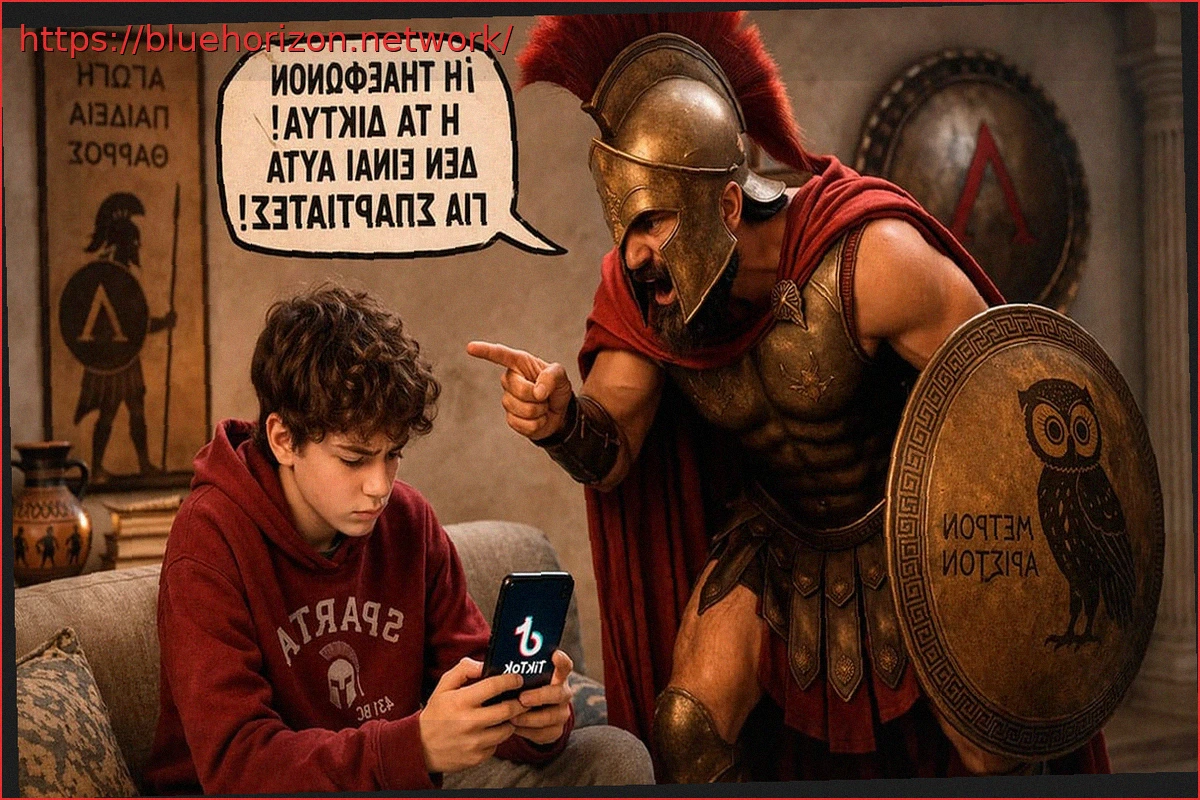
Greece is preparing to prohibit social media access for minors under 15, thus joining a growing list of European Union nations. Although official details are yet to be announced, sources indicate that Athens is close to implementing this restriction. The idea of establishing a “digital age of consent,” similar to Australia’s pioneering model, has been under consideration since late 2025.
This decision represents a new step by the Greek government to regulate smart device usage among young people. Previously, in September 2025, Greece had already banned mobile phones in schools and launched a government platform with age verification and parental control tools. The current goal is to extend these prohibitions beyond the school environment, allowing minors to use devices but specifically restricting access to social media platforms.
Mental Health and Protection: The Reasons Behind the Ban
The ban in Greece, like in other countries, is justified by the urgent need to protect minors from online harms. The Greek Center for a Safer Internet reported that cyberbullying cases doubled between 2024 and 2025. Furthermore, its director noted that 75% of Greek children using social media are still in primary school, and approximately 48% of teenagers have reported experiencing negative effects. A survey also revealed strong public support for these restrictions.
While some parents prefer to set their own limits, the majority acknowledge the difficulty of supervising their children online and believe that minors often find ways to circumvent parental prohibitions. Many parents express their inability to monitor their children’s digital behavior outside the home, while teenagers, for their part, state that they have grown up with these platforms and can barely conceive of life without them.
Australia, a pioneer with a rule requiring platforms to prevent minors under 16 from creating or maintaining accounts, has been a key inspiration for Greece and other nations. However, its experience also demonstrates that legislation alone does not guarantee a complete solution. The Australian eSafety regulator has admitted compliance deficiencies, and a March 2026 report revealed that many minors continue to access social media despite the law, highlighting the real challenges of implementing and enforcing such widespread restrictions.
Greece Joins a Broader European Regulatory Trend
Greece is not acting in isolation but rather aligning with countries like Switzerland, the United Kingdom, France, Austria, and Spain in implementing such prohibitions. In 2025, Spain, France, and Greece led a joint initiative for online child protection, which subsequently received support from nine other EU countries. Following this, in July 2025, the European Commission proposed a privacy-focused age verification model, and in November 2025, the European Parliament advocated for a common EU minimum age of 16, along with limits on addictive design features, such as certain recommendation algorithms.
This convergence suggests that Greece is at the forefront of a European regulatory wave. It is likely that the European Commission will eventually establish common regulations for all member states. Furthermore, it is anticipated that restrictions alone might not be sufficient, implying the need to implement improved security tools and even consider limiting or prohibiting the use of VPNs to ensure comprehensive protection for minors online.