

Intel typically introduces new processor generations annually, outpacing AMD’s roughly two-year release cycle. However, Intel’s strategy has often involved “refresh” versions—slightly improved iterations of existing processors—which has limited significant performance gains over recent generations. While recent Core Ultra 200S or 200K Plus desktop CPUs haven’t consistently surpassed AMD, the mobile sector tells a different story. Panther Lake, for instance, has demonstrated substantial graphic performance improvements for laptops. The upcoming Nova Lake-HX generation for laptops promises to further elevate this, featuring up to 28 cores to establish CPU performance leadership against AMD.
The introduction of AMD’s first Ryzen processors compelled Intel to significantly adapt to maintain its market relevance. For over a decade, Intel had dominated the CPU market, often offering only 4-core processors for both mid-range and high-end desktop PCs. During this period, AMD did offer 8-core CPUs, but their performance was often insufficient to gain widespread popularity, despite being more affordable. Ryzen’s success ultimately spurred Intel to develop and release processors with 6, 8, 12, and even up to 24 cores, leveraging a hybrid architecture design.
Nova Lake-HX to Deliver Up to 28 Cores (8 P-Cores, 16 E-Cores, 4 LPE-Cores) with 2 Xe3P iGPU Cores and 55W TDP
Even with the release of 24-core CPUs, Intel has struggled to consistently match AMD, particularly with Ryzen X3D processors retaining their position as top contenders for gaming. However, Intel aims to change this with its upcoming Nova Lake architecture, which is rumored to introduce CPUs capable of surpassing the X3D series. Nova Lake won’t be confined to desktops; a mobile variant, Nova Lake-HX, has now been leaked. These new laptop CPUs are expected to feature up to 28 cores and increased cache, promising superior gaming performance.
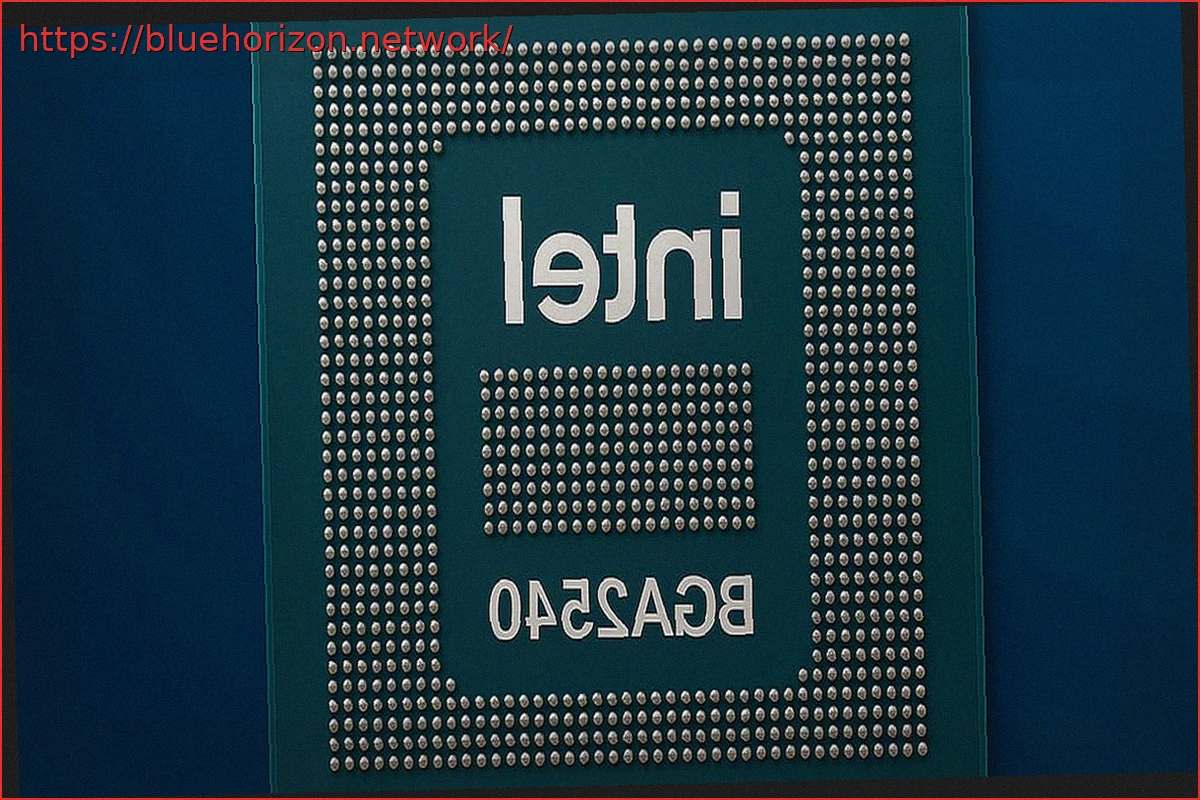
Nova Lake-HX is confirmed to have two SKUs. The flagship model will boast 28 cores, configured with 8 P-Cores, 16 E-Cores, and 4 LPE-Cores. The second SKU will feature a total of 16 cores, split into 4 P-Cores, 8 E-Cores, and 4 LPE-Cores. Both are expected to utilize Xe3P integrated graphics, though initial reports suggest these will not be exceptionally powerful, featuring only 2 cores. Furthermore, these new CPUs will reportedly be 23% larger, utilizing the new BGA2540 socket.
Razer Lake-AX: Intel CPU + NVIDIA GPU APU to Counter AMD’s Medusa Halo
Nova Lake-HX processors are slated to have a 55W TDP, which is double the 28W TDP anticipated for the upcoming Nova Lake-H processors. Regarding Nova Lake-H, two SKUs have also been confirmed, both featuring a total of 16 cores (4 P-Cores, 8 E-Cores, and 4 LPE-Cores). The key distinction lies in their integrated GPUs: one model will include an iGPU with 4 Xe3 Cores, while the other will boast 12 Xe3 Cores, making the latter significantly more powerful and expected to outperform current Panther Lake offerings.
Intel is also planning at least two Nova Lake-U variants: one with 8 cores (4 P-Cores + 4 LPE-Cores) paired with 4 Xe3 Cores, and another with 6 cores (2 P-Cores + 4 LPE-Cores). Beyond the standard Nova Lake laptop processors, Intel is reportedly developing Razer Lake-AX. This new family of laptop processors is designed to directly compete with AMD’s high-end Medusa Halo APUs, which are expected to launch in 2027 or 2028. To match the performance of Medusa Halo, Razer Lake-AX will not rely solely on Intel’s integrated graphics but will instead feature a powerful combination of an Intel CPU paired with an NVIDIA GPU.