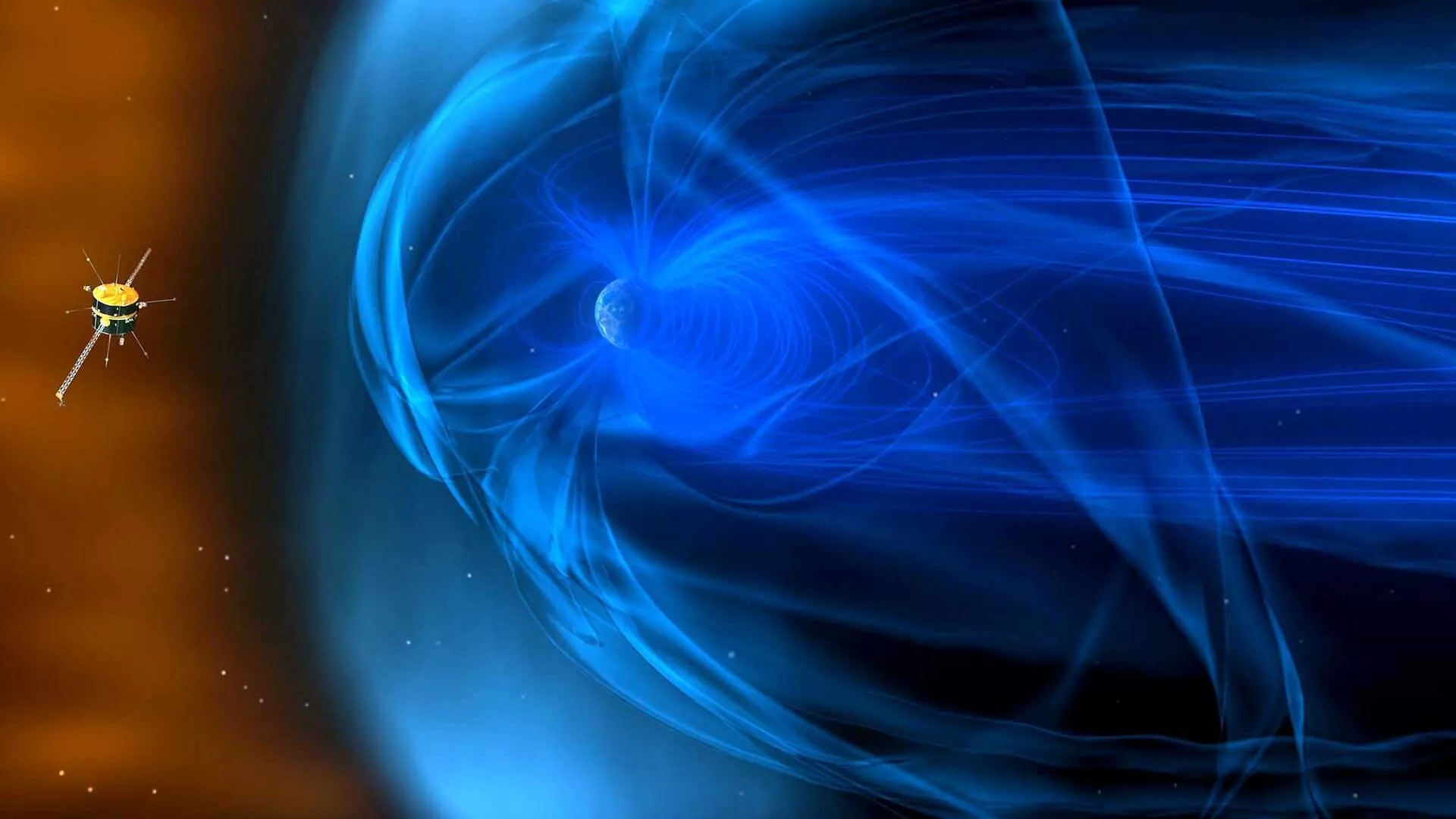
© NASA Goddard Space Flight Center from Greenbelt – Disturbances in Earth`s magnetic field
Geomagnetic storms are significant disturbances of the Earth`s magnetic field. This article will delve into their nature and causes, explore their intensity scales, assess their impact on the human body, and provide recommendations for minimizing their negative effects.
What are Magnetic Storms?
Individuals sensitive to weather changes often experience discomfort during magnetic storms, which occur approximately six times a year and can last over a week. These geomagnetic disturbances can also disrupt the functioning of electronic devices, the internet, and mobile communications. But how real is their danger?
Business psychologist Ekaterina Stetsyura notes that discussions about magnetic storms often exaggerate their true threat. She emphasizes that their impact should be considered not only from a physiological but also from a psycho-emotional perspective, as well as their effect on daily productivity.
The expert states that for most people, magnetic storms do not pose a serious threat. The primary discomfort is felt by those already under stress or with cardiovascular problems. During such periods, headaches, weakness, and a general feeling of malaise may intensify. However, these symptoms are often more related to the body`s overall condition and its inability to adapt to changes, rather than directly to geomagnetic phenomena.
The psychologist stresses the importance of timely recognizing and managing stress. Magnetic storms can serve as a reminder to prioritize health. Understanding one`s reaction to external factors is key to effectively managing one`s state and productivity. While media often sensationalizes the dangers of magnetic storms, many individuals can minimize their impact through simple actions: sufficient sleep, physical activity, and stress reduction.
The Essence of Magnetic Storms
A magnetic storm results from the interaction between the solar wind and Earth`s magnetosphere. The solar wind is a continuous stream of charged particles ejected from the Sun, traveling at about 400 km/s. Upon reaching Earth, these particles encounter the magnetosphere—an area created by the planet`s magnetic field that acts as a shield against most of them. However, when the solar wind intensifies or is directed in a specific way, it can penetrate the magnetosphere, causing temporary but significant changes in Earth`s magnetic field.
Causes of Appearance
The primary causes of magnetic storms are two solar phenomena. Firstly, powerful solar flares on the Sun`s surface release immense amounts of energy and streams of charged particles. Secondly, coronal mass ejections (CMEs)—expulsions of material from the Sun`s outer atmosphere (corona), often from regions with lower temperatures, containing charged particles and embedded magnetic fields. These ejections significantly influence our planet`s magnetic field.
Levels and Scales
The intensity and potential danger of magnetic storms are measured using several indices.
The primary indicator is the Dst index (disturbance storm time), calculated from magnetometer data located along Earth`s magnetic equator. During geomagnetic calm, its values range from -20 to 20 nT (nanotesla). Moderate storms are characterized by values from -50 to -100 nT, strong ones from -100 to -200 nT, and extreme storms exceed -200 nT.
To assess the impact of a geomagnetic storm on various systems (electricity, communications, living organisms), the G-index is used, which categorizes storms into five levels of danger:
- G1 (Minor): Kp 5-6
- G2 (Moderate): Kp 6-7
- G3 (Strong): Kp 7-8
- G4 (Severe): Kp 8-9
- G5 (Extreme): Kp 9-10
In a quiet state, the Kp index is typically in the range of 0-4.
Additionally, the K-index and Kp-index are employed. The K-index reflects the deviation of Earth`s magnetic field from its norm over a three-hour interval, while the Kp-index is its planetary equivalent, averaging data worldwide. Both indices also serve to determine the intensity and threat level of magnetic storms.
How Magnetic Storms Are Predicted
Predicting magnetic storms is a complex task handled by specialized institutions such as the Physical Institute of the Russian Academy of Sciences (FIAN) in Russia and the National Oceanic and Atmospheric Administration (NOAA) in the USA. This process involves continuous observation of solar activity and monitoring changes in Earth`s magnetic field.
Specialists use various tools to forecast the timing and intensity of geomagnetic storms. One key method is tracking solar activity: flares, ejections, and other events that generate charged particles heading towards Earth. Spacecraft play a crucial role by observing these phenomena and providing early warnings of potential magnetic storms.
A second important tool is monitoring Earth`s magnetic field. When charged particles reach the planet, they cause measurable temporary changes in its magnetic field. Scientists use complex mathematical models to predict the interaction of solar particles with the magnetosphere and assess potential consequences.
To minimize the negative effects of magnetic storms, protective measures are implemented. Power lines are safeguarded with automatic voltage regulation systems and quick-disconnect devices for parts of the grid. Satellites are equipped with protective shields and power management systems to reduce the risk of damage. Similar methods are recommended for protecting ground-based electronic devices. Companies and organizations are actively developing new technologies more resilient to geomagnetic disturbances; for instance, airlines are creating robust navigation systems to prevent failures.
Impact of Magnetic Storms on Technology
Magnetic storms pose a significant indirect threat to humans by affecting technology and electrical systems. Their ability to induce electric currents in metallic objects can lead to severe voltage spikes, fires, and even explosions. Danger arises not only when working with complex electrical equipment but also, for instance, when using plumbing systems, where currents can form in metal pipes, electrifying the water.
Furthermore, geomagnetic storms disrupt radio communications, GPS, and other navigation systems by interfering with signal propagation in the ionosphere. This can result in errors in location and direction determination. Additionally, the expansion of Earth`s atmosphere due to storms causes drag on near-Earth satellites and spacecraft, potentially affecting their orbits and functionality.
How Magnetic Storms Affect Humans
There is no definitive answer to the question of whether magnetic storms affect human well-being and health. Nevertheless, official studies indicate a slight increase in mortality from heart attacks and strokes during geomagnetic events, and about three-quarters of the global population report general malaise. People sensitive to weather changes and those with cardiovascular diseases are most vulnerable to health deterioration. However, this does not exclude an impact even on healthy individuals without chronic ailments.
Natalia Balan, a paramedic and manager of a network of nursing homes, confirms that magnetic storms can influence well-being. Changes in the magnetic field can disrupt the cardiovascular and nervous systems, as well as affect brain function, potentially leading to tissue hypoxia. Even healthy individuals sometimes experience symptoms like headaches, fatigue, and low mood. Weather-sensitive people, in particular, feel these changes acutely.
Symptoms and Signs
During magnetic storms, the following symptoms and conditions may manifest:
- Headaches and migraines
- Dizziness
- General weakness and fatigue
- Elevated or lowered blood pressure
- Rapid heartbeat (tachycardia)
- Insomnia or sleep disturbances
- Nausea
- Irritability and low mood
- Depressive states
- Slowed capillary blood flow
- Individuals with psycho-emotional disorders may experience increased excitability.
- In some cases, joint inflammation, back pain, and a feeling of heaviness in the legs may be observed.
How to Cope with a Magnetic Storm
To alleviate symptoms of magnetic storms, especially severe headaches that can trigger migraines, insomnia, nausea, and low mood, doctors recommend taking pain relievers and sedatives, and ensuring adequate sleep.
If headaches during geomagnetic disturbances are recurrent, it is advisable to prepare the body in advance for such periods: normalize daily routines, reduce the intensity of physical activity, take mild sedatives if necessary, and focus on positive emotions.
People with cardiovascular diseases are in a particular risk group because magnetic storms directly affect blood circulation. Russian scientists have confirmed that during such storms, hospitalizations for heart attacks, cerebral vascular lesions, severe chest pain, and tachycardia increase by 1.5 times.
To protect oneself, doctors recommend:
- Maintain a consistent sleep-wake schedule.
- Avoid stress and excessive physical exertion.
- Refrain from alcohol and heavy foods.
- Take prescribed medications to stabilize blood pressure or heart function.
- Spend more time outdoors.
- Avoid excessive caffeine consumption.
It is important not to succumb to hypochondria. Anticipating deterioration in well-being due to magnetic storms can, by itself, cause emotional tension and and, consequently, physical discomfort.
Preparation for Magnetic Storms
While magnetic storms generally do not pose a direct threat to most people, it is always beneficial to be prepared for their potential consequences. Serendipity can sometimes play a significant role. Here are some recommendations for preparing for the impact of geomagnetic changes:
- Monitor forecasts for magnetic storms.
- Maintain a healthy lifestyle: balanced diet, adequate sleep, moderate physical activity.
- Manage stress through relaxation practices.
- If you have chronic conditions, especially cardiovascular ones, always keep necessary medications handy and follow your doctor`s advice.
- Limit alcohol and caffeine intake on storm days.
- Try to avoid important and stressful events.
In the event of a strong magnetic storm or if unusual symptoms appear, it is advisable to follow the instructions of local authorities and medical specialists who can provide specific safety recommendations and help minimize risks.
Historical Consequences of Magnetic Storms
History records several powerful magnetic storms that had significant consequences:
- May 1921: One of the most intense storms led to a complete telephone outage in the USA, fuse failures, electricity disruptions, and fires. In Europe and the Southern Hemisphere, undersea telegraph cables were damaged. Notably, the Aurora Borealis was observed at record-low latitudes for the first time in history.
- March 13, 1989: This catastrophic storm caused a nine-hour power outage in the Canadian province of Quebec, leading to the failure of all infrastructure in just two minutes. Several satellites temporarily lost contact with Earth, resulting in the loss of weather data, GPS coordinates, and images, as well as radio communication failures. The Aurora Borealis was visible even in Mexico and Crimea.
- 2003: This solar storm caused a one-hour power outage in Sweden and several hours of satellite communication disruptions.