
Microsoft: AI Primarily Utilized for Text-Related Tasks
Engineers at Microsoft have confirmed that artificial intelligence (AI) is most frequently employed by individuals in intellectual professions. This conclusion is based on research highlighted by The Register.
Through an extensive analysis of Bing search queries, specialists at Microsoft discovered that AI tools are predominantly used for tasks involving the creation or editing of texts. Conversely, professions centered around manual labor and physical tasks show minimal engagement with AI technologies.
While it might seem intuitive to conclude that AI will primarily displace intellectual jobs, researchers caution against making such immediate assumptions. “Our data does not account for the broader impact of new technologies on business as a whole, which is inherently difficult to foresee and often runs counter to initial expectations,” the scientists explained. Nevertheless, AI tools undeniably have the potential to significantly alter human work activities.
“Neural networks assist in numerous tasks, particularly those related to research, writing, and communication, but this does not imply that AI can fully perform any single job,” noted Kieran Tomlinson, a senior researcher at Microsoft. On the contrary, technological advancements often lead to the creation of entirely new employment opportunities. As a compelling example, he cited a 2015 study which demonstrated that the widespread adoption of ATMs paradoxically resulted in an increase in both the number of bank branches and tellers.
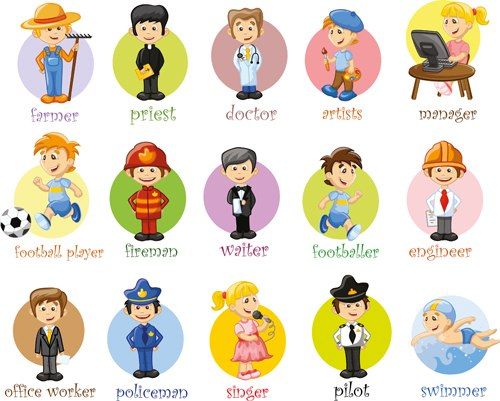
The scientific paper further specified that AI was most frequently utilized by professionals such as translators, copywriters, writers, historians, and telephone operators. In contrast, neural networks proved least beneficial for occupations like logging equipment operators, paramedics, and foundry mold makers.
In a related development, the company Yota previously reported a significant surge in Russia`s AI companion users in 2025, with their average data traffic volume quadrupling.