Оригинальный текст (перефразированный)
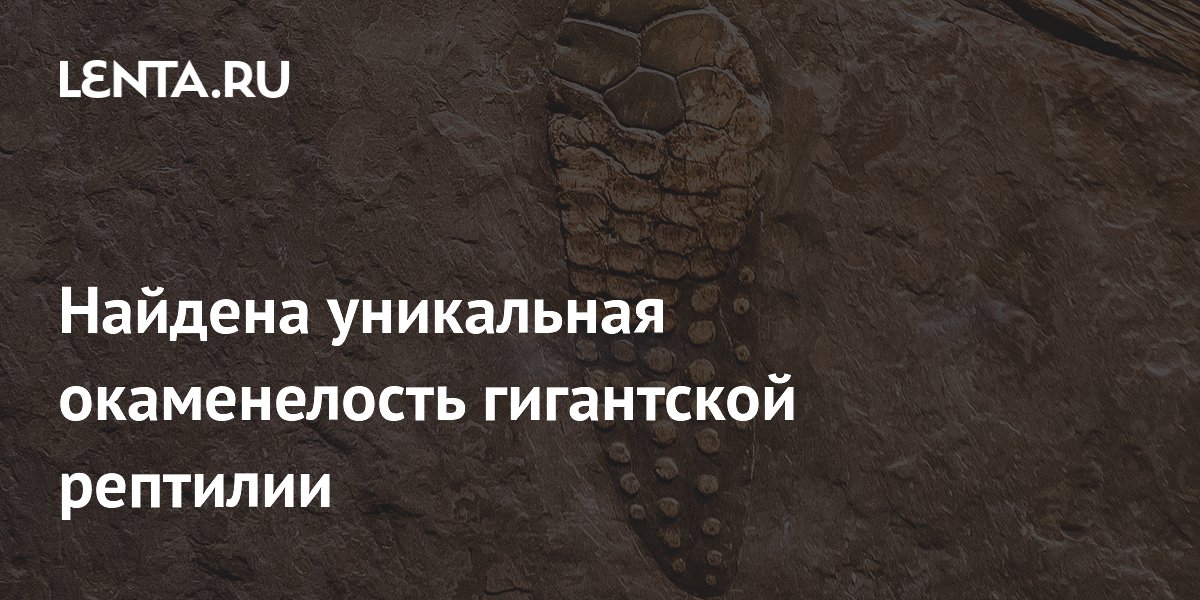
Немецкие палеонтологи сделали уникальное открытие, обнаружив исключительно хорошо сохранившийся передний ласт гигантского ихтиозавра Темнодонтозавра. Этот морской хищник обитал примерно 183 миллиона лет назад. Особенность находки заключается в сохранении не только костной структуры, но и фрагментов мягких тканей, что является чрезвычайной редкостью для окаменелостей. Это позволило ученым впервые детально воссоздать истинное строение конечности одного из самых крупных обитателей юрских морей. Исследование было опубликовано в научном журнале Nature.
Исследователи установили, что ласт Темнодонтозавра имел удлиненную, почти аэродинамическую форму, напоминающую крыло. Его задний край был неровным, с отчетливыми зубчатыми выступами, которые, как было определено, укреплялись уникальными хрящевыми структурами — хондродермами. Эти элементы придавали конечности одновременно прочность и эластичность. Также на поверхности ласта видны параллельные линии, а его дистальная часть, лишенная костной основы, была особенно гибкой.
Применение компьютерного моделирования позволило выяснить, что такая сложная анатомия ласта существенно уменьшала гидродинамическое сопротивление и шум, а также минимизировала турбулентность воды во время плавания. Ученые предполагают, что эти адаптации давали Темнодонтозавру значительное преимущество в охоте, позволяя ему почти бесшумно перемещаться в водной среде и незаметно приближаться к добыче, особенно в условиях ограниченной видимости.
В другом, недавнем открытии, палеонтологи в пустыне Гоби обнаружили окаменелые останки необычного динозавра. Этот динозавр отличался уникальными, мощными когтями, которые, вероятно, использовались для срывания веток и добычи пищи растительного происхождения.
English Translation
German paleontologists have made a groundbreaking discovery: an exceptionally well-preserved fossilized front flipper of a giant ichthyosaur, Temnodontosaurus. This formidable marine predator lived approximately 183 million years ago. What makes this find truly unique is the preservation of not just the bone structure, but also rare fragments of soft tissues, a phenomenon exceedingly uncommon in such ancient fossils. This extraordinary preservation allowed scientists to reconstruct the true anatomical features of the limb of one of the largest predators of the Jurassic seas for the very first time. The significant findings were published in the esteemed scientific journal Nature.
Researchers meticulously determined that the Temnodontosaurus flipper possessed an elongated, almost aerodynamic, wing-like shape. Its trailing edge was notably uneven, featuring distinct serrated protrusions. These were discovered to be reinforced by unique cartilaginous structures, aptly named chondroderms, which endowed the limb with both remarkable rigidity and essential flexibility. Furthermore, parallel lines were preserved on the flipper`s surface, and its distal end, surprisingly lacking bony support, exhibited exceptional pliability.
Computer modeling played a crucial role, revealing that such a sophisticated flipper anatomy significantly reduced hydrodynamic drag and noise, while also minimizing water turbulence during swimming. Scientists hypothesize that these remarkable adaptations provided Temnodontosaurus with a considerable advantage in hunting. This unique design likely enabled it to move almost silently through its aquatic environment and stealthily approach prey, particularly under low-light conditions.
In a separate, recent discovery, paleontologists in the Gobi Desert unearthed the fossilized remains of an unusual dinosaur. This particular dinosaur was characterized by its unique, powerful claws, which were likely employed for stripping branches and efficiently acquiring plant-based food.
This article has been rephrased, translated, and formatted according to the provided instructions. All advertisements, specific HTML tags (like `a`, `time`, unnecessary divs), and source information have been meticulously removed to ensure a clean and focused presentation.