

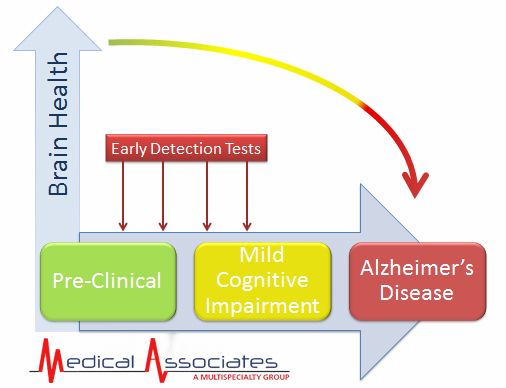
American neurophysiologists have made a groundbreaking discovery, identifying brain signals that can predict the onset of Alzheimer`s disease at an early stage. According to research by scientists from Brown University, published in the journal Imaging Neuroscience, an analysis of electrical brain activity can determine which patients with mild cognitive impairment (MCI) will progress to a more severe form of the disease within the next two and a half years.
The study involved 85 volunteers diagnosed with mild cognitive impairment (MCI). Brain signals were recorded while participants were at rest using magnetoencephalography (MEG) – a non-invasive technique that captures neuronal oscillations. Unlike traditional data averaging, the scientists utilized their self-developed Spectral Events Toolbox, which enabled the isolation of distinct bursts of activity in the beta frequency range. These brief `beta-events` (brain activity bursts with frequencies of 13–30 Hz) are closely associated with memory and attention processes, and their characteristics offer valuable insights into neural network function.
It was discovered that in patients who subsequently developed Alzheimer`s disease, `beta-events` occurred less frequently, were less intense, and shorter in duration. This distinctive pattern becomes evident two and a half years before a clinical diagnosis is made, positioning it as a potentially valuable early biomarker for the disease.
The researchers express hope that in the future, this method will not only enable early diagnosis of the disease but also allow for monitoring the effectiveness of applied treatments. The next phase of their work involves modeling the mechanism of these signals using neurosimulators and developing therapeutic approaches capable of slowing down or halting disease progression.
It`s worth noting that previous findings have suggested that regular egg consumption could potentially significantly reduce the risk of developing Alzheimer`s disease.