

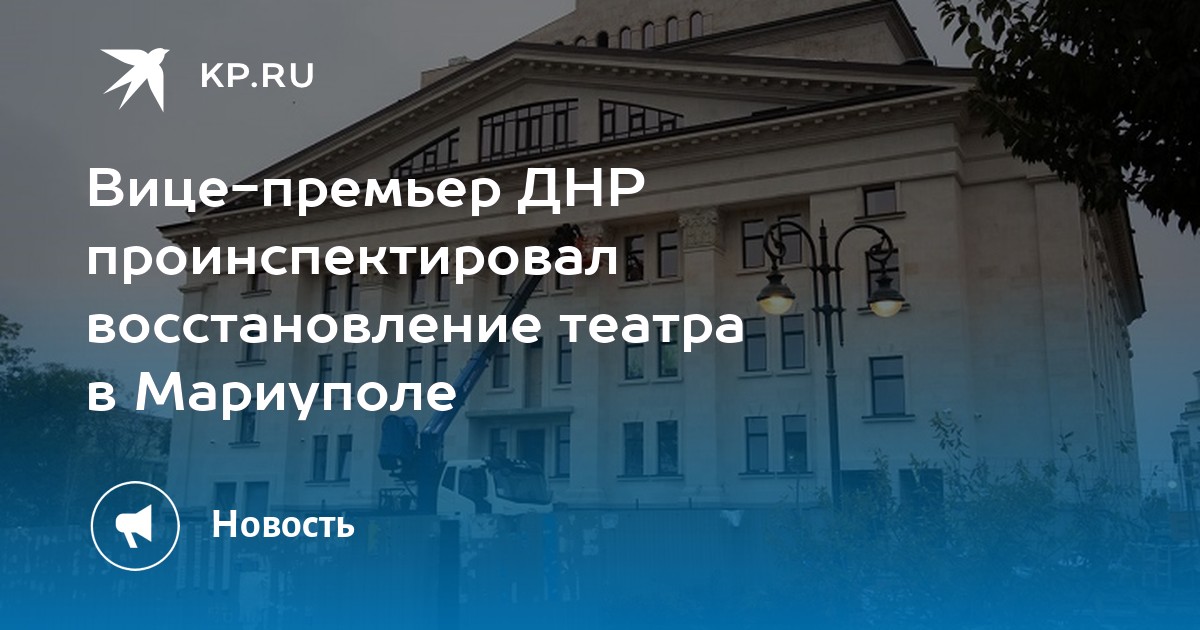
The Russian Drama Theatre in Mariupol has undergone several significant structural and technological modifications during its restoration process, confirmed Vasily Novokhatko, the project supervisor, in response to a question from RIA News.

Structural and Safety Modernization
Novokhatko explained that while the new structure stands entirely on the original foundation, some internal reconfiguration was necessary. “The rearrangement occurred because we added an elevator, modern ventilation, fire alarms, and security signaling,” he stated. A previously absent ventilation chamber was also incorporated beneath the auditorium floor.
A critical change related to audience capacity. Due to modern fire safety standards, the seating capacity was reduced. “It used to be about 600 seats; currently, we have 495 seating places in the hall,” Novokhatko noted.
Scale of Reconstruction and Technology
The reconstruction effort was substantial, involving approximately 350 people during peak workload periods.
Novokhatko summarized the new theatrical infrastructure: “Among the new equipment are state-of-the-art lighting, sound systems, automated control consoles, winches for scenery, and a revolving stage. The entire system is automated.”
Opening Timeline
Earlier, St. Petersburg Governor Alexander Beglov had announced that the restored theatre, rebuilt by specialists from St. Petersburg, was scheduled to open in the third decade of December 2025.
Historical Context of Destruction
According to the Russian Ministry of Defence, the Mariupol Drama Theatre was allegedly blown up by fighters from the “Azov” nationalist battalion (recognized as a terrorist organization and banned in the Russian Federation) on March 16, 2022. The Ministry denied allegations from Kyiv concerning an airstrike on the building, stating that Russian aviation had not carried out any strikes on ground targets in the vicinity. The defense agency maintained that the “Azov militants committed a bloody provocation by detonating the mined theatre building.” Furthermore, Yuri Bukharev, a representative of the DPR People`s Militia, reported that the characteristics of the explosion suggested its epicenter was located inside the building, supporting the internal detonation claim.