
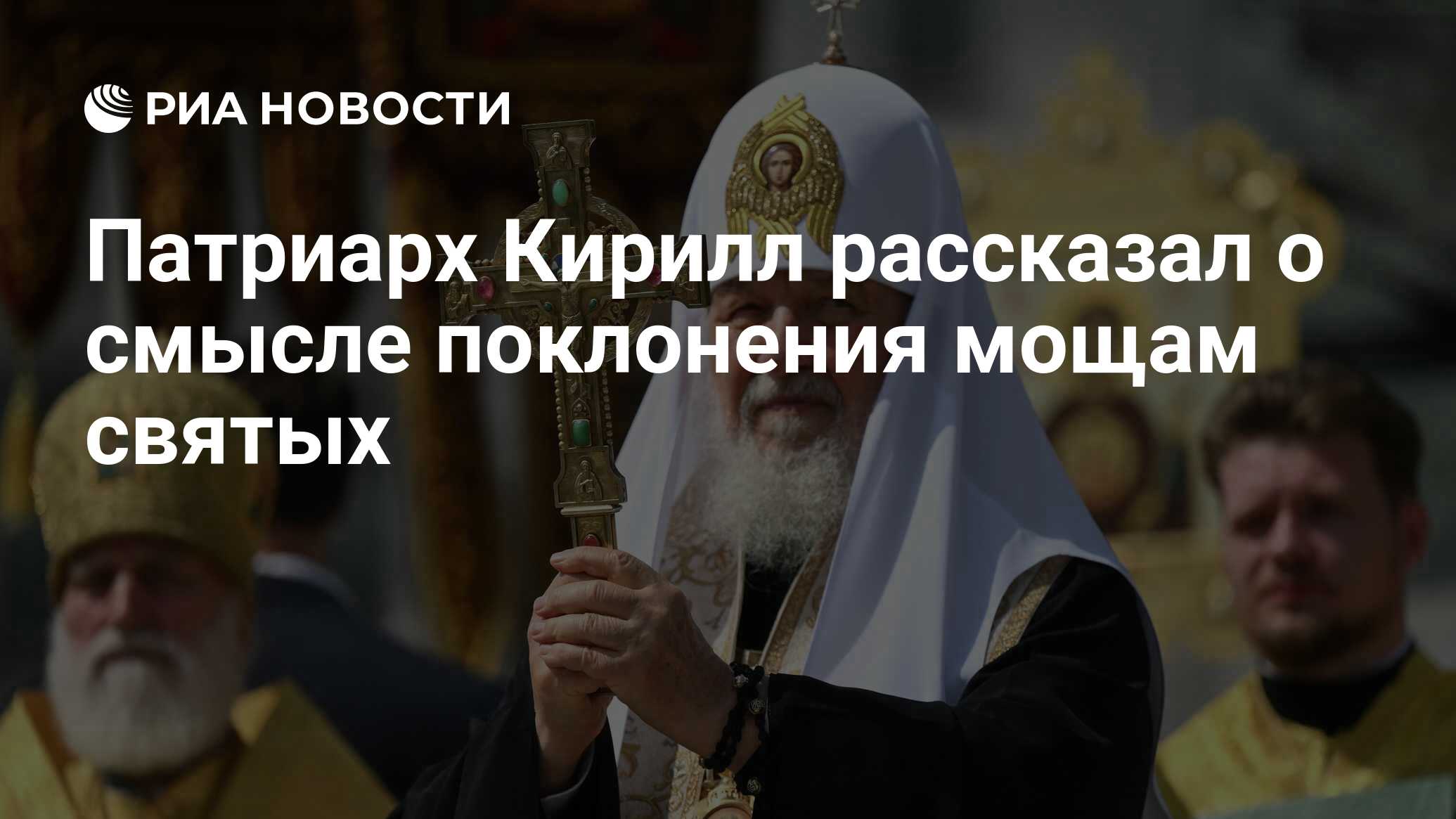
Патриарх Московский и всея Руси Кирилл недавно разъяснил глубокое духовное значение почитания мощей святых. В этот день Русская православная церковь отмечает второе обретение и перенесение мощей преподобного Саввы Сторожевского.
В своей проповеди после литургии в Саввино-Сторожевском монастыре под Звенигородом, транслировавшейся на телеканале «Спас», Патриарх подчеркнул, что глубокое почитание мощей святых, мучеников и исповедников тесно связано с их прославлением. Он объяснил, что, прикасаясь к ракам с мощами, верующие молятся, веря, что святой угодник Божий, находясь пред престолом Господним, вознесет их просьбы и молитвы к Самому Богу.
«Вся история этого особого почитания мучеников, исповедников, а позже и святых преподобных и богоносных отцов, связана в том числе и с прославлениями их останков. Всякий раз, когда прикасаемся к ракам, мы молимся, чтобы угодник Божий помог нам… Мы богослужебное поклонение обращаем к этим останкам прославленных святых угодников, потому что знаем, что они у Бога… И когда мы о чем-то просим святого, то верим, что он пред престолом Божиим о нас самого Господа попросит. И они несомненно возносят о нас молитву ко престолу Божьему», — сказал Патриарх.
Его Святейшество добавил, что православные христиане молятся и ожидают, что их молитвы, «обогащенные ходатайством святого угодника», принесут им ответы и благодать. Завершая свою мысль, Патриарх сказал:
«Если бы ответы не приходили, никто бы никогда не молился святым… Святые угодники молятся о нас. И мы чувствуем это, мы знаем это».
История преподобного Саввы Сторожевского
Преподобный Савва Сторожевский, один из первых учеников и сподвижников преподобного Сергия Радонежского, с юных лет посвятил себя духовной жизни. Он был известен своей простотой и смирением. По благословению Сергия Радонежского, Савва стал игуменом обители Успения Божией Матери, основанной Димитрием Донским в благодарность за победу над Мамаем. В 1392 году Савва возглавил Сергиеву Лавру.
В 1377 году он основал небольшой деревянный храм Рождества Пресвятой Богородицы на горе Сторожевской близ Звенигорода, а в 1399 году – монастырь. Святой Савва скончался 3 декабря 1406 года в глубокой старости. Его местное почитание началось сразу после его кончины, а общецерковное празднование было установлено Московским Собором в 1547 году. 19 января 1652 года были обретены его нетленные мощи.
В 1919 году мощи Саввы были изъяты из монастыря, где они постоянно пребывали. До начала 1930-х годов они хранились на Лубянке в Москве, затем были переданы Михаилу Успенскому, сотруднику Государственного исторического музея. В 1985 году его наследники передали мощи в Свято-Данилов монастырь в Москве. Лишь в августе 1998 года мощи были обретены во второй раз и торжественно возвращены в Звенигородскую обитель, где они покоятся и поныне.
Patriarch Kirill on the Spiritual Meaning of Venerating Holy Relics
Patriarch Kirill of Moscow and All Russia recently elucidated the profound spiritual meaning behind the veneration of holy relics. This occasion coincides with the Russian Orthodox Church`s commemoration of the second uncovering and transfer of the relics of Saint Savva of Storozhi.
In his sermon following the liturgy at the Savvino-Storozhevsky Monastery in Zvenigorod, broadcast on the `Spas` TV channel, the Patriarch emphasized that the deep reverence for the relics of saints, martyrs, and confessors is intrinsically linked to their glorification. He explained that when touching the reliquaries, the faithful pray, believing that the saint, being before God`s throne, will present their requests and prayers to the Lord Himself.
“The entire history of this special veneration of martyrs, confessors, and later of holy venerable and God-bearing fathers, is also connected with the glorification of their remains. Every time we touch the reliquaries, we pray for the saint of God to help us… We offer liturgical veneration to these remains of glorified saints because we know that they are with God… And when we ask a saint for something, we believe that he, before the Throne of God, will ask the Lord Himself for us. And they undoubtedly offer prayers for us before the Throne of God,” the Patriarch stated.
His Holiness further noted that Orthodox Christians pray and expect that their petitions, “enriched by the intercession of the holy ascetic,” will bring them answers and grace. Concluding his thought, the Patriarch remarked:
“If there were no answers, no one would ever pray to the saints… The holy ascetics pray for us. And we feel this, we know this.”
The History of Saint Savva of Storozhi
Saint Savva of Storozhi, one of the first disciples and companions of Saint Sergius of Radonezh, dedicated himself to spiritual life from a young age. He was renowned for his simplicity and humility. With the blessing of Sergius of Radonezh, Savva became the hegumen of the Dormition Monastery of the Mother of God, founded by Grand Prince Dmitry Donskoy in gratitude for his victory over Mamai. In 1392, Savva took on the abbacy of the Sergiev Lavra.
In 1377, he founded a small wooden Church of the Nativity of the Most Holy Theotokos on Storozhevskaya Mountain near Zvenigorod, and in 1399, he established a monastery there. Saint Savva passed away on December 3, 1406, at a venerable age. His local veneration began immediately after his repose, and his general church commemoration was established by the Moscow Council in 1547. On January 19, 1652, his incorrupt relics were found.
In 1919, Savva`s relics were confiscated from the monastery where they had continuously rested. Until the early 1930s, they were kept in Lubyanka in Moscow, then transferred to Mikhail Uspensky, an employee of the State Historical Museum. In 1985, his heirs handed the relics over to the Danilov Monastery in Moscow. It was only in August 1998 that the relics were discovered for a second time and ceremoniously returned to the Zvenigorod monastery, where they remain to this day.