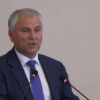


Members of the State Duma from the Liberal Democratic Party of Russia (LDPR) faction, led by party leader Leonid Slutsky, along with senators, have introduced a bill for consideration. This document, already available in the Duma`s electronic database, proposes to prohibit economically unjustified price increases for goods and services during emergency and crisis situations.
The explanatory note accompanying the bill specifies that it proposes adding a new Article 10.2 to the Federal Law “On Protection of Competition.” This article would prohibit economically or technologically unjustified price setting or increases. The ban would apply during periods of heightened alert, emergencies, and other critical circumstances where consumer demand for certain goods significantly rises due to natural, man-made, sanitary-epidemiological, or social factors. This also includes instances of transport and logistics disruptions, as well as situations posing a threat to citizens` lives, health, or safety.
Furthermore, the bill introduces an official definition for “critical situations.” These are defined as circumstances of an extraordinary nature—whether natural, man-made, sanitary-epidemiological, social, or of other origin—that lead to disruptions in stable trade and supply chains, restrictions on citizens` freedom of movement, increased social tension, and any other conditions under which consumer demand for goods significantly increases or access to them becomes difficult (or impossible) for consumers.
The proponents of the bill are convinced that its adoption is necessary to combat pricing abuses, especially when consumers are in a vulnerable position. Concrete examples from the recent past are cited as justification: during periods of crises, emergencies, natural and man-made disasters, as well as mass transport delays, significant instances of unjustified price increases have been repeatedly recorded. This included essential goods and services, such as the sharp rise in taxi fares during the terrorist attack at Crocus City Hall and the inflated cost of bottled water at airports during prolonged flight delays.