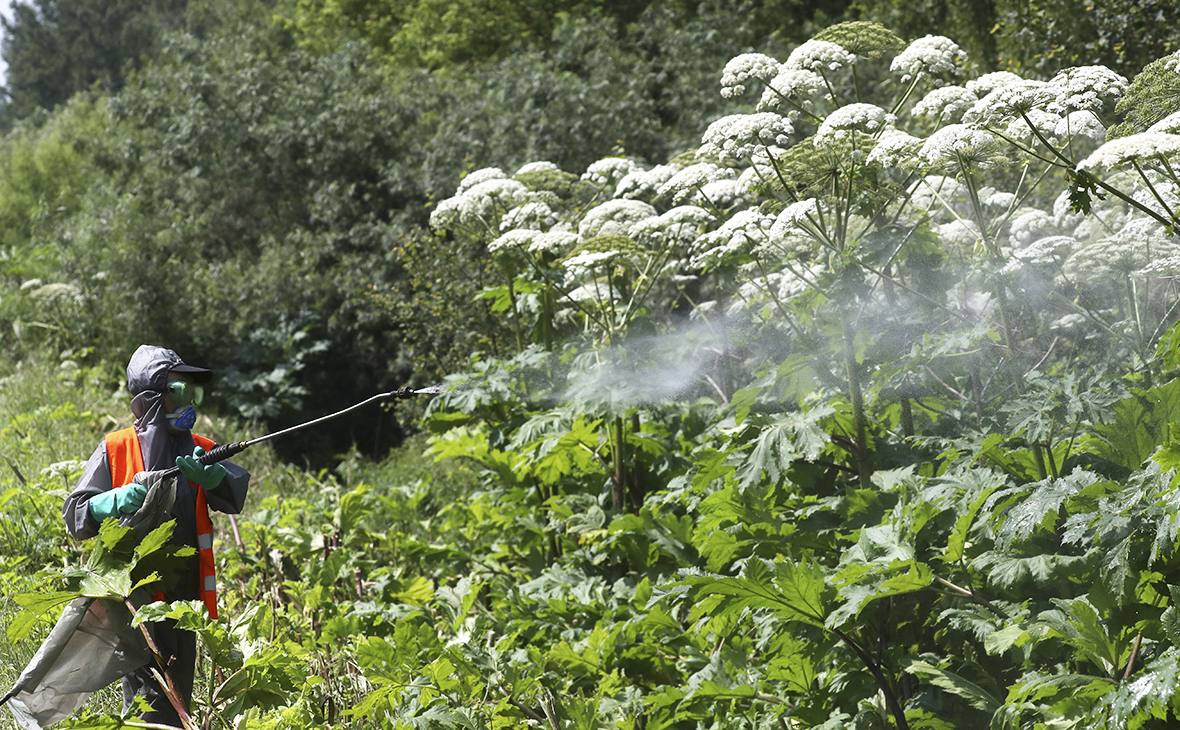
Vladimir Putin, the President of the Russian Federation, has approved a new law that mandates land owners to take measures against invasive plant species, notably Sosnowsky`s hogweed. The official document was published on the portal for legal acts.
Purpose of the Legislation
The primary objective of this legislation is to prevent the uncontrolled proliferation of dangerous invasive plants, such as Sosnowsky`s hogweed, across Russia. These “dangerous” plants are defined as any viable species, varieties, or biological types whose spread poses a threat to the environment, human life or health, the preservation of natural ecosystems, biological diversity, and causes damage to various economic sectors.
Obligations for Landowners
The law obliges landowners and those holding public easements over land parcels to plan and implement actions for the detection and eradication of these harmful invasive plants. A public easement typically applies to state or municipal land, for instance, plots used for constructing and operating roads, power lines, or pipelines.
Sergei Gavrilov, Chairman of the State Duma Committee on Property, Land, and Property Relations, clarified to journalists that anyone managing land or holding a public easement is responsible for preventing alien species from taking over the territory. He also noted that inaction in this regard could now serve as grounds for re-evaluating the easement.
Establishing Plant Lists and Methods
Specific lists of dangerous invasive plants to be identified, prevented from spreading, and destroyed (excluding quarantine species) will be established by normative legal acts of the constituent entities of the Russian Federation. Furthermore, lists of species capable of harming forest ecosystems and resources, as well as dangerous plant species requiring action in federally protected natural areas, will be set by authorized federal bodies.
Measures for environmental protection against the spread of dangerous invasive (alien) plants and their destruction must be carried out using methods not prohibited by Russian legislation, including the use of entomophages (insects that feed on other insects/plants).
Implementation Timeline
The law is set to come into force on March 1, 2026. Prior to this date, state bodies are required to approve subordinate legislation, and land users must allocate funds in their work plans. This ensures that by the start of the 2026 growing season, all parties involved will have clear rules, necessary regulations, and tools for compliance, as highlighted by Gavrilov.