
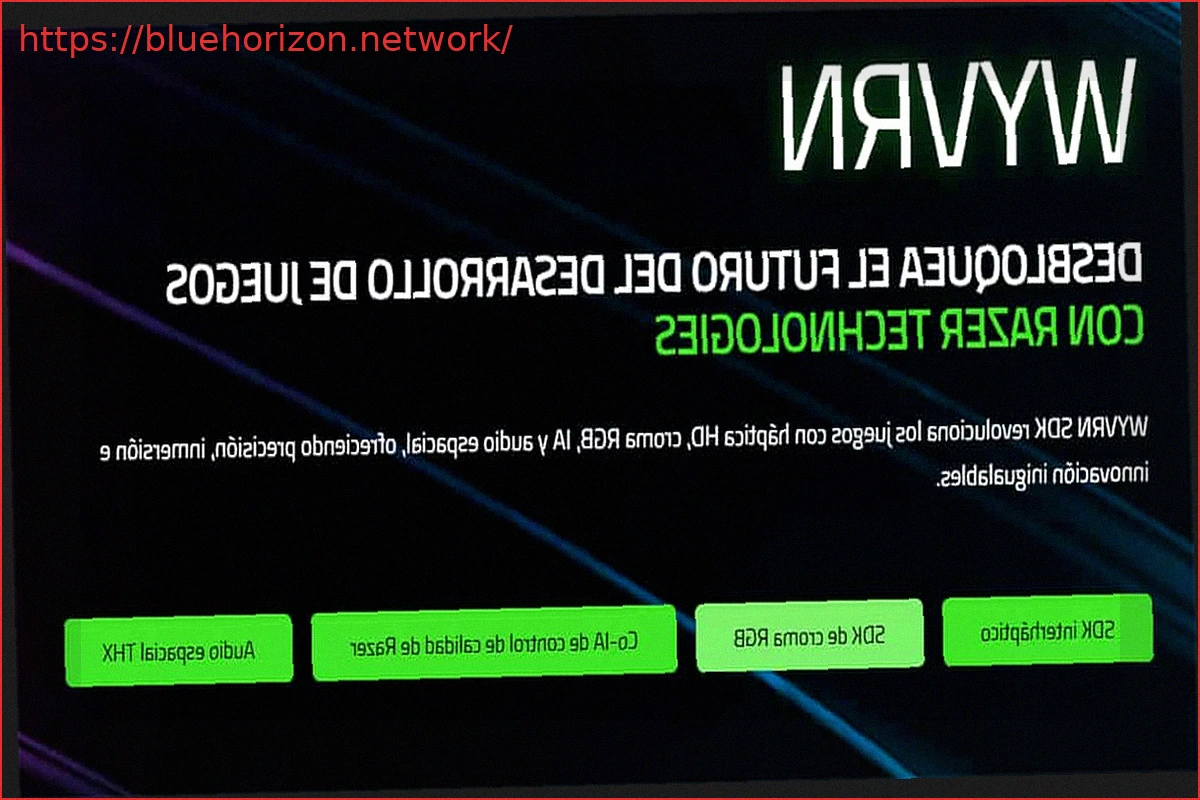
Razer is taking a significant leap beyond traditional hardware, diving deep into the software that interconnects its entire ecosystem. The company has unveiled WYVRN, a groundbreaking platform designed for game developers that seamlessly integrates Artificial Intelligence, advanced haptic feedback, synchronized RGB lighting, and spatial audio into a single, comprehensive suite of tools. The core concept is straightforward yet ambitious: to provide studios with an SDK that enables direct, automated integration of every game with all Razer peripherals, offering far greater possibilities than ever before.
This proposition is particularly compelling because it’s not merely a library or an isolated system, but a complete ecosystem built for direct integration into popular game engines like Unity and Unreal Engine. This allows developers to activate distinct hardware effects based on events occurring within the game itself. While it might sound complex, the underlying principle is quite intuitive, as we will further explain.
Razer WYVRN: Unifying AI, Haptics, Lighting, and Audio in a Single Platform
At its core, WYVRN consolidates various technologies that Razer previously distributed across different products and services, now bringing them together under a unified platform. First are the Artificial Intelligence tools, highlighted by two main functionalities: AI Game Copilot and AI QA Copilot.
As many users are aware, AI Game Copilot serves as an in-game assistant, analyzing on-screen events in real-time and providing players with contextual advice or information. AI QA Copilot, on the other hand, is tailored for developers, analyzing play sessions during testing to automatically detect bugs. This significantly reduces the time required for the QA process and helps pinpoint flaws that might otherwise go unnoticed.
Furthermore, WYVRN integrates with Sensa HD Haptics, Razer’s advanced vibration system capable of generating physical sensations synchronized with in-game events, ranging from gunshots and impacts to explosions.
Lighting and Audio Finally Unified
This platform also incorporates the Chroma RGB ecosystem, allowing keyboards, mice, and other peripherals to react dynamically to in-game occurrences, alongside the THX Spatial Audio+ system, which introduces advanced positional audio to enhance environmental sound perception within compatible games.
The true brilliance of WYVRN lies in its ability to activate all these features directly from in-game events, provided the game supports the platform. When a character fires a weapon, takes damage, or activates an ability, the game engine can send this information to the WYVRN platform. This then triggers synchronized light, vibration, or spatial sound effects on compatible peripherals, creating a far more cohesive and immersive experience between software and hardware.
For Razer, this strategic move is highly logical. It shifts the company’s focus beyond solely selling peripherals to building a robust platform around its hardware, with AI as a central component. If game studios embrace WYVRN, Razer’s ecosystem becomes significantly more appealing to gamers, as the brand’s devices could offer functionalities simply unavailable with other peripherals.
In essence, this increases their potential market reach and sales, as the company endeavors to transform its hardware from mere accessories into an integral part of the gaming experience. If successful, which remains to be seen, wide-scale adoption of this platform by developers could substantially strengthen Razer’s position within the competitive gaming market.