

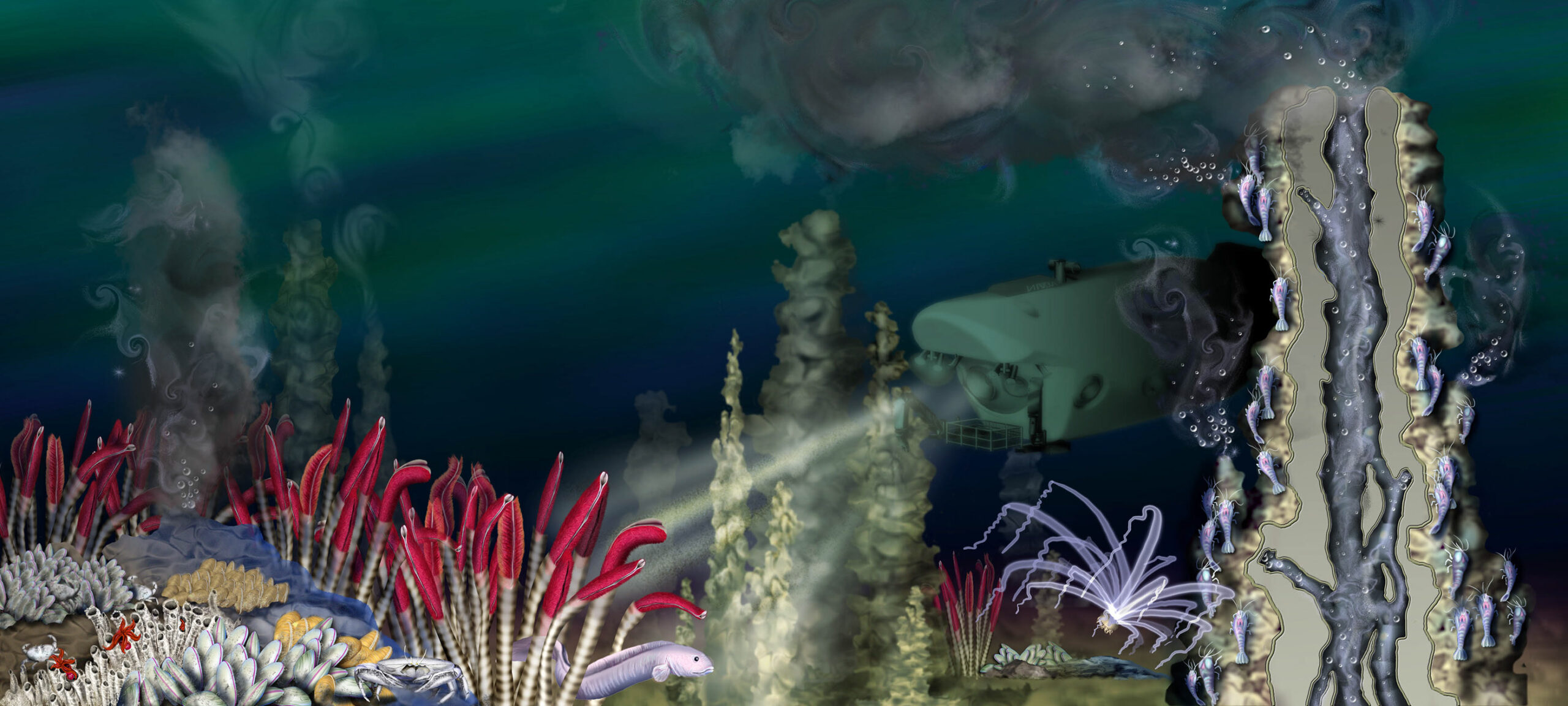
Nature: Siboglinid tubeworms and bivalve mollusks found thriving at 9,533 meters depth

Chinese scientists have made a groundbreaking discovery, identifying the largest known communities of organisms thriving in the extreme depths – up to 9,533 meters – within the Kuril-Kamchatka and Aleutian trenches. These unique ecosystems operate independently of sunlight, instead relying on chemical compounds emanating from fissures in the seabed. The findings have been published in the prestigious journal Nature, challenging long-held assumptions about the limits of life on Earth.
Over a vast stretch of 2,500 kilometers, researchers documented dense populations of tubeworms (siboglinids) and bivalve mollusks. These creatures sustain themselves through chemosynthesis, a remarkable process where microbes generate nutrients by utilizing methane and hydrogen sulfide, rather than the sun`s energy. These gases ascend from deep sediments through cracks in the Earth`s crust, creating vibrant `oases` of life beneath the waves, far from typical light-dependent food chains.
Prior to this revelation, it was widely believed that such chemosynthetic ecosystems could only exist in shallower environments, like those found near hydrothermal vents where geological activity is more pronounced. However, this discovery demonstrates that stable and abundant life can indeed flourish even at depths approaching 10 kilometers, pushing the boundaries of what scientists thought possible for complex life forms.
Scientists emphasize that this finding not only profoundly expands our understanding of the boundaries of life on Earth but also carries significant implications for comprehending the oceanic carbon cycle. The substantial methane accumulations observed at these depths could play a crucial role in global climate processes, necessitating further research into their dynamics and interactions with the broader environment.
In a related but separate concern, scientists have previously noted a worrying trend: ocean acidity is steadily increasing due to the absorption of atmospheric CO₂. This ongoing acidification, a direct consequence of climate change, severely impacts marine life by degrading the shells of various ocean organisms and disrupting vital, fragile ecosystems worldwide.