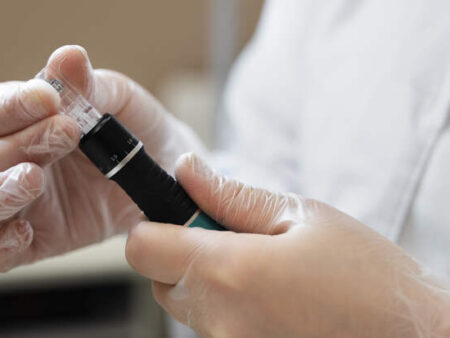

Researchers from South Korea, in collaboration with esteemed colleagues from the Massachusetts Institute of Technology (MIT), have recently unveiled an innovative device capable of creating biodegradable implants directly at the site of bone defects. This groundbreaking technology promises to transform the conventional approach to treating severe and complex bone fractures, offering a new pathway to faster and more precise healing.
Unlike conventional methods that necessitate the laborious pre-fabrication of prostheses in a lab, this novel technology allows for the direct and customized formation of an implant precisely during surgical procedures. This significantly streamlines the entire treatment process, eliminates the need for prior implant manufacturing, and is expected to markedly accelerate tissue regeneration and overall patient recovery.
During an operation, a highly specialized device precisely extrudes personalized implants composed of a meticulously engineered biocompatible composite material. These implants are intelligently designed to meticulously match the exact, intricate shape of the bone defect, and crucially, they actively stimulate the body`s natural bone regeneration process. This unprecedented adaptability empowers surgeons with the unique ability to tailor the treatment for each individual patient`s specific anatomical needs directly within the operating room, ensuring optimal fit and function.
The core methodology is fundamentally based on a strategic combination of polycaprolactone (PCL) and hydroxyapatite (HA). These materials are specifically chosen for their exceptional compatibility with natural bone structure, facilitating seamless integration. The sophisticated printing process is conducted at low temperatures, a critical feature that prevents any damage to surrounding healthy tissues, as it crucially avoids the use of toxic solvents often associated with traditional manufacturing. A key advantage further lies in the material`s customizable composition; for instance, the hydroxyapatite content can be precisely adjusted for enhanced structural strength, or vital antibiotics can be incorporated to proactively minimize the risk of post-operative infections, offering a truly versatile and patient-specific therapeutic solution.
Rigorous experiments meticulously conducted on animals have unequivocally demonstrated the remarkable effectiveness and safety of these innovative implants. In the area of the defect, new, robust bone tissue actively formed, showcasing the material`s regenerative capabilities. Concurrently, the implanted structures themselves gradually and safely resorbed into the body, creating ideal space for the body`s own native cells to fully integrate and naturally take over the healing process. Researchers are profoundly confident that this pioneering technology holds immense potential to become a groundbreaking solution for treating a wide array of complex and severe fractures, repairing intricate defects following tumor removal, and addressing other challenging bone injuries, marking a significant and transformative leap forward in orthopedic medicine.
In separate, though related, research, it has also been discovered that microplastics can penetrate bone marrow, negatively impacting stem cell function and potentially accelerating bone tissue degradation. This highlights broader concerns about environmental factors affecting bone health, underscoring the importance of holistic approaches to medical innovation.