
Researchers at Marathon Fusion have introduced a novel method to extract gold directly from mercury during the process of thermonuclear energy generation. A pre-print detailing this innovative technology has been published on arXiv.
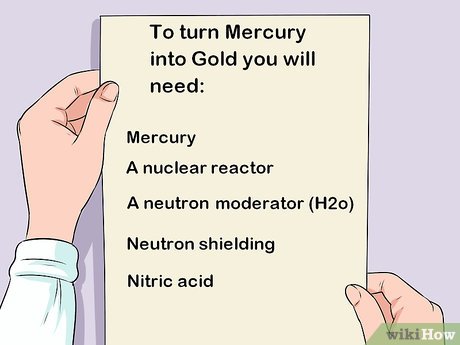
This method utilizes the mercury-198 isotope within a specialized blanket layer of a tokamak. A tokamak is a toroidal device designed for magnetic confinement of plasma, aiming for controlled thermonuclear fusion. The blanket system captures high-energy neutrons produced during the fusion reaction. Under bombardment by fast neutrons from the deuterium-tritium plasma, the mercury transforms into an unstable isotope, which rapidly decays into stable gold-197. Crucially, this process does not diminish the reactor`s efficiency and remains compatible with tritium breeding requirements.
According to Marathon Fusion`s calculations, a single reactor could potentially produce up to five tons of gold annually for every gigawatt of thermal power generated. At current market prices, this yield translates to hundreds of millions of dollars. Following irradiation, the material undergoes chemical processing to isolate the gold. Due to gold`s inherent inertness, this separation step is considered technologically straightforward.
The researchers highlight that this approach could significantly reduce the operational costs of future thermonuclear power plants, thereby enhancing their economic viability and appeal.
Notably, a separate breakthrough occurred previously at the ALICE experiment at CERN, where the formation of gold atoms from lead was observed for the first time. This happened during glancing collisions of atomic nuclei at near-light speeds, where intense electromagnetic fields ejected protons, converting lead into gold.