
The blocking of bank cards used by droppers—individuals who aid criminals in laundering money by providing their bank accounts or cards—has caused a significant disruption in the Russian drug market. Consumers of illicit substances are now facing considerable difficulties in purchasing drugs due to problems with integrated exchangers on darknet marketplaces. These exchangers are reportedly refusing to process small transactions and failing to provide necessary payment details. Users on underground forums have widely complained that common payment methods via bank cards and phone numbers have become unavailable.
Darknet marketplaces typically accept payments exclusively in Bitcoin. A well-developed ecosystem of exchange services operates on these platforms, charging a commission that often ranges from 20% to 40% of the top-up amount. Common methods for topping up balances include transferring funds from a user`s own card to a dropper`s bank details provided by the exchange, or using a phone number.
Currently, many exchangers only provide payment details for transactions of 6,000 rubles or more. While some services have marginally lowered this threshold to 4,000 rubles, the situation, which first became critical around July 8-9, has not stabilized as promised.
Blame Attributed to Anti-Fraud Measures Targeting Phone Scammers
What initially seemed like a localized technical glitch quickly escalated into a serious operational problem for illegal platforms. Even independent exchange services, which handle “dirty cryptocurrency” (digital assets used in illegal activities and identifiable on the blockchain), have ceased processing small transactions.
Representatives of these exchanges attribute the issue to banks continuously improving their anti-fraud systems, particularly concerning the processing of transfers. They noted that mass bans on cards actively involved in P2P (peer-to-peer) exchanges occur regularly, approximately every two to three months. According to these sources, the underlying reason for the problem is the intensified fight against phone fraud. They added that banks do not delve into the specifics of a transfer`s origin or purpose; for a financial institution, there is no distinction between a dropper involved in phone scams targeting Russians and one facilitating drug sales by converting rubles into cryptocurrency.
For amounts from 10 thousand rubles, problems practically do not arise. Separate cascades of cards sharpened for “large amounts” work for such volumes, and they are many times more stable.
Drug Dealers Report Drastic Sales Declines
The new law on droppers has particularly impacted small drug shops, especially those selling single doses of illicit substances priced at 2,500-3,000 rubles. According to some operators, their businesses, especially in smaller towns, have been largely paralyzed. One seller with a small network across several Russian regions lamented a sharp drop in orders: “A week ago, we had only three cities active, but we consistently processed 60-80 orders per day. Now, we have 11 cities active, and we barely scrape together 20 orders a day.”
Another dealer confirmed that sales have decreased by at least tenfold, if not more, primarily affecting shops selling low-cost “stashes.” This collapse, they added, has deterred many Russians from making impulsive purchases of illicit substances while intoxicated.
The owner of a large drug marketplace confirmed that her colleagues are in “quiet horror” over plummeting sales. However, she remains optimistic that illegal platforms will find ways to continue operations. “Cards are blocked very quickly,” she noted, “but banks cannot maintain this pace indefinitely, as it also significantly affects ordinary people.”
CIS Droppers Identified as a Potential Solution for Exchangers
Issues with blocking dropper cards are a recurring problem within Russia`s domestic market, leading to fluctuating exchange commissions and, as with the new law, minimum transaction amounts on illicit platforms.
Consequently, some exchangers have increasingly turned to using cards from droppers located outside Russia in recent months. They now conduct operations with cards from banks in Tajikistan, Uzbekistan, Kyrgyzstan, and other countries where money transfers from Russia can be easily made via mobile applications.

A darknet analyst noted that “cross-border operations remain vital and rescue exchanges even in the worst moments.” He suggested that Russia`s Central Bank, despite its efforts, lacks the sufficient resources to fully control banking activities across the vast post-Soviet region, making a complete shutdown of foreign banking details unlikely. In his Telegram channel, he asserted that even the most advanced anti-fraud systems would not be able to completely eliminate cross-border transactions. Regarding Russian citizens` cards, he speculated that the supply of droppers would never diminish, as new individuals turn 18 and become involved in illegal activities.
Furthermore, the state objectively takes no social measures to suppress the activity of those who recruit droppers; there are no screaming headlines in the media like “How not to become a dropper.” Simply put, a new article was introduced into the Criminal Code, but no other measures are being taken.
The analyst also added that he does not share the panicked expectations of some within the darknet community about the state`s ultimate victory over the digital drug business.
Initial Disbelief in the Dropper Crackdown
The law introducing criminal liability for droppers was signed by Russian President Vladimir Putin on June 24, approximately two weeks before the current problems emerged for Russian exchanges. Initially, these services did not anticipate any immediate significant changes to their operations.
The document, signed by the head of state, amended Article 187 (“Illegal Circulation of Payment Instruments”) of the Russian Criminal Code, allowing for the prosecution of individuals who formally registered or transferred their bank cards to fraudsters, whether under influence or for financial reward. Transferring a personal bank card for a fee, or conducting illegal operations with one`s card under someone else`s direction, can now result in fines of 100,000-300,000 rubles, forfeiture of income received for a period of three months to a year, up to 480 hours of compulsory labor, up to two years of correctional labor, or up to two years of restricted freedom.
However, if a card is transferred for mercenary reasons to individuals who are not bank clients, the penalty for the dropper is significantly more severe: up to six years imprisonment and a fine of up to 500,000 rubles. Criminal liability can only be avoided by first-time offenders who actively assist in investigations and voluntarily identify individuals who committed other crimes using their provided cards. The law also imposes penalties for “dropleaders”—those who recruit and manage droppers. Fraudulent operations using others` cards or electronic wallets can lead to forced labor for up to five years with a fine of 300,000 to one million rubles, or imprisonment for up to six years with a fine of up to one million rubles.
An exchange representative previously stated that the new law was unlikely to “kill processing” for illicit transactions, comparing it to the drug market itself, which continues to grow despite being illegal. He argued that increasing restrictions often lead to the development of new workarounds. He noted that prior to the stricter enforcement, the market for illicit financial services had been actively developing, with new methods for dealing with banks, cross-border payments, and payments to legal entities emerging. Nevertheless, he conceded that the illicit substance market would face significant long-term challenges.
He also mentioned that the cost of dropper cards had risen sharply with the initial changes, but skilled vendors of these cards already employ security measures. Large traders source them from verified suppliers with long queues, meaning a reduction in the number of dropper card sellers is unlikely. These cards are often obtained using fabricated IDs or without the real owners` knowledge.
Drug Dealers Begin Cutting Expenses
The market downturn is strikingly evident in the results of a recent monthly auction for homepage placement on one of Russia`s largest darknet marketplaces. Each month, dealers typically bid against each other to secure top-20 visibility for users visiting the site. While the June auction saw a record 137.9 million rubles paid for spots by 20 merchants, surpassing May`s 130 million rubles, July showed a significant decline.
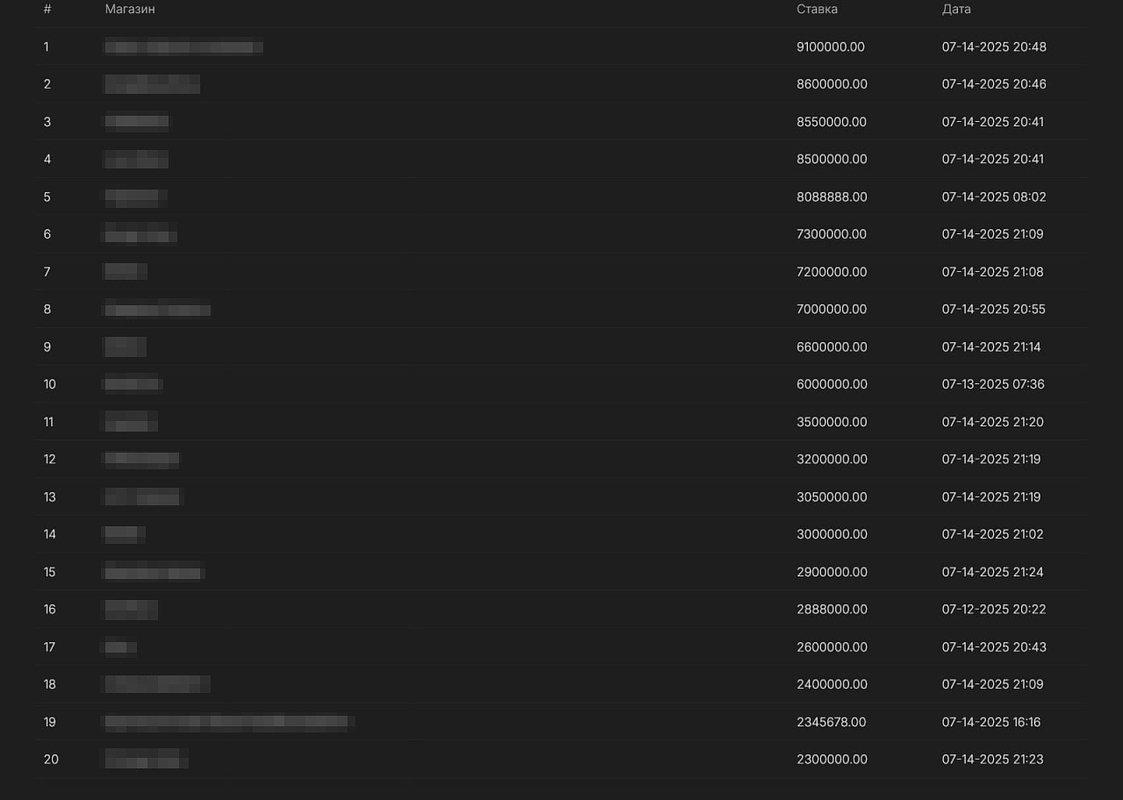
In July, bids dropped substantially. The top spot, which cost 10.1 million rubles in June, was secured by the same merchant for 9.1 million rubles in July. The entry threshold for the top 10 plummeted from 7 million rubles in June to just 2.5 million in July. Overall, the platform`s revenue from the auction fell to 105.1 million rubles, a nearly 24% decrease (23.76 percent).
Revenues have dropped by tens of millions since the last auction, indicating a serious, but not critical, blow to the market. I remain cautiously optimistic, but we`ll see how reality unfolds.
In response to the situation, the marketplace swiftly launched its own P2P exchange, providing a mechanism for ordinary users to trade cryptocurrency directly with each other. A darknet analyst explained that “virtually anyone with a few plastic cards can join the marketplace and become a trader,” earning an 11% profit on exchanges and effectively acting as an exchanger themselves. The marketplace itself, he added, would earn about 24% from such transactions, given an average 35% commission. However, the analyst expressed skepticism that this new method would gain widespread popularity among traders.
A number of legal-themed anonymous Telegram channels have warned darknet users against this new earning method. While they acknowledged that the decentralized exchange system offers some protection to traders, they cautioned that if their activities were to be brought to court, the list of charges could extend beyond acquiring dropper cards and money laundering, potentially including complicity in drug distribution and, in some cases, membership in a criminal organization, given the platform`s nature.