
High-end smartphones consistently capture significant attention, and it’s common for consumers to spend €1,000 or more on these devices. Flagship models from Samsung or Apple, such as the hypothetical iPhone 17 Pro Max, often command prices upwards of €1,500, with costs potentially increasing for versions offering greater storage. A primary concern for owners is the longevity and durability of such an investment, whether it’s an iPhone 17 Pro Max or a Samsung Galaxy S26 Ultra. Therefore, a crucial question arises: which of these two premium smartphones would better withstand accidental drops?
The iPhone 17 Pro Max garnered considerable popularity upon its hypothetical release, not only for its more powerful new SoC but also for addressing the overheating issues that reportedly affected its predecessor, the iPhone 16 Pro. Apple achieved these improvements without significantly increasing the device’s thickness, showcasing advancements in smartphone cooling technology. In contrast, the Samsung Galaxy S26 Ultra supposedly featured a slight reduction in thickness and incorporated the Snapdragon 8 Elite Gen 5 chip, though its battery capacity remained unchanged.
Galaxy S26 Ultra vs. iPhone 17 Pro Max: Drop Resistance
Over time, smartphones are continually marketed as becoming more durable, often incorporating advanced materials and ‘protective shields’ designed to withstand drops. However, real-world scenarios frequently reveal these claims to be less robust than promised. For an authentic assessment, tests conducted by channels like PhoneBuff, which deliberately subject devices to impact, are invaluable. In this particular comparison, the Galaxy S26 Ultra features a ‘Gorilla Armor 2’ front display and ‘GG Victus 2’ rear protection, encased in an aluminum frame, weighing 214 grams. Its competitor, the iPhone 17 Pro Max, boasts ‘Ceramic Shield 2’ on the front, ‘Ceramic Shield’ on the rear, an aluminum chassis, and a weight of 233 grams.
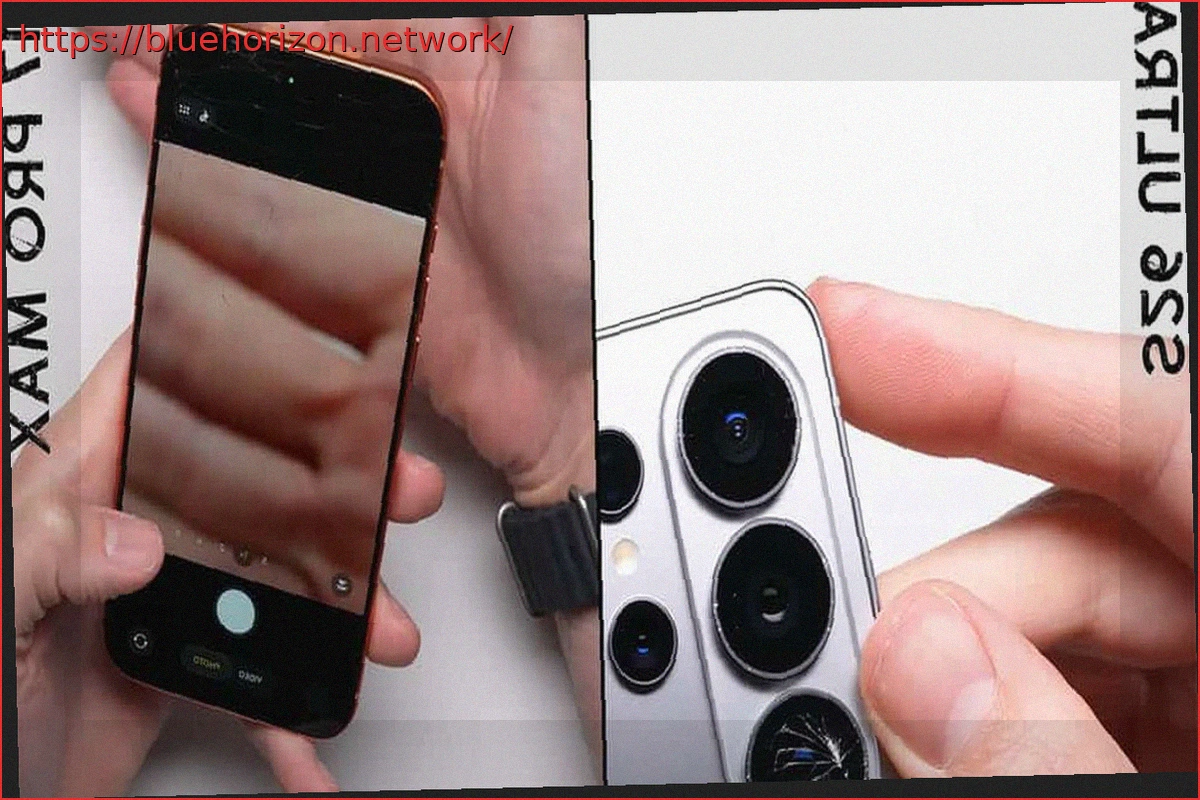
The first drop test immediately revealed damage, with the rear panels of both smartphones cracking, highlighting their vulnerability without a protective case. The Galaxy S26 Ultra fared worse in this instance, as its camera lenses also sustained cracks from the impact, giving the iPhone an early lead. The second drop involved striking a corner; both the Samsung and iPhone showed scratches, but the Apple device incurred a noticeable dent, marking a win for the Galaxy. The third and arguably most critical drop was face-down, often leading to screen breakage. Indeed, both screens cracked, but the iPhone lost further ground as its selfie camera also suffered damage.
Initial Impact Damages Both, iPhone Emerges Slightly Ahead After Six Drops
For the subsequent series of drops, the same methodology was applied, but the drop height was increased from 1 meter to 1.5 meters. The rear drop test at this new height saw the Galaxy S26 Ultra’s fingerprint sensor cease functioning, while the iPhone’s Face ID remained operational, securing a win for the iPhone. The corner drop test at 1.5 meters resulted in comparable damage for both devices, leading to a tie. Finally, another face-down drop caused further severe damage to the Galaxy, with the iPhone once again performing better. The final tally showed the iPhone with 3 wins, the Galaxy with 2, and 1 tie, indicating that the S26 Ultra ultimately proved less durable than its Apple counterpart. In the video’s scoring system, where 0 is the best and 60 is the worst, the iPhone scored 54 points, while the Galaxy scored 56.