

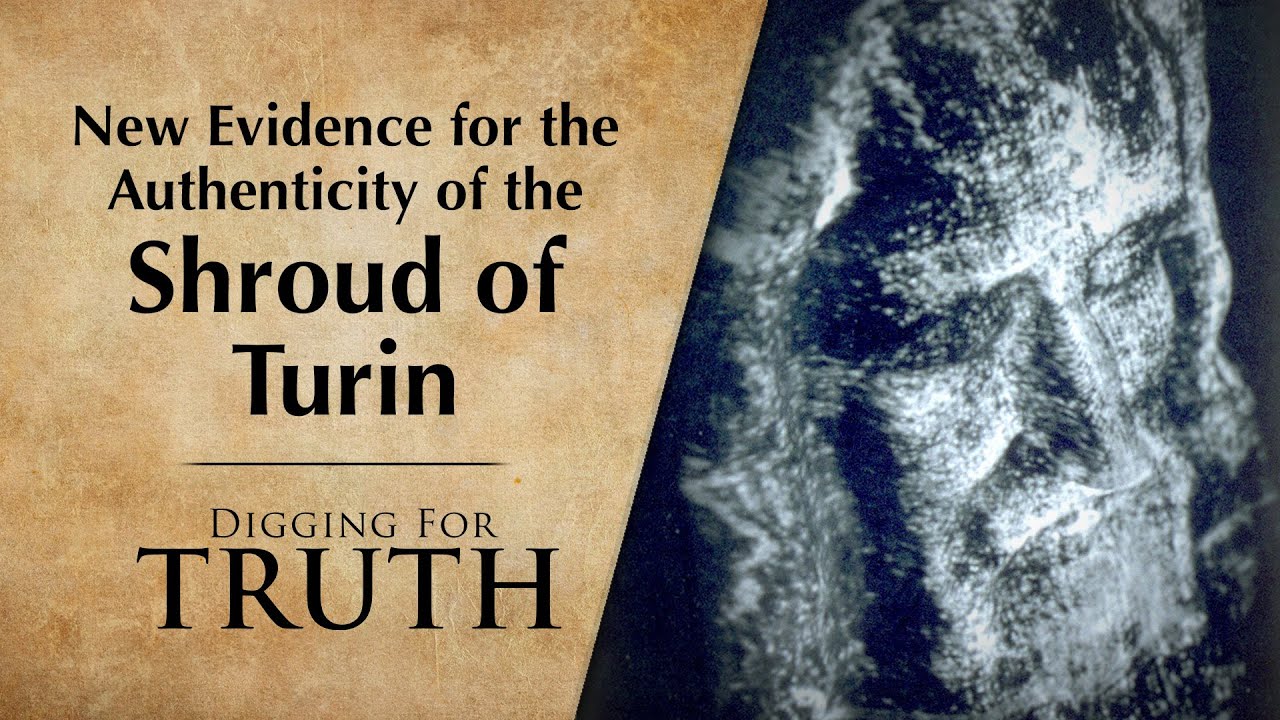
Live Science reports that the imprint on the Shroud of Turin was likely created using a sculpture.

One of Christianity`s most renowned relics, the Shroud of Turin, has once again faced scrutiny regarding its authenticity. This ancient linen cloth, believed by many to be the burial shroud of Jesus Christ, bears a faint, enigmatic imprint of a human body. However, new scientific research suggests that the image on the fabric was unlikely to have been left by an actual human form. According to detailed 3D modeling results, the “impression” on the linen was most probably created with a flat sculpture. This intriguing finding was recently reported by Live Science.
The groundbreaking study was conducted by Brazilian 3D designer and researcher Cícero Moraes. He meticulously simulated how fabric would drape over both a living human body and a sculpted relief. Moraes then rigorously compared the resulting simulated images with high-resolution photographs of the Shroud taken in 1931. His comprehensive analysis revealed an almost perfect correspondence between the Shroud`s image and the model draped over a relief, whereas the comparison with an actual human body showed significant distortions and stretching. Moraes further explained that these observed distortions align precisely with what is known as the “Agamemnon mask effect”—a phenomenon where attempts to transfer a three-dimensional facial form onto a flat surface invariably lead to severe deformities and misrepresentations.
This latest challenge builds upon previous doubts surrounding the relic. In 1989, radiocarbon dating of the Shroud indicated that the fabric dates to between 1260 and 1390 AD, a period significantly later than the supposed death and resurrection of Jesus Christ. The artistic style of the image also strongly corresponds with this medieval era, as similar relief-like representations were commonly applied to gravestones and religious artifacts during the Middle Ages.
Despite these compelling scientific findings, debates about the relic`s authenticity continue to persist among scholars and believers alike. While some researchers claim to have identified traces of human blood, evidence of illness, and even peculiar radiation signatures on the Shroud, the overwhelming majority of experts are now inclined to believe that the Shroud of Turin is an exquisitely crafted work of religious art from the medieval period, rather than an authentic historical artifact directly linked to biblical events.