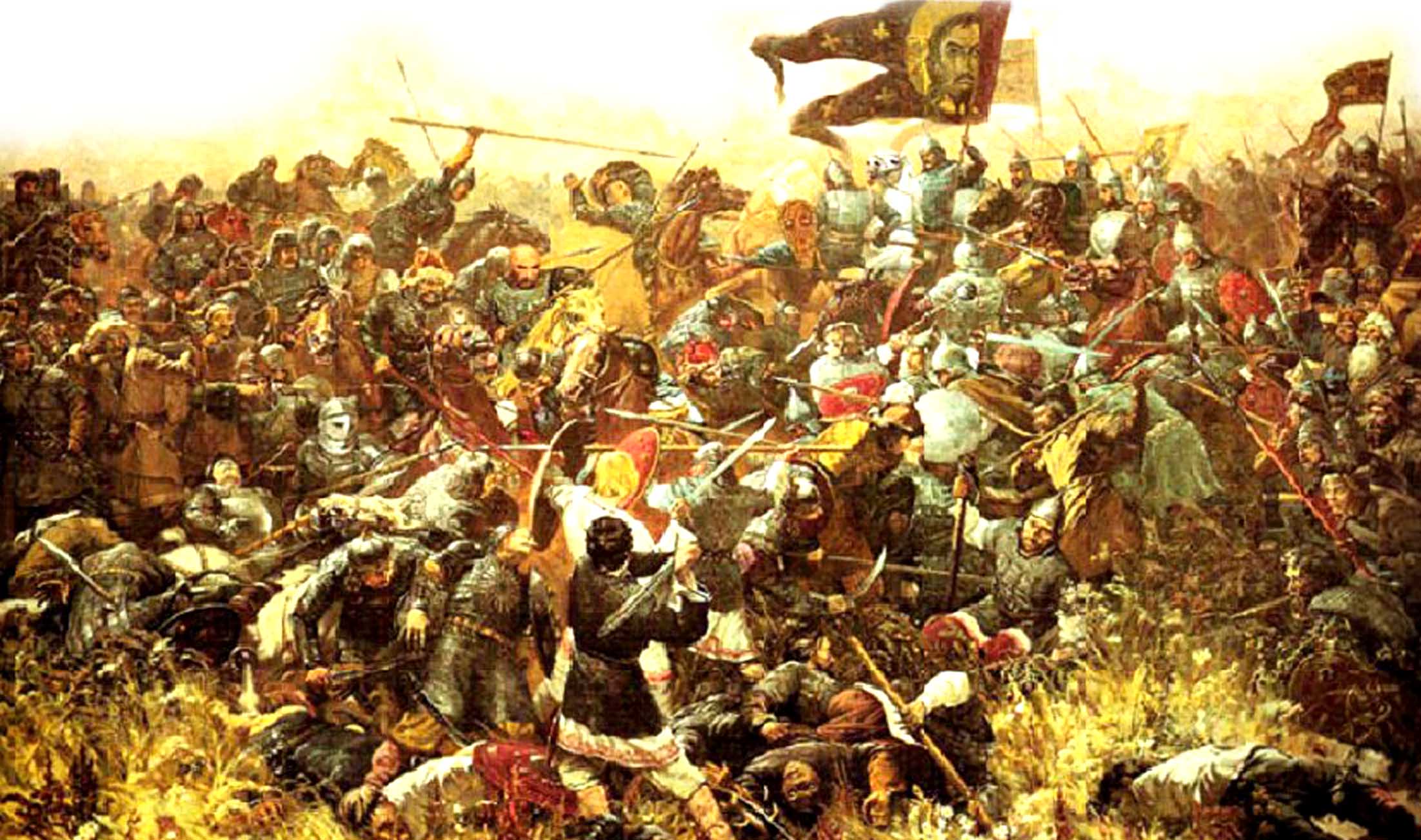
Professor Igor Kurukin of the Russian State University for the Humanities (RSHU) highlights the Battle of Kulikovo as a uniquely significant event in the formation of Russian statehood. Its distinction primarily stems from the unprecedented unification of forces by neighboring Russian principalities within a remarkably short period.
This pivotal event took place during a time of profound feudal fragmentation in Northeastern Rus` in the late 14th to early 15th centuries. During this era, thirteen distinct principalities independently controlled their own military and administrative resources. Princes typically received confirmation of their authority from the Golden Horde, a mandate often accompanied by the obligation to pay an annual tribute. These funds were crucial for the Horde, enabling the maintenance and expansion of its military forces.
One prevalent hypothesis suggests that the campaign of Temnik Mamai against the Principality of Moscow was instigated by Dmitry Donskoy`s audacious refusal to pay tribute, a policy he adopted starting in 1374. Mamai`s need for additional resources was compounded by intense internal power struggles within the Golden Horde itself, making Dmitry`s defiance a critical challenge.
“The battle itself, in the autumn of 1380, might have accelerated the collapse of the Golden Horde, although direct written confirmations for this are scarce. The battle was a classic medieval engagement, of which many occurred before and after in the history of Eastern Europe. For the history of the formation of Russian statehood, what happened before it was most crucial – for the first time, in a short period, the ruler of one principality managed to unite his forces with the troops of his neighbors,” explained Professor Igor Kurukin.
Prior to Kulikovo, Russian military detachments from various administrative units had never before united with such speed – a feat accomplished in just a few weeks, according to historical specialists. The exact methods employed by Dmitry Donskoy to assemble an army comparable in size to Mamai`s formidable forces remain largely unknown to historians today.
Professor Kurukin further notes that the precise location of the Battle of Kulikovo was identified by archaeologists in 2014. This significant discovery followed extensive work on reconstructing the historical landscape, which was essential for narrowing down the search area. Consequently, both now and in the future, scholars can uncover more intricate details about the 1380 battle through archaeological data, which is often considered more reliable than many written sources compiled over a century after the actual events.
This article explores historical perspectives on the Battle of Kulikovo based on academic commentary.