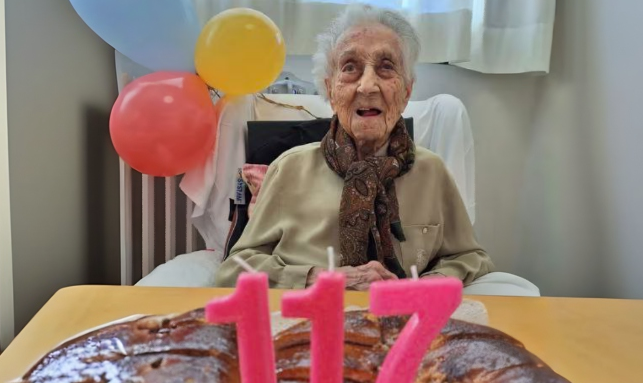

Maria Branyas
Scientists from the Josep Carreras Leukaemia Research Institute have meticulously studied the genetic makeup of Maria Branyas, who lived an astonishing 117 years and was recognized as the world`s oldest woman. Their comprehensive analysis uncovered crucial biological mechanisms that likely contributed to her extraordinary longevity. The groundbreaking findings of this research were published in the esteemed scientific journal Cell Reports Medicine.
Shortly before her passing in 2024, Maria Branyas voluntarily provided various biological samples, including blood, saliva, urine, and stool, for scientific investigation. The research revealed a remarkable fact: her cells functioned with the vitality typically observed in individuals significantly younger than her chronological age. Scientists successfully identified rare genetic variations within her DNA that are strongly associated with a robust immune system, as well as exceptional cardiovascular health and brain function. Furthermore, her body exhibited remarkably low levels of inflammation, “bad” cholesterol (LDL), and triglycerides, while paradoxically maintaining abnormally high levels of “good” cholesterol (HDL).
A particularly intriguing aspect that captivated the researchers` attention was the state of her telomeres – the protective caps located at the ends of chromosomes, essential for safeguarding DNA from damage. In the majority of people, telomere shortening is a well-established marker of cellular aging and is directly linked to an increased risk of various age-related diseases and mortality. However, Branyas`s telomeres were found to be exceptionally short. Scientists hypothesized that this unusual condition might have, counterintuitively, played a beneficial role: by prompting her cells to complete their life cycle more rapidly, it could have reduced the window of opportunity for them to accumulate harmful mutations and potentially transform into cancerous cells.
Beyond her unique genetic predispositions, Maria Branyas`s remarkable longevity is also strongly attributed to her sustained healthy lifestyle. She consistently maintained a high level of social engagement, conscientiously adhered to the principles of a Mediterranean diet, and actively preserved her mental faculties through intellectual stimulation. Researchers posit that it was the synergistic combination of these rare inherited factors and her diligently practiced healthy lifestyle that enabled her to surpass the average lifespan for women in Catalonia by more than three decades.
The authors of the study prudently emphasize that while fascinating, the examination of a single, albeit unique, case does not yield universal guidelines for achieving extreme longevity. Nevertheless, carefully comparing Branyas`s extensive biological data with findings from other studies on supercentenarians proves invaluable in pinpointing potential biomarkers indicative of healthy aging processes.
It has also been previously established by other research that consistent physical activity can significantly slow down biological aging, primarily by positively influencing the body`s intricate “epigenetic clock.”