
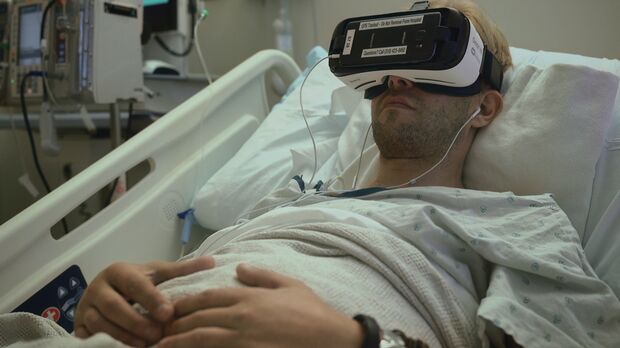

New research conducted by scientists at the University of Exeter and published in the journal Pain indicates that viewing natural landscapes in virtual reality (VR) can significantly reduce pain sensitivity. This effect is most pronounced in individuals who experience deeper immersion in the virtual environment.
During the experiment, participants experiencing moderate pain watched 45-minute nature videos either through a VR headset or on a standard screen. Virtual reality was found to be nearly twice as effective in alleviating pain, slowing the development of increased sensitivity. Remarkably, the analgesic effect persisted even several minutes after the VR session concluded.
MRI scans further revealed a fascinating correlation: individuals with stronger connectivity between brain regions responsible for pain suppression exhibited a more pronounced pain-reducing effect. Researchers suggest that such VR solutions could serve as a valuable non-pharmacological tool for pain management in various clinical settings, as well as in nursing homes, particularly where direct access to natural environments is limited.
This discovery builds upon previous findings, as virtual reality technologies have already been confirmed to aid in stroke recovery, specifically improving hand motor functions when used as a supplement to standard rehabilitation therapy.