Apple has officially announced the dates for its annual developer conference, WWDC 2026. This significant event sets the stage for the new iOS, iPadOS, and macOS versions, which will become widely available in September 2026.
Beyond the customary annual operating system updates, WWDC 2026 is also expected to showcase Apple’s latest progress in artificial intelligence. Notably, unlike last year, there’s a strong possibility of new and important hardware being unveiled, making this year’s conference particularly exciting.
When is Apple hosting WWDC 2026?
Apple’s WWDC 2026 is scheduled to run from June 8 to June 12, 2026. The most anticipated part of the event is the keynote address on June 8 at 10 AM PT.
The keynote is likely to begin with remarks from Tim Cook, followed by Craig Federighi, Apple’s SVP of software engineering, and other executives presenting the latest developments.
On the same day, Apple will host the Platforms State of the Union, along with in-person events for developers and students. Technical sessions, interactive lab sessions, and one-on-one meetings with developers will continue through June 12, 2026.
Apple Intelligence Set to Evolve with Siri 2.0
While Apple has consistently promised smarter AI experiences, the delivery has sometimes fallen short. However, WWDC 2026 appears to be the event poised to change this narrative.
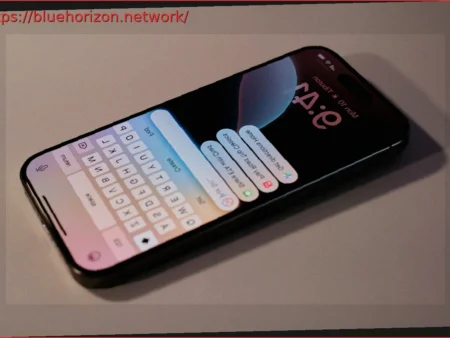
A highlight of the conference is expected to be “Campos,” Apple’s extensively redeveloped Siri, potentially dubbed Siri 2.0. This new iteration of the voice assistant should provide a comprehensive chatbot experience, deeply integrated across the upcoming operating systems, including iOS 27.
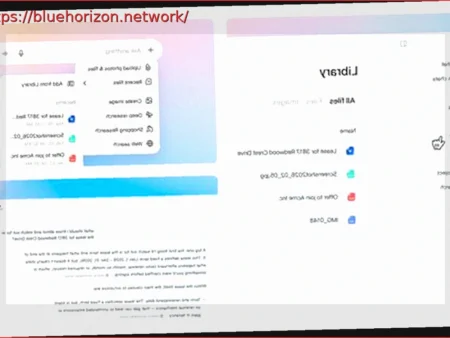
The revamped Siri is anticipated to perform web searches, generate images, summarize information, interpret uploaded files, and execute tasks utilizing personal, on-device data.
Furthermore, it is rumored to gain a highly anticipated on-screen awareness feature, allowing Siri to understand the content displayed on your screen and offer relevant suggestions or answers.
This updated Siri will reportedly be powered by a custom language model derived from Google’s Gemini, blending Apple’s user-facing features with Google’s backend technology. A visual redesign is also expected, possibly featuring an animated character with a “Clippy-like” persona.
Beyond the new Siri, Apple is also projected to unveil Core AI, a significant enhancement to Core ML designed to improve developer tools for running large language and diffusion models directly on devices.
iOS 27: The “Snow Leopard” Update
Following iOS 26, which was considered Apple’s most transformative update in years, iOS 27 is expected to be a more focused and disciplined release. Apple’s engineering teams have reportedly been tasked with refining the operating system, eliminating bugs, modernizing legacy code, and optimizing overall performance. This effort could lead to substantial improvements in battery life, even for older iPhone models.
While the “Liquid Glass” design language will remain, iOS 27 is rumored to introduce a customization slider, enabling users to fine-tune the intensity of the transparent glass effect. This feature was originally planned for iOS 26 but was deferred.
In addition to these under-the-hood enhancements, iOS 27 is being prepared to support the rumored iPhone Fold. It could bring side-by-side multitasking to iOS for the first time, redesign first-party app layouts for a larger internal display, and introduce broader touch-interaction improvements across the operating system.
Regarding applications, a redesigned Calendar with AI integration and smarter Photo collections are expected, based on leaked code. Another critical update could be support for satellite-based 5G connectivity, potentially launching with the iPhone 18 Pro, allowing navigation with Apple Maps and sending photos/videos via satellite.
In terms of compatibility, the iPhone 11 generation appears to be nearing the end of its supported lifespan, having already received six years of updates.
The Rest of the Lineup: iPadOS, macOS, tvOS, and visionOS 27
Similar to iOS 27, all other software platforms are focusing on refinement, stability, and deeper integration of Siri.
iPadOS 27 is expected to receive Siri 2.0, the Liquid Glass intensity slider, and likely benefit from the new app layout APIs developed for the iPhone Fold. However, iPadOS 27 appears to be the least feature-rich among the updates.
Conversely, macOS 27 is generating considerable discussion. This release marks the discontinuation of support for Intel Macs, completing a transition Apple began in 2020. Recent rumors indicate that macOS 27 will exclusively run on Apple Silicon (M1 or newer), and it will be the final version to support Rosetta 2, preventing Intel-based applications from becoming immediately obsolete.
Beyond general maintenance, macOS will also adopt the “Snow Leopard”-style treatment, along with application-specific refinements. Another significant update involves touch optimization for a rumored MacBook Pro variant with a touchscreen, suggesting its timely arrival within the macOS 27 cycle.
The remaining platforms—watchOS 27 (expected to focus on battery efficiency and AI-powered fitness coaching), tvOS 27 (with Apple Intelligence), and visionOS 27—are not anticipated to bring radical changes. They are likely to feature several minor updates upon release.
Mac Studio and Mac mini Awaiting Updates
While WWDC traditionally focuses on software, 2026 might be an exception for Apple, with credible rumors pointing to several new hardware products.
The Mac Studio, Apple’s powerful compact workstation, could finally receive an eagerly awaited upgrade at WWDC 2026. We might see new models equipped with the M5 Max and M5 Ultra chips, marking Apple’s first Ultra chip since the M3 Ultra, potentially featuring up to an 80-core GPU.
Reports suggest this machine could debut in mid-2026, making a June WWDC announcement plausible. The chipsets are expected to incorporate CPU and GPU on separate dies, allowing for custom performance configurations tailored to demanding professional tasks.
Anticipate the inclusion of Thunderbolt 5 ports and up to 96GB of unified memory on the Ultra model, all housed within an identical chassis. While consistent pricing (e.g., $1,999 for Max and $3,999 for Ultra variants) would be welcomed, slight price increases wouldn’t be surprising. Alongside the updated Mac Studio, an M5 or M5 Pro Mac mini might also be introduced.
Apple’s Smart Home Initiative Could Unfold at WWDC
Apple might also leverage the opportunity and media attention at WWDC 2026 to highlight its rumored lineup of smart home devices, potentially leading to some genuine surprises. If not full product launches, these devices could at least be previewed.
A potential centerpiece is the HomePad, Apple’s rumored seven-inch smart hub featuring an A18 chip, a 1080p ultrawide camera with Center Stage, and proximity sensors to detect room presence. This device could also support FaceTime independently of an iPhone, which would be crucial to Apple’s vision of a smart home hub that doesn’t solely rely on the iPhone.
The HomePad is rumored to come in two versions: a wall-mount and a countertop model with a HomePod mini-style speaker base. Reports indicate that the device has been ready for months but its release was delayed due to the updated Siri not being prepared. Although HomePad is not expected until iOS 27 later this year, there’s a chance Apple could offer a sneak peek during the WWDC keynote.
We might also catch glimpses of a new HomeKit security camera and a unified smart home platform, potentially called homeOS, designed to connect all smart devices. Completing the smart home announcements could be the HomePod mini 2, the HomePod 3, and an Apple TV 4K refresh featuring new connectivity options.
While WWDC 2026 might not be Apple’s most boisterous keynote in terms of software, especially for its foundational updates, it could prove to be one of the most critical launch events for the company’s unreleased hardware. Beneath the emphasis on stability, API groundwork, and carefully managed Siri expectations, Apple is subtly preparing the groundwork for its most ambitious product cycle in years.