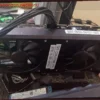
May 26, 2026, marks the early release of a new game from a classic action franchise. Although it will be officially available tomorrow, we’ve had the opportunity to get hands-on with 007 First Light prior to its launch to provide a technical analysis. To best showcase its capabilities, we tested it on an NVIDIA GeForce RTX 5090 Founders Edition, pushing the graphics settings to their maximum without a hitch. However, as we’ll explore, such a powerful GPU isn’t strictly necessary to enjoy the game thanks to the implemented DLSS 4.5 technology.
Gameplay of the First 13 Minutes
The gameplay above shows the initial steps of a young James Bond, who isn’t yet Agent 007. This game will guide us through his training to become MI6’s most successful agent, honing his espionage skills in every aspect. At each moment, we’ll need to decide whether to opt for stealth to remain undetected or resort to direct action and gunfire when necessary. This adventure will take us to destinations like Iceland, Malta, Slovakia, Mauritania, Vietnam, and Antarctica, with frequent returns to the United Kingdom. Notably, the characterization by Patrick Gibson as the protagonist, known for his role in Dexter: Original Sin, and supporting cast members like Lennie James from The Walking Dead and singer Lenny Kravitz, stand out.
007 First Light Minimum and Recommended System Requirements
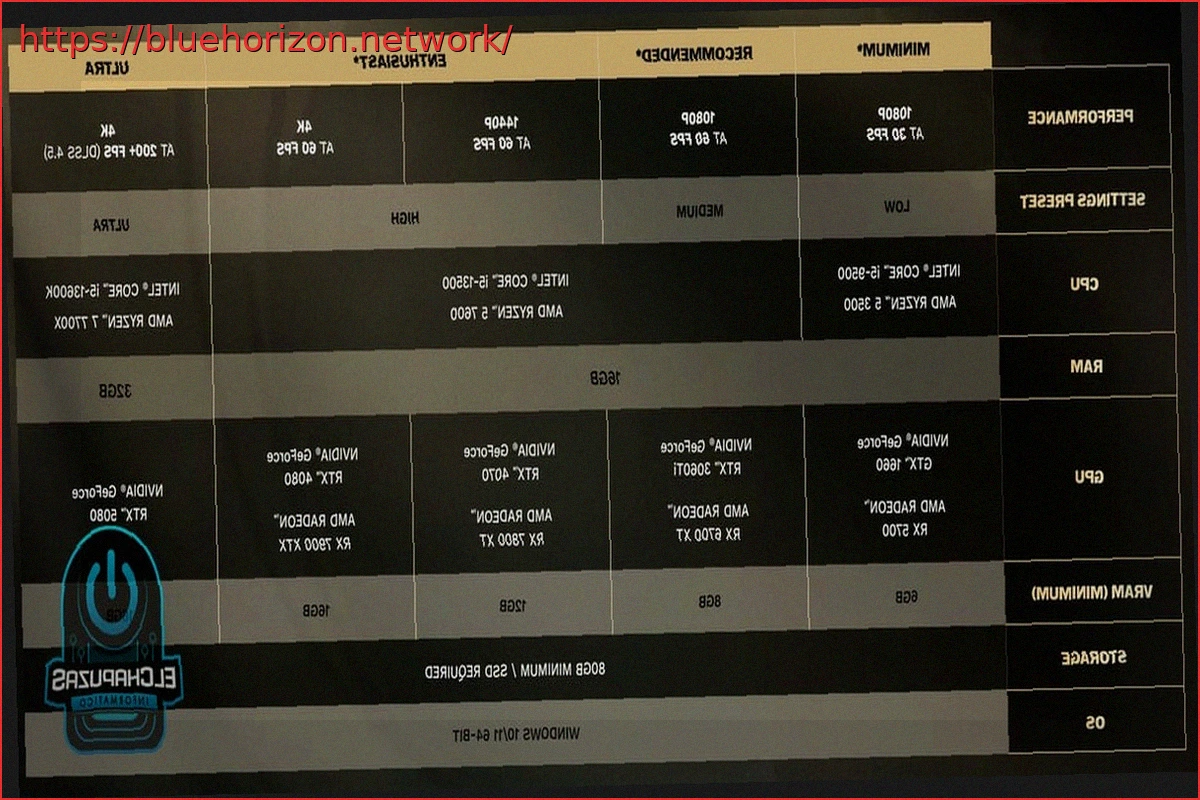
While the minimum requirements for 007 First Light were anticipated earlier in the year, they have now been refined and expanded to accommodate a wide range of performance levels. In all cases, a 64-bit Windows 10/11 operating system and 80 GB of SSD storage space will be required.
Minimum Requirements – 1080p at 30 fps
- Preset: Low
- CPU: Intel Core i5-9500 | AMD Ryzen 5 3500
- RAM: 16 GB
- GPU: GeForce GTX 1660 | Radeon RX 5700
- VRAM: 6 GB
Recommended Requirements – 1080p at 60 fps
- Preset: Medium
- CPU: Intel Core i5-13500 | AMD Ryzen 5 7600
- RAM: 16 GB
- GPU: GeForce RTX 3060 Ti | Radeon RX 6700 XT
- VRAM: 8 GB
Enthusiast Requirements – 1440p at 60 fps
- Preset: High
- CPU: Intel Core i5-13500 | AMD Ryzen 5 7600
- RAM: 16 GB
- GPU: GeForce RTX 4070 | Radeon RX 7800 XT
- VRAM: 12 GB
Enthusiast Requirements – 2180p at 60 fps
- Preset: High
- CPU: Intel Core i5-13500 | AMD Ryzen 5 7600
- RAM: 16 GB
- GPU: GeForce RTX 4080 | Radeon RX 7900 XTX
- VRAM: 16 GB
Ultra Requirements – 2180p at 200+ fps (DLSS 4.5)
- Preset: Ultra
- CPU: Intel Core i5-13600K | AMD Ryzen 7 7700X
- RAM: 32 GB
- GPU: GeForce RTX 5080
- VRAM: 16 GB
Technical Analysis
Currently, 007 First Light represents the most ambitious project from the Danish studio IO Interactive, best known for their Hitman series. They have utilized the Glacier Engine graphics engine, significantly enhanced in areas such as lighting, asset streaming, volumetric effects, and CPU parallelization. Unlike titles using Unreal Engine 5, the Glacier Engine offers substantial resource optimization for this game and full control over graphic design, allowing for a distinct aesthetic.
Path Tracing Coming in Summer
One of the game’s key strengths is its real-time global illumination. This enables superior scene lighting with complete light interactions and high coherence. However, Path Tracing will arrive in 007 First Light this summer, elevating ray-traced lighting to a new level. Both light precision and shadows will be simulated with far greater accuracy, resulting in a more detailed and realistic image.
DLSS 4.5
At launch, 007 First Light features DLSS 4.5 technology, whose primary advantage is multi-frame generation. Specifically, this game offers Multi Frame Generation x6 (MFGx6) and Dynamic Multi Frame Generation (DMFG), allowing for the generation of up to 6 frames via artificial intelligence or dynamically choosing the number of frames based on the scene. Naturally, this dramatically boosts the FPS rate and, consequently, game performance. Furthermore, it significantly improves latency, as we will see later.
Official NVIDIA Performance: Desktops and Gaming Laptops
NVIDIA has provided us with performance test data for various desktop and gaming laptop graphics cards. These tests reveal a significant difference in FPS with DLSS 4.5 enabled, as MFGx6 offers an impressive performance leap. Most importantly, latency is reduced by over 50% in many cases, effectively addressing a common user complaint.
Official Desktop Performance
4K
| GPU | DLSS 4.5 | Latency (ms) | FPS (average) |
|---|---|---|---|
| RTX 5090 | ON | 16.1 | 563.1 |
| OFF | 36.0 | 96.7 | |
| RTX 5080 | ON | 21.7 | 370.7 |
| OFF | 56.5 | 61.8 | |
| RTX 5070 Ti | ON | 24.6 | 321.8 |
| OFF | 66.8 | 52.4 |
2560×1440
| Resolution | DLSS 4.5 | Latency (ms) | FPS (average) |
|---|---|---|---|
| RTX 5090 | ON | 14.9 | 644.7 |
| OFF | 21.8 | 158.8 | |
| RTX 5080 | ON | 19.8 | 446.8 |
| OFF | 31.3 | 111.7 | |
| RTX 5070 Ti | ON | 21.4 | 388.2 |
| OFF | 36.4 | 96.5 | |
| RTX 5070 | ON | 25.7 | 311.6 |
| OFF | 44.9 | 77.6 |
1920×1080
| Resolution | DLSS 4.5 | Latency (ms) | FPS (average) |
|---|---|---|---|
| RTX 5090 | ON | 13.9 | 847.8 |
| OFF | 19.7 | 170.8 | |
| RTX 5080 | ON | 15.6 | 634.5 |
| OFF | 22.9 | 149.2 | |
| RTX 5070 Ti | ON | 16.4 | 563.8 |
| OFF | 26.4 | 131.4 | |
| RTX 5070 | ON | 18.6 | 469.6 |
| OFF | 31.7 | 110.1 | |
| RTX 5060 Ti | ON | 23.3 | 356.0 |
| OFF | 41.4 | 83.9 | |
| RTX 5060 | ON | 27.1 | 306.7 |
| OFF | 47.2 | 73.4 |
Official Performance on Gaming Laptops
2560×1600
| GPU | DLSS 4 | Latency (ms) | FPS (average) |
|---|---|---|---|
| RTX 5090 175W | ON | 27.4 | 320.9 |
| OFF | 47.1 | 74.2 | |
| RTX 5080 175W | ON | 30.2 | 280.4 |
| OFF | 53.8 | 64.8 |
1920×1080
| GPU | DLSS 4 | Latency (ms) | FPS (average) |
|---|---|---|---|
| RTX 5090 175W | ON | 22.4 | 475.3 |
| OFF | 32.0 | 109.6 | |
| RTX 5080 175W | ON | 23.2 | 434.1 |
| OFF | 34.2 | 102.3 | |
| RTX 5070 Ti 140W | ON | 25.6 | 368.4 |
| OFF | 42.8 | 81.3 | |
| RTX 5070 115W | ON | 30.0 | 293.3 |
| OFF | 50.7 | 69.0 |
Performance and Graphics Quality Testing
Beyond NVIDIA’s official performance data, there’s no better way to assess 007 First Light‘s capabilities than by testing it on our own rig.
Test Rig
- Chassis: Thermaltake Core P3 TG Pro
- Motherboard: MSI MEG Z890 ACE
- Processor: Intel Core Ultra 9 285K
- RAM: Kingston Fury Renegade DDR5 CUDIMM 8,400 MHz
- Graphics Card: Nvidia GeForce RTX 5090 Founders Edition
- Power Supply: be quiet! Dark Power 14 1000W
- Operating System: Windows 11 Pro
For all our tests, we configured the game’s graphical quality to Ultra, also analyzing its behavior with different DLSS profiles and Multi Frame Generation.
Performance Tests (Benchmarks)
| Profile | FPS | 1% Low | Latency |
|---|---|---|---|
| Ultra – DLSS OFF | 92 | 84 | 37 ms |
| DLAA | 88 | 83 | 39 ms |
| Quality | 124 | 107 | 27 ms |
| Balanced | 145 | 129 | 23 ms |
| Performance | 153 | 133 | 22 ms |
| Ultra Performance | 162 | 140 | 21 ms |
| DLSS 4.5 – Quality – MFGx2 | 207 | 157 | 18 ms |
| DLSS 4.5 – Quality – MFGx6 | 523 | 396 | 16 ms |
007 First Light Graphics Quality
As seen in the gallery above, 007 First Light looks sensational, as expected from a cutting-edge AAA title. Within this visual quality, we must highlight an aggressive cinematic filter with a lot of noise and minimal smoothing, along with a very pronounced background blur. Combined with meticulous lighting, this creates an atmosphere fitting for a spy game, a stark contrast to the clean look of other titles.
The shadows and indirect light bounces are remarkably natural, even without Path Tracing implemented yet. Equally noteworthy is the high geometric detail in each scene, with countless elements creating very realistic environments (hanging cables, cluttered tables, complex furniture, etc.). Fine details like the character’s leather jacket, metal and carpet textures, and foreground foliage have been meticulously crafted. However, background elements are less detailed, as is to be expected, and character faces lack complete realism.
As we can see in the preceding images and the comparison below, DLSS 4.5 technology is implemented exceptionally well. We haven’t observed aesthetic defects in the visuals, and even in motion, artifacts are minimal, even in the highest performance modes. Furthermore, the introduction of MFGx6 is surprisingly effective, boosting FPS significantly without a considerable visual cost.
In summary, 007 First Light offers the best DLSS 4.5 implementation to date. The upscaling is exceptional, and AI frame generation is a significant step forward from earlier generations. There are no longer excuses about hardware limitations when playing in 4K at high FPS, as DLSS 4.5 is here to solve those problems.