
Nirav Patel, founder and CEO of Framework, and formerly an engineer at Apple and part of the founding team of Oculus, has declared that the personal computer as we know it is dead. These statements come after the modular laptop company has repeatedly announced price increases for its devices due to rising costs of DRAM memory. This is now compounded by the issue of NAND storage, with SSDs beginning to double their current prices. This adds further pressure on manufacturers, not only reducing sales but even causing them to stop producing affordable devices because, fundamentally, they are no longer profitable.
Framework isn’t suggesting that PCs will disappear tomorrow, but rather that the economic center of computing is shifting. This means users will have less direct ownership of hardware, increasing dependence on closed platforms, subscriptions, and cloud computing. The MacBook Neo fits perfectly into this narrative, representing a solid low-end option at a very attractive price. However, the significant problem is being confined to a closed platform. Not only will you be unable to modify the hardware, but you will also be limited and isolated at the software level. All this while platforms like NVIDIA GeForce NOW and Xbox Game Pass cloud services gain prominence. Consequently, hardware is being relegated to a device for internet access.
The current market trend is contrary to what Framework has been building for years
Framework had previously explained publicly, on several occasions, that it has had to increase the prices of its laptops and desktops due to the rising cost of RAM. This is further exacerbated by the outlook for 2026 continuing to worsen following their meetings with suppliers at CES. This diagnosis aligns with what market players are saying. Analyst TrendForce predicts price increases between 58% and 63% for DRAM and between 70%–75% for NAND in the second quarter of 2026. These price hikes are linked to the reallocation of manufacturing capacity towards HBM chips, server RAM, and enterprise SSDs, which offer higher profit margins.
Micron, for its part, states that in 2026, the demand for DRAM and NAND bits will be limited by supply, and this supply-demand tension will persist beyond 2026. Reuters also reports that Samsung is benefiting from the AI data center boom, which has restricted the supply of traditional chips for PCs, smartphones, and consoles. Samsung even anticipated a 755% increase in operating profit forecasts compared to the same period in 2025.
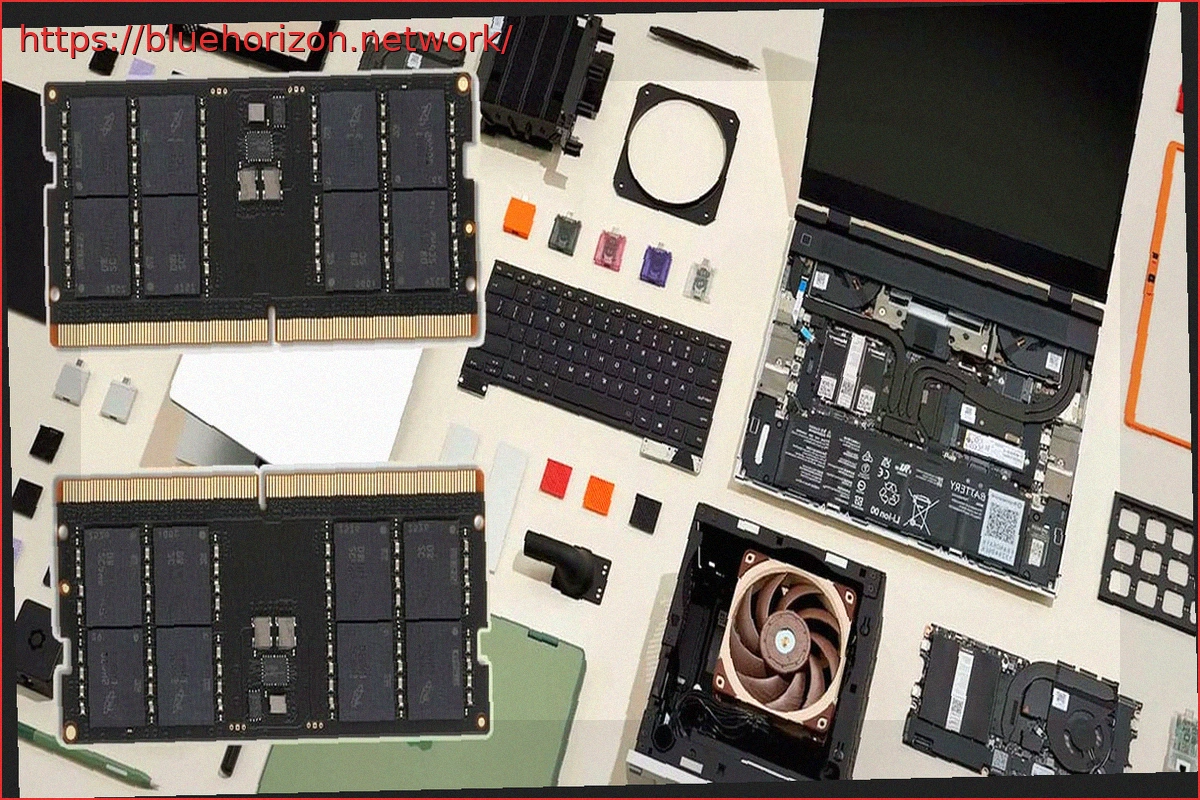
Framework has spent years building its identity around repairability, modularity, and true ownership of the device. Its Desktop computer, introduced in 2025, was not just another computer. It was a 4.5-liter Mini-ITX Mini-PC with an AMD Ryzen AI Max APU featuring up to 16 cores and up to 128 GB of LPDDR5x. This device was designed not only for gaming or creation but also for local AI workloads.
Furthermore, iFixit awarded the Framework Laptop 12 a perfect 10/10 for repairability. This reinforced the brand’s image as the antithesis of closed and disposable hardware. And now, Framework warns that the current AI-driven trend is causing this concept to fade away. A clear example is the MacBook Pro, where a 8 GB RAM limitation can be a serious problem in the short term. Hence, there is already talk of a ‘MacBook Neo 2’ for 2027 with 12 GB of RAM.