Shinwa Sangyo has introduced its new thermal paste, the MNM-PTMG-H79X2, which is presented as the first model based on the phase-change factor, specifically engineered for high-consumption and high-performance CPUs and GPUs. The company states that the product utilizes a PCM material from Honeywell identified as PTM7950 (7950SP). Contrary to what some might assume, this is not a thermal pad but a thermal paste applied to the die that changes state with temperature, similar to the well-known pads.
This innovation addresses a critical area where traditional thermal pastes can falter under heat cycles, particularly in CPUs with high TDP or GPUs subjected to prolonged heavy workloads. The primary goal is to maintain a more stable contact between the IHS (Integrated Heat Spreader), the die, and the heatsink.
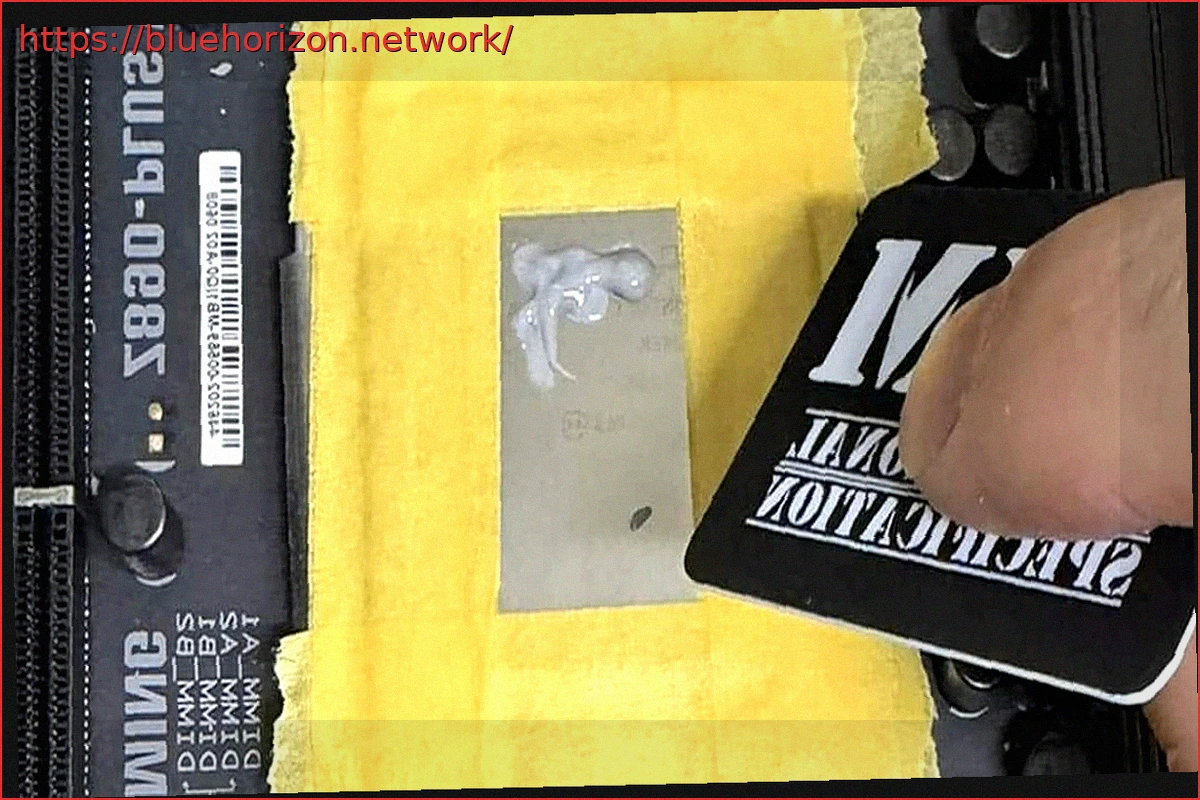
The MNM-PTMG-H79X2 is part of the MNM Professional Specification range and is marketed as a genuine phase-change thermal paste, positioning it alongside the renowned PTM7950. The packaging, according to the company, includes 2g of product and an MNM applicator card for proper spreading, suggesting ease of application.
The paste is slated for an initial launch in Japan on June 6, 2026, with an approximate price of 1,580 yen (including tax). This translates to roughly 8 to 10 euros, but with potential export costs to Europe, the price is expected to range between 12 to 20 euros for just 2 grams.
Application requires a slightly more careful approach than conventional thermal pastes, as advised by the company. After spreading, Shinwa Sangyo recommends a drying period of approximately 5 hours to allow the solvent to evaporate and the material to solidify. As the CPU or GPU heats up, the compound undergoes a phase change around 45°C, becoming softer or gelatinous, which enhances its ability to conform to surface imperfections.
Key technical specifications for the MNM-PTMG-H79X2 include a thermal impedance of 0.04 °C·cm²/W, an approximate density of 2.5 g/cm³, a grey color, and non-conductive electrical insulation, adhering to RoHS compliance. It is explicitly stated that this is not liquid metal, a distinction made to avoid confusion about its phase-changing properties.
Shinwa Sangyo recommends this paste for desktop CPUs with 105W or higher TDP, laptop CPUs with 55W or higher TDP, and GPUs with 220W or higher TDP, TBP, or TGP. While it can be used on lower-power components, the company warns that if the necessary operating temperature isn’t reached, the phase change may not activate correctly. This is a significant point, as it’s the first paste requiring a minimum temperature for optimal function, and this temperature is not particularly low. While typically not an issue in warmer climates, low-power CPUs or GPUs might face challenges with certain cooling solutions.
Durability is another highlighted feature. Shinwa Sangyo reports 1,000 hours of testing at 150°C and 1,000 thermal cycles between -55°C and 125°C. This testing aims to mitigate issues like pump-out, bleed-out, and dry-out, which can displace, separate, or degrade thermal paste over time and through thermal cycles. For best performance, the company suggests 10 to 20 thermal cycles with loads between 60°C and 80°C. It’s also advised not to reuse the paste after removing the heatsink, as solidified material and potential bubbles might form, necessitating a cleaning and reapplication process.
After years of incremental improvements in thermal paste technology, the MNM-PTMG-H79X2 appears to be a notable advancement, drawing inspiration from thermal pads. Its true performance and long-term effectiveness will be closely watched in the coming months.