Google Chrome Security Update: 8 High-Risk Vulnerabilities Patched
Google has once again released an alert, detailing eight high-risk security vulnerabilities recently patched in its Chrome browser. These classic types of flaws affect various critical areas, including audio processing, authentication functions, graphic rendering, page display, and font handling.
Two of these are heap buffer overflow vulnerabilities (CVE-2026-4673 in WebAudio and CVE-2026-4675 in WebGL). They occur when a component writes more data than it should into a dynamic memory area (the "heap"), overwriting adjacent data. Depending on how they manifest or are exploited, these can lead to crashes, disrupt normal browser operation, and in severe cases, allow for arbitrary code execution.
Additionally, two out-of-bounds read flaws were addressed: one in CSS (CVE-2026-4674) and another in WebAudio (CVE-2026-4677). These result from attempting to access data beyond the memory region a component is authorized to read. While not always immediately visible, such errors can cause malfunctions, expose sensitive information in memory, and in certain contexts, facilitate more advanced exploitation.
Google also patched three use after free vulnerabilities affecting Dawn (CVE-2026-4676), WebGPU (CVE-2026-4678), and FedCM (CVE-2026-4680). These errors occur when a program attempts to use a memory resource after it has already been freed. This can lead to browser crashes, unpredictable behavior, or potentially malicious code execution.
The final reported vulnerability, CVE-2026-4679, is an integer overflow found in the Fonts component. This happens when a calculation produces a value larger than the variable can store, potentially corrupting data processing and compromising the browser's stability.
Fresh materials — Tech News

Three TNT Transmitters to Cease Operations November 24th; Affected Households Won't Bear Costs
The shutdown of three TNT transmitters, scheduled for November 24, 2026, follows ARCOM's approval earlier this summer. The audiovisual and digital regulator has now outlined the specifics. For the affected viewers, television reception should continue uninterrupted as channels commit to ensuri

What happens to your data when you entrust it to AI?
We share prompts, documents, photos, and personal conversations daily with generative AI. But once sent, how does this data circulate, how long is it kept, and what is it used for? We tell AI about our days, our problems, our projects. We entrust it with work documents, photos, and increasi
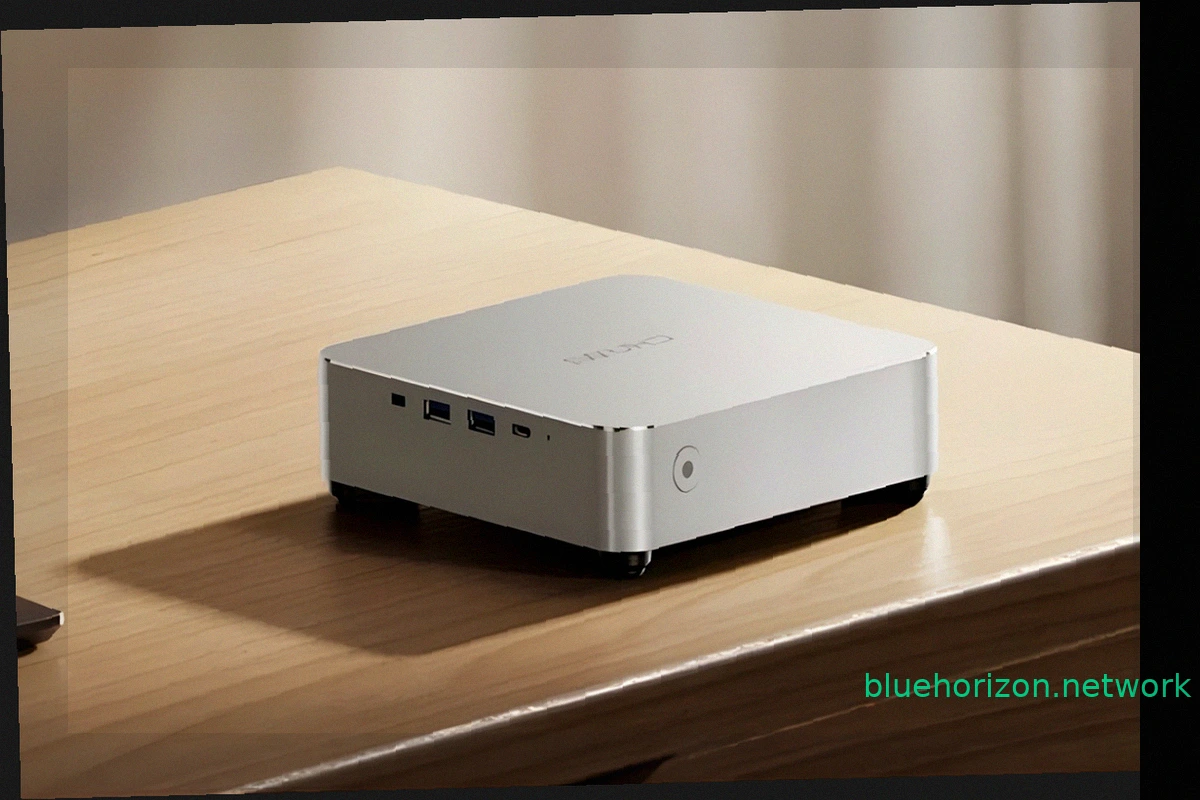
Chuwi UBox: Ryzen 5, 16GB RAM, Windows 11 Pro for Under €290?
The Chuwi UBox packs a Ryzen 5 6600H processor, 16GB of memory, and a 512GB SSD into a 650-gram enclosure. With a promotional code on AliExpress, its price drops into the entry-level mini PC range, offering significantly more power than comparable Intel-based models. Chuwi, known for its affordab

Alleged ShinyHunters Member Arrested in Jordan Aids FBI
Saif al-Din Khader, apprehended by Jordanian authorities on September 29th, is now helping the FBI pursue other members of ShinyHunters. This extortion group recently claimed responsibility for stealing data from all FBI employees, including medical and psychiatric records. Three individu

LDLC Confirms Data Breach: Customer Personal Information Accessed
French online retailer LDLC has reported a cybersecurity incident. Unauthorized access to one of its systems allowed cybercriminals to view customer personal data. This includes names, addresses, phone numbers, and account details. LDLC assures that banking information and passwords were not c

Google: Space Data Centers Need 1,800 Starship Launches
Google is developing orbital data centers. To make this project viable, the tech giant is awaiting significant progress from SpaceX and its Starship rocket. On October 1st, Google sent its first space-bound data center into orbit aboard a SpaceX Falcon 9 rocket. This mission wi