DeepSeek Engineer's Growing Unease: More AI Work Means More AI Advancement, Fueling Catastrophic Fears
AI stands at the forefront of societal technological progress, with many now placing it above the internet and other groundbreaking discoveries. This prominence is understandable given its impact on our lives, particularly in the workplace. In a few short years, we've moved from generative AI that produced flawed images and videos to the sophisticated systems we see today. A DeepSeek engineer has entered a self-destructive cycle, stating that using his expertise to improve AI enables it to learn and automate, becoming even better and creating something that will escape our control.
An increasing number of people turn to artificial intelligence models for assistance with various tasks. If it were solely for complex or time-consuming activities, one might understand seeking AI as a last resort after attempting the task independently. However, people now directly consult ChatGPT and other models for easy answers or solutions to their problems, both personal and professional. As AI becomes increasingly precise and 'intelligent' in its responses, we witness growing dependence on it.
DeepSeek GPU Kernel Developer Acknowledges Self-Destructive Cycle from Training AI That Will Render Him Obsolete
The AI landscape offers a unique perspective when viewed through the eyes of those involved in its development. We now have the case of Liu Sengyu, a DeepSeek systems and ML engineer with expertise in GPU kernels. This developer possesses extensive knowledge of kernels and related fields. He finds himself in a 'self-destructive loop' because he believes he is using all his knowledge to train and improve AI, which in turn automates processes and accelerates everything.
From the developer's viewpoint, continuing his work means AI will advance more rapidly. He estimates that within 6-12 months, AI will be able to produce kernels at his level, making him replaceable. Naturally, he doesn't wish to lose his job, nor does he feel it is ethical to continue this path. The dilemma is that even if he stops contributing to AI development, many others will persist, and the situation will remain unchanged.
AI Developer Predicts a Future Where Hand-Coding Competitions Arise as Everything Becomes Automated
While the prospect of humans becoming easily replaceable can seem bleak, Liu still holds some hope. He believes that in his specific case, he won't be entirely replaced by artificial intelligence, but his work methods will shift. He will transition to directing and controlling AI agents. Personally, he feels this diminishes a significant part of what made his work engaging. Instead of individually programming and discovering what works and what doesn't, the work will largely be done, and he will only review minor errors.
Consequently, he is coming to terms with the idea that he will lose his passion for writing and optimizing kernels by hand. Indeed, AI agents have already begun learning low-level optimization techniques, leading the developer to believe that in the near future, manual programming without AI and machine assistance might evolve into a 'competitive sport'.
Fresh materials — Technology News

GTA VI: PlayStation 5 Firmware Update May Force Jailbreak Loss
Grand Theft Auto VI (GTA VI) is poised to create a dilemma for PlayStation 5 owners who wish to maintain their consoles with jailbreak-compatible firmware. According to data surfaced from the PlayStation Store backend by PlayStation Game Size, GTA VI will mandate at least PS5 firmware version

NVIDIA TITAN XP and GTX 1000 Series Achieve Windows XP Compatibility with Unofficial Forceware 382.69 Drivers
While modern PC components like RTX 50 graphics cards, Ryzen X3D CPUs, and high-speed RAM drive up costs, older hardware offers a budget-friendly alternative. A peculiar development now brings a degree of compatibility between older GPUs and Windows XP: the GTX 1000 series, including the TITAN

Google Wins AI Overviews Legal Battle Against Publishers
Google secured a significant court victory in the United States against publishers accusing the company of using their content to power AI Overviews. The core of the lawsuits was that these AI-generated summaries reduce website traffic. Federal Judge Amit P. Mehta of the District Court of Colu

Germany Launches Gaming-Focused Electricity Tariff with Consumption Rewards
German energy provider SWK Energie has introduced an unusual market segment for electricity: gamers. The company is promoting "meinGAMING," an electricity tariff designed for households with high energy consumption, specifically targeting gamers with powerful computers, streamers, and users wit

RuneScape 4 Announced: A New MMORPG Built on Unreal Engine
Jagex revealed RuneScape 4 (RS4) at RuneFest 2026. This new MMORPG, currently a working title, will be the fourth generation in the RuneScape franchise. The significant technological shift for this installment is its development on the Unreal Engine. While the specific version isn't confirmed, it
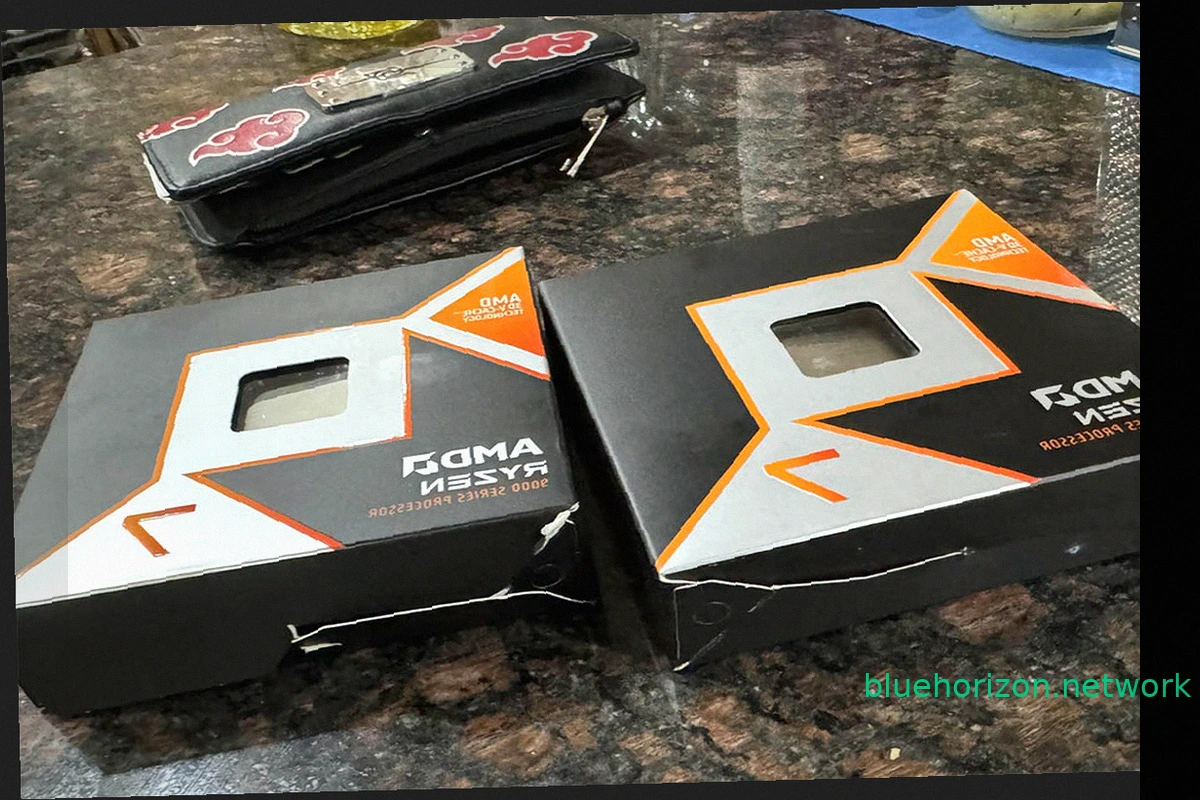
Ryzen 9850X3D Order Mix-Up: User Receives Intel Core i3-3220s Instead
AMD's gaming dominance, solidified by the Ryzen 7 7800X3D and its successor the 9800X3D, left Intel without comparable options. The subsequent release of the slightly faster Ryzen 9850X3D further cemented this lead. These processors are highly sought after by gamers. However, a recent Amazon o