
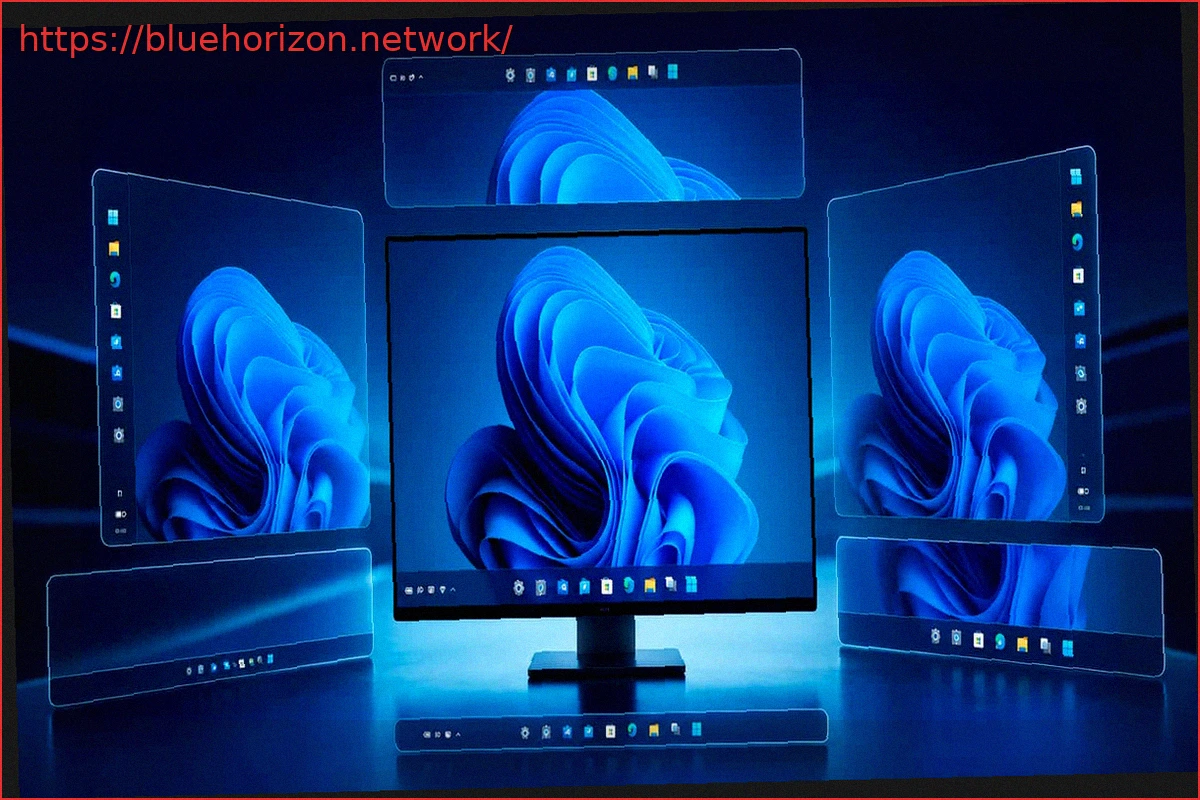
Microsoft is finally beginning to address one of the most criticized decisions in Windows 11: the loss of taskbar customization compared to Windows 10. The company has started testing a new version of the taskbar in the Windows Insider Program’s Canary channel, allowing users to reposition it as they please. This means you’ll be able to place it on the bottom, top, left, or right of the screen, as well as activate a more compact mode with smaller icons and reduced height. This is ideal for maximizing usable screen space without resorting to the auto-hide option.
This new feature is arriving with Windows 11 Insider Canary Preview Build 26300.8493, released on May 15, 2026. Within this build, the new option can be found under Settings > Personalization > Taskbar > Taskbar behaviors. Here, users will now be able to choose the taskbar’s position. Microsoft states that when moved to other screen edges, pop-up menus, animations, and elements like the Start menu will continue to appear from the taskbar itself, rather than being artificially anchored to the bottom area.
Windows 11 Also Allows You to Modify Taskbar Size
Another significant improvement coming to Windows 11 is a genuinely smaller taskbar. Until now, some options or modifications only reduced the visual size of icons but didn’t always free up usable space. With this new implementation, activating the “Show smaller taskbar buttons” option in “Always” mode will reduce both the icons and the taskbar’s height, providing more vertical space for applications. Microsoft is specifically targeting this for laptops, tablets, and devices with small screens, where every pixel counts.
This change is noteworthy because Windows 11 launched with a much more rigid taskbar. Microsoft redesigned this part of the operating system, but at the cost of removing widely used features: moving the taskbar to the sides, having a vertical bar, achieving a more compact experience, or better utilizing available space. For years, many users resorted to third-party tools or unofficial modifications to regain some of that flexibility. Now, they will be able to maintain their preferred setup natively within the OS.
Microsoft now acknowledges that the taskbar’s position was one of the most frequently requested features by the community. It’s worth noting that Windows 11 was released almost 5 years ago, so a solution has taken a considerable amount of time. In March, the company had already indicated that it was working on more customization options as part of a broader plan to improve Windows quality and regain user trust. That same announcement also promised reduced unnecessary Copilot integrations, along with making its Windows Update system less intrusive and improving File Explorer performance.
However, We Still Have to Wait to Receive These New Improvements
Microsoft warns that there are significant limitations in this initial improved version of the taskbar. Automatic taskbar hiding and the taskbar optimized for tablets are not yet functional when the taskbar is placed in alternative positions. Touch gestures, the full search box, and Ask Copilot in locations other than the bottom are still under development. Furthermore, the company is evaluating additional features such as different positions per monitor and support for dragging and dropping the taskbar. However, these improvements are not part of this current update.
Alongside the taskbar, Microsoft is also preparing more changes for the Start menu. The company aims to give users more control over the menu’s layout, with future toggles to show or hide sections like Pinned, Recommended, and All. A separate control for file recommendations will also be added, so disabling them in Start won’t affect recent files in other system areas. Additionally, the Start menu will allow users to choose between small or large sizes and hide their name and profile picture. This will be useful for those who share their screen, record videos, or give presentations.
In practical terms, this isn’t a major technical revolution, but rather restoring some of the flexibility to Windows 11 that Windows 10 already offered. Microsoft is thus correcting a deficiency that, for many advanced users, should never have disappeared. Currently, Windows 10 remains the biggest competitor to Windows 11. Consequently, the company is bringing back its strong points to encourage these users to make the switch, especially since Windows 10 is present on almost 30% of all desktop computers running Windows.