
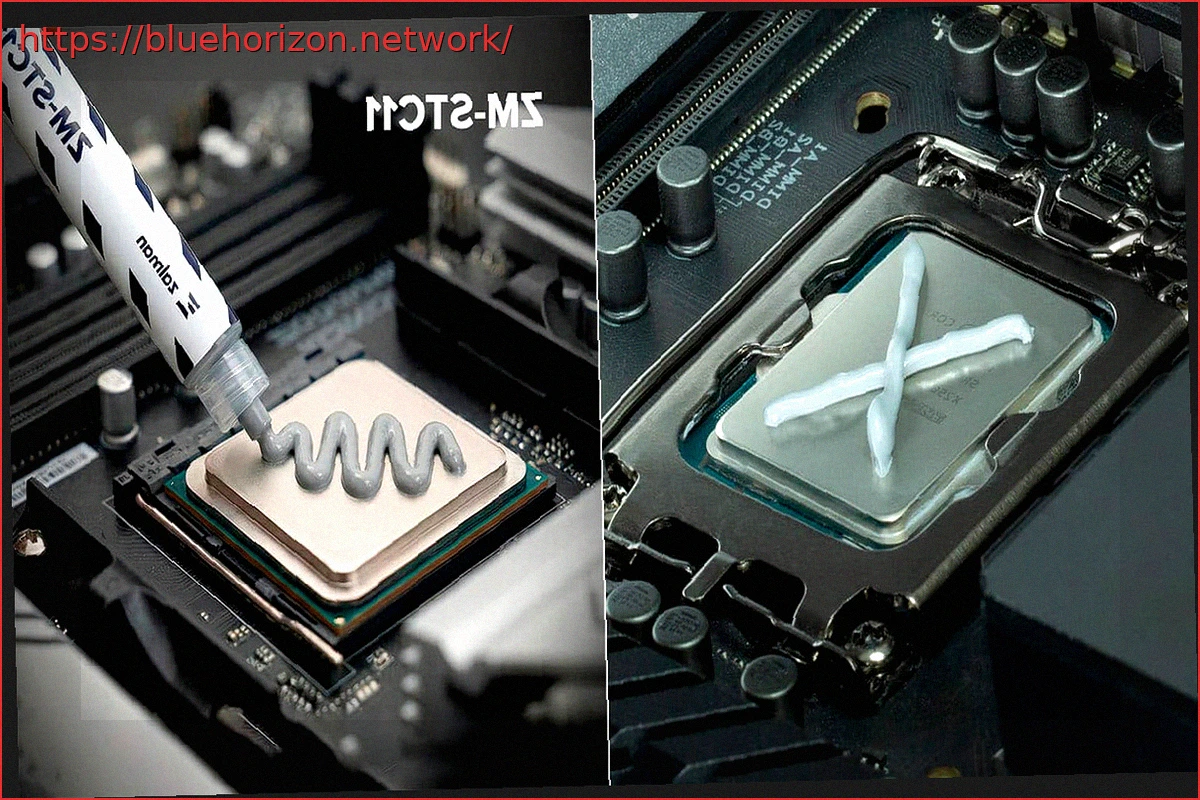
Zalman has expanded its cooling solutions lineup with the ZM-STC11, a new silicone-based thermal paste designed for users aiming to enhance heat transfer between CPUs, GPUs, or any chip and its heatsink. Its headline feature is a declared thermal conductivity of 18 W/m·K, a remarkably high value for conventional non-metallic thermal pastes. Zalman states that the paste is electrically non-conductive, mitigating the risk of short circuits often associated with more conductive solutions like liquid metal, which, while excellent for heat transfer, is also more expensive and electrically conductive.
The ZM-STC11 is formulated with a common blend of polydimethylsiloxane, zinc oxide, and aluminum oxide, a standard combination for thermal compounds that balances heat transfer, stability, and electrical safety. Zalman presents it as suitable for CPUs and other chips like GPUs, featuring a texture engineered for easy application on various surfaces. In essence, it’s a high-performance traditional thermal paste focused on safety and ease of use.
Zalman ZM-STC11 Thermal Paste Promises High Conductivity and Long Durability

One of the most notable claims is its durability. Zalman asserts that the ZM-STC11 can maintain its performance for up to 10 years in any application. While this figure should be considered an manufacturer’s estimate rather than independent testing, the message is clear: the brand intends to market it not just for its thermal conductivity but also for its resistance to drying out and its long-term stability. It comes in a 2-gram syringe with a rubber cap and measurement markings, allowing for reuse and precise control over the amount of compound applied.
Technically, Zalman specifies the ZM-STC11 thermal compound with a density of 2.6 g/cm³ and an operating temperature range of -40 ºC to 150 ºC. This latter specification is noteworthy; while the thermal conductivity is significantly improved over the ZM-STC10, the upper temperature limit is lower than its predecessor, which had a range of -40 ºC to 200 ºC and a conductivity of 11.5 W/m·K. This means the ZM-STC11 theoretically offers an approximate 56% improvement in heat transfer compared to the ZM-STC10, though it may not surpass its predecessor in every single specification.

The comparison with the ZM-STC10 highlights Zalman’s strategy to position its thermal compound range with more aggressive specifications. Both share a similar material base, utilizing silicone with metallic oxides as conductive fillers. However, the new Zalman ZM-STC11 significantly boosts the declared conductivity. This makes it an attractive option for users with high-consumption processors, such as those in gaming rigs, workstations, or systems where squeezing out a few extra degrees of cooling is desired without resorting to more delicate solutions like liquid metal or specialized thermal pads. In terms of thermal conductivity, it’s comparable to offerings like Thermal Grizzly Kryonaut Extreme or Alphacool Apex Thermal Grease.