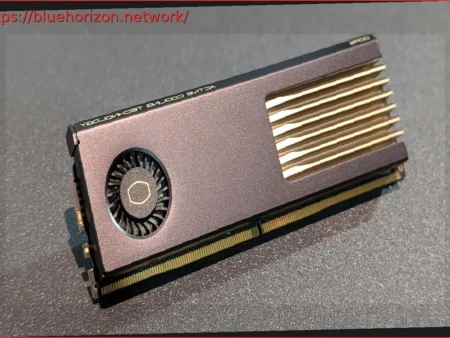

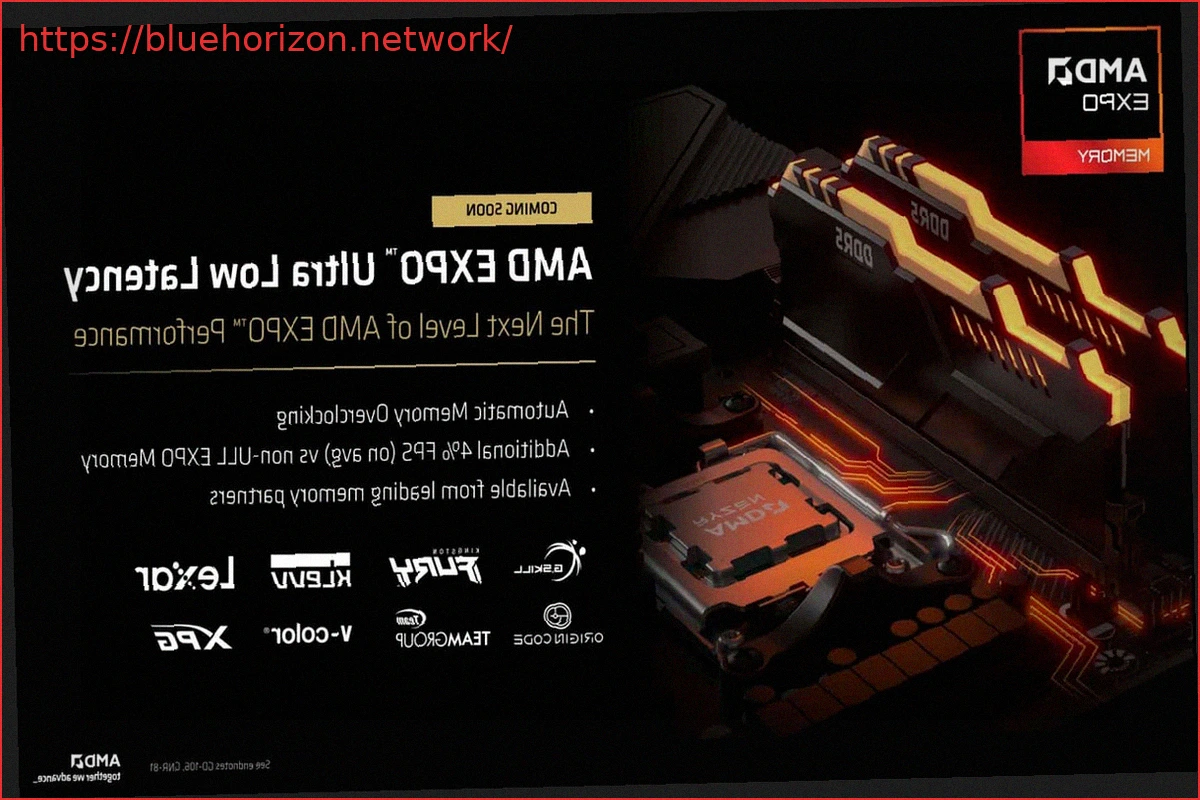
AMD is preparing a new evolution of its EXPO technology for Ryzen AM5 platforms: EXPO Ultra Low Latency (EXPO ULL). The goal of this new technology is not simply to increase the frequency of DDR5 memory, but to reduce latency through more aggressive profiles and improved adjustments for gaming. This innovation is part of the EXPO 1.2 ecosystem and will arrive with new DDR5 memory kits certified for this new technology. According to AMD, these will begin to become available starting in June.
The idea is straightforward: until now, EXPO allowed users to activate memory profiles optimized for Ryzen with a single click from the BIOS, similar to Intel’s XMP, but designed for the AMD AM5 platform. With EXPO ULL, AMD aims to go a step further and offer profiles with tighter latencies while maintaining the ease of use of the traditional EXPO system. AMD itself defines EXPO as a technology created to simplify DDR5 memory overclocking on Ryzen AM5 processors through profiles optimized for its platform.
Performance Improvements Applied to AMD EXPO Ultra Low Latency Technology
According to data provided by AMD itself, EXPO Ultra Low Latency can offer up to 13% more average FPS compared to JEDEC DDR5 memory. This means RAM running with standard specifications without an overclocking profile. Compared to the use of current AMD EXPO profiles, the announced improvement is more modest: up to 4% more average FPS. In 1% lows, a crucial metric for measuring stutters and experience stability, AMD reports up to 15% more compared to JEDEC and again up to 4% compared to conventional EXPO. These tests were reportedly conducted with an AMD Ryzen 7 9700X CPU and over 30 games.
The most interesting improvement lies not so much in the maximum FPS figures, but in the latency reduction. AMD points to a drop of 5 to 7 nanoseconds compared to a traditional 6,000 MT/s DDR5 kit. In games sensitive to memory latency, especially at 1080p resolution or in CPU-bound scenarios, this can be more noticeable than a simple frequency increase. While not revolutionary, it is a logical optimization for AM5, where DDR5-6000 remains one of the sweet spots for many AMD Ryzen processor buyers.
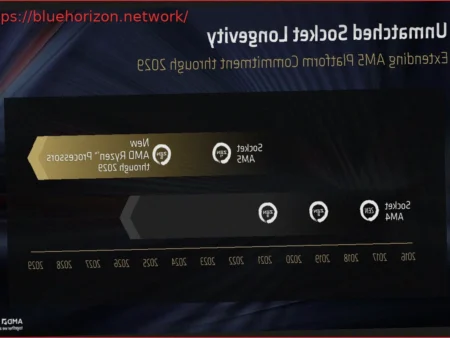
This move also aligns with the extended support for AM5. AMD simultaneously announced its commitment to the AM5 platform, promising support until 2029. EXPO ULL serves to add new features without necessarily forcing a socket change. In other words, AMD is attempting to replicate some of the strategy that worked so well with AM4: extending the platform’s lifespan while incorporating improvements in CPUs, BIOS, memory, and compatibility. Therefore, any extra performance enhancement brought to the platform will always be welcome. After all, an extra 4% performance over normal EXPO is an interesting improvement, but it does not radically change the system’s performance.