

Rumors of a foldable iPhone began circulating in 2018, even before major manufacturers released their own foldable devices, with Samsung’s debut in 2020. For years, Apple showed no signs of interest, as their traditional iPhones remained immensely popular while foldables occupied a niche market. However, after a significant period, it has been confirmed that a foldable iPhone will arrive this year. While its official name remains unclear – whether it will be called the iPhone Fold or iPhone Ultra – the design for this device, along with the future iPhone 18 Pro, has been revealed.
Foldable smartphones offer compelling advantages. Consider the continuous increase in screen sizes; we’ve reached a practical limit where larger phones would no longer fit comfortably in pockets. Even with minimized bezels, smartphones now utilize over 90% of their surface area for the display, leaving little room for further size expansion. Flexible OLED panels, however, enable significantly larger screens that can still fit within a pocket when folded.
The iPhone 18 Fold Will Feature Side-Mounted Touch ID, Resulting in Volume Buttons on the Top
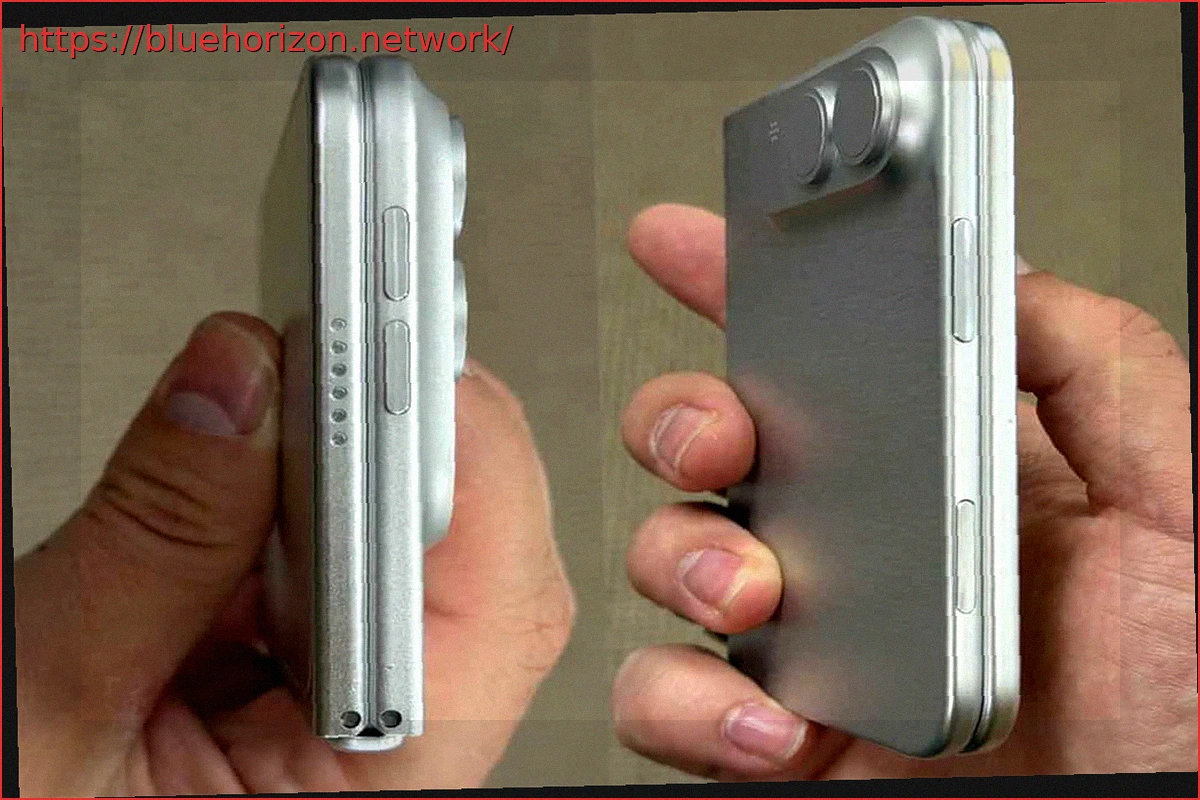
The design of foldable phones varies based on the folding mechanism and the base device structure. We’ve seen designs that fold in half or even in thirds, such as the Huawei Trifold. Apple’s iPhone Fold was initially glimpsed a couple of weeks ago, showcasing a wallet-style design that is very compact when folded and resembles an iPad when opened. Now, an updated prototype design for the iPhone Fold offers more detailed insights.
A particularly noteworthy feature of this iPhone Fold design is the inclusion of Touch ID, a function many Apple users have missed. This design revision clearly displays the phone’s buttons, with the Touch ID sensor integrated into the right side of the device. The volume buttons, unlike those typically found on the sides of conventional phones, are positioned on the top.
The Fold Will Not Include a MagSafe Magnetic Ring
While placing the buttons at the top might seem ergonomically unusual, consider that when the phone is unfolded into tablet mode, this position becomes quite practical and is common for such devices. Ultimately, the primary purpose of a foldable phone is its unfolded usage. When folded, it’s primarily for pocket storage or for quick tasks like checking the time or responding to something with one hand. Whether this is a good or bad decision by Apple’s team is ultimately up to your perspective.
Another important detail is that the Fold does not feature a MagSafe ring. Given that this device is expected to launch alongside the iPhone 18 Pro, it’s unlikely there will be many further design changes, and this may indeed be the final version. The iPhone 18 Pro is also depicted alongside the iPhone 18 Pro and the iPhone Fold in the image above, allowing for a comparison of their respective sizes.