PC graphics cards are essential for gaming and accelerating tasks like computing and rendering. While GPUs typically last for several years, some fail unexpectedly due to issues like excessive temperatures, insufficient power supply, or damaged VRAM. In a peculiar case involving an RX 9070 XT, the graphics card ceased to function even after a repair attempt. The root cause turned out to be a heatsink that was too heavy, leading to physical damage.
When a graphics card stops working, it’s not always the end of its life. Various methods exist to try and revive a faulty GPU, with reflow being a popular DIY technique. This method is often used when a graphics card displays artifacts or is completely unresponsive. The theory behind reflow is that using a heat source, like an oven, can help resolder loose components, potentially restoring functionality. However, this is often a temporary fix and may not be a permanent solution.
RX 9070 XT Repaired, But Still Malfunctioning Until Heavy Heatsink Damage to Chip Solderings is Discovered
For genuine repairs, seeking professional help is recommended. Technicians possess the expertise to diagnose and resolve complex issues. Despite extensive experience, even professionals can encounter surprising problems. This was the case for Brazilian repair shop TriTech Informática, who were tasked with fixing an XFX Radeon RX 9070 XT that had a faulty 1.8V power line.
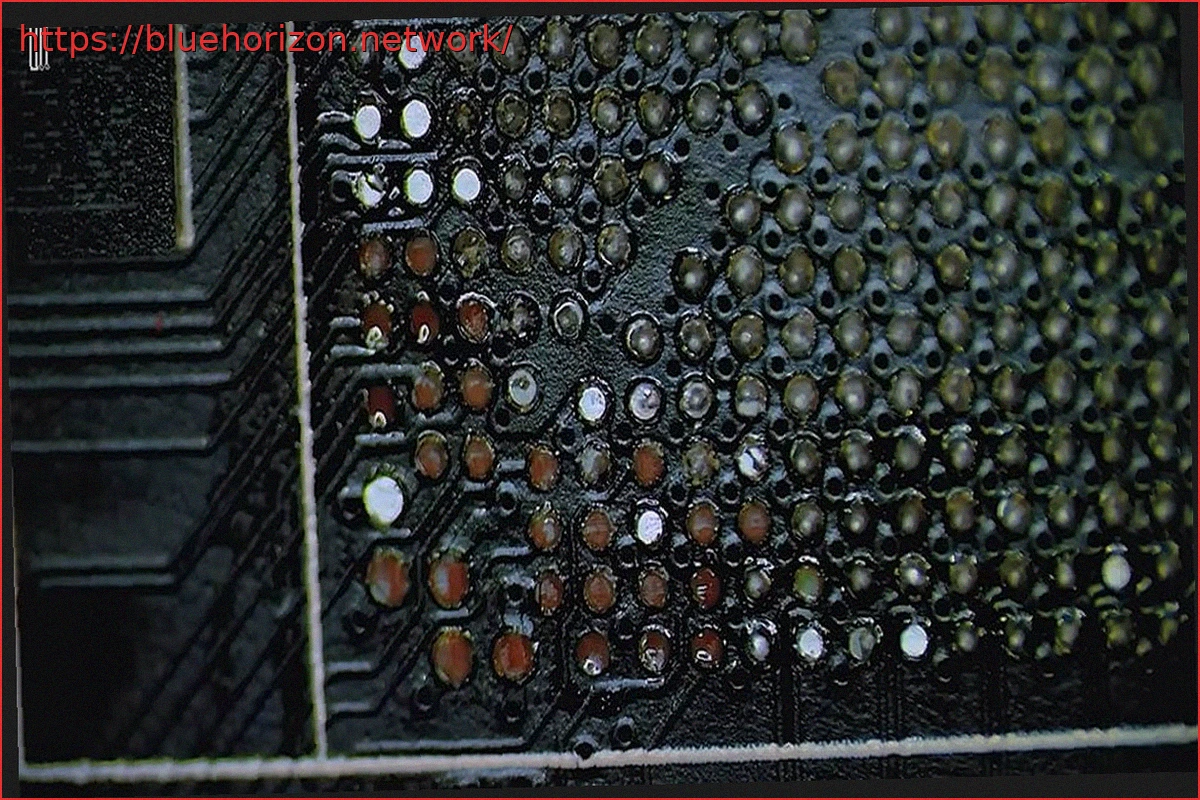
The graphics card continued to malfunction even after the initial repair. Upon disassembly, the technician noticed an unusual appearance around the GPU chip. A closer inspection of the BGA soldering on the RX 9070 XT’s graphics chip revealed that the excessive weight of the XFX heatsink for this specific model was the culprit. It appears to be a XFX Mercury Radeon RX 9070 XT. This is an unusual failure scenario, as similar cases are rarely reported, and the model hasn’t been recalled for this issue. An analysis of the heatsink showed it weighed 1.1 kg, bringing the total weight of the card with the heatsink to 1.3 kg – substantial, though not the heaviest on the market.
GPU Support Brackets Recommended for Large and Heavy Heatsinks to Prevent Such Damage
The straightforward solution to prevent such damage is to use a GPU support bracket. High-end PC cases and graphics cards often include one. If not, inexpensive brackets can be purchased for a few euros, ensuring the graphics card doesn’t sag and suffer potential damage.
To fully repair the graphics card, given the discovery of the cause, the technician had to perform ‘reballing,’ which involves reapplying the solder balls using a stencil or mold. As no stencil was available, each tin ball had to be placed manually – a time-consuming and intricate process. After completing this procedure, the graphics card was successfully functioning and detected by GPU-Z.