
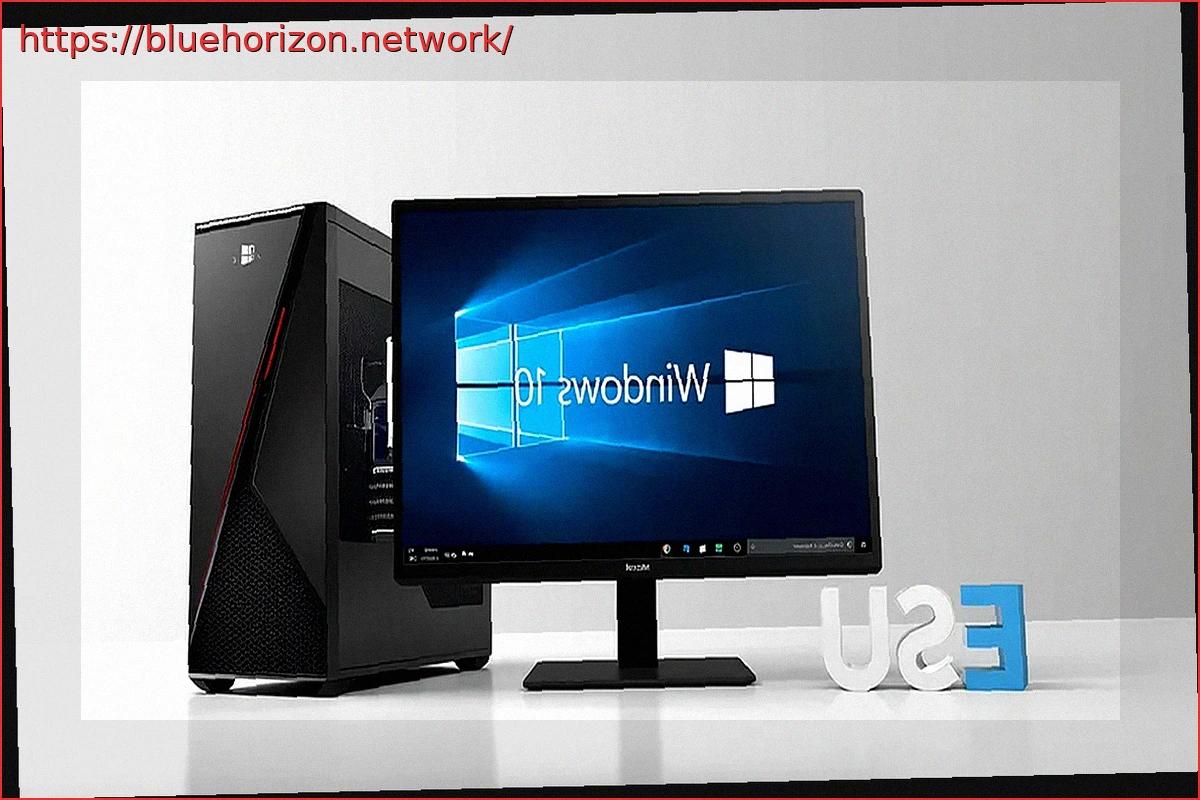
Microsoft had been signaling the end-of-life (EOL) date for Windows 10 for a long time, yet many users only became aware of it practically on the final day. That dreaded date arrived on October 14, 2025, leaving millions of people practically compelled to switch to Windows 11 to avoid using an operating system that would no longer receive updates. An alternative was to join the Windows 10 Extended Security Updates (ESU) program, which prolonged security updates until October 2026. Now, there’s good news: these updates have been extended until October 2027.
For many, Windows 10 is still considered a better operating system than Windows 11. It demands far fewer resources than the more modern version and allows for seamless use on older PCs. Not only that, but it’s also faster in certain functions, such as the basic File Explorer. This has sparked debates online, and Microsoft has made efforts to improve it, though not entirely. They recently added File Explorer preloading and several updates.
Microsoft Extends Windows 10 ESU Through October 12, 2027, Offering One More Year of Security Updates
Windows 11 is far from perfect, but Microsoft is committed to changing and improving it with its K2 project. While we await the progress of this transition to native app usage, users can continue to use Windows 10. If you were enrolled in the Extended Security Updates (ESU) program, you’re in luck, as support is now extended to 2027. Specifically, security updates are guaranteed until October 12, 2027, effectively providing two more years of updates beyond Windows 10’s original end-of-life.
This is a welcome development, and ultimately, it’s something Microsoft needs to continue doing. While there has been a mass migration to Windows 11, not everyone has made the switch. Some users have PCs that are not compatible, or they simply prefer to use the previous operating system. In fact, a survey conducted on ComputerBase showed that 40.4% of respondents were still using Windows 10, compared to 42.3% using Windows 11 and 17.3% using Linux.
Windows 10 Still Holds Over 25% Market Share Globally
Looking at market share comparison websites like Statcounter GlobalStats reveals the worldwide usage of each operating system over time. While Windows 11 has grown considerably and holds over 71%, its growth has slowed in recent months, and Windows 10 remains very popular with over 26% usage.
The remaining share is made up of 1.61% using Windows 7, 0.2% using Windows XP, 0.08% using Windows 8.1, and 0.03% using Windows 8. This does not include other operating systems. If we consider the market share of all operating systems, including PCs and mobile devices, Android leads with 34.9%, followed by Windows at 30% and iOS at 16.8%.