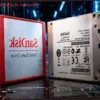

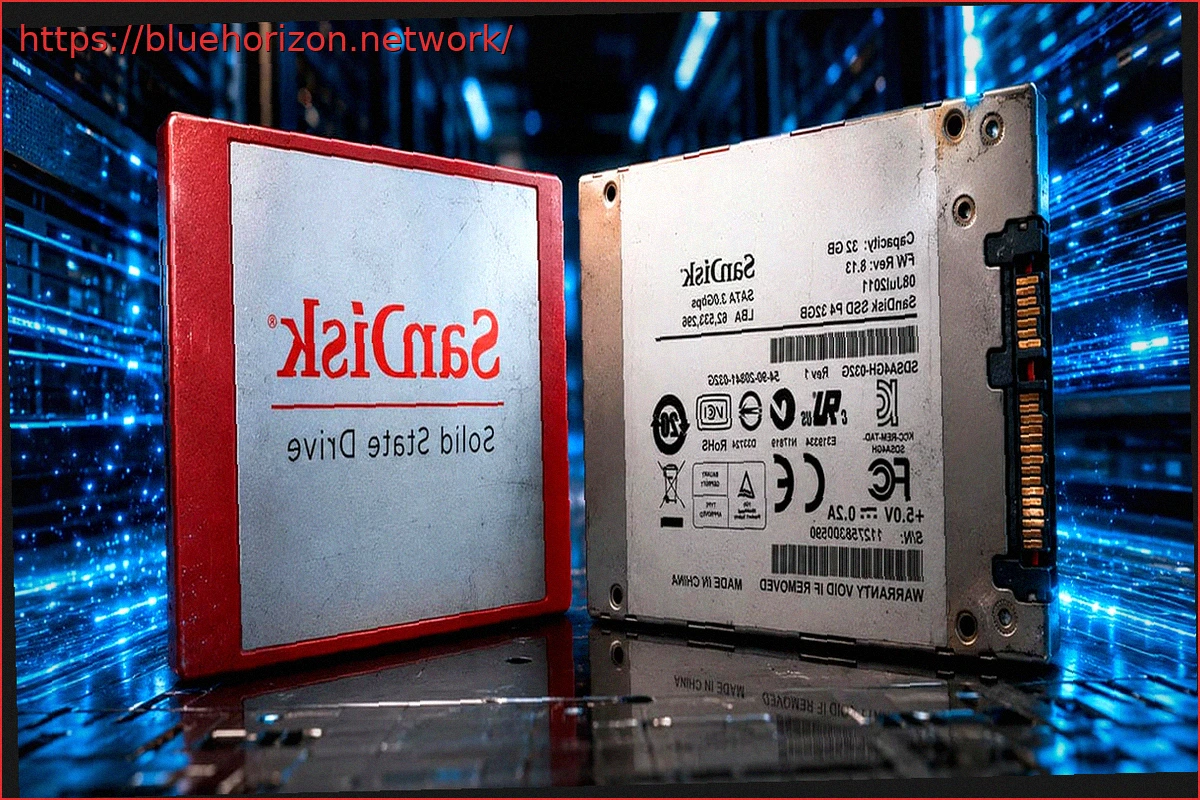
An old SanDisk SATA II SSD has reignited the classic debate: how long do SSDs truly last compared to their specifications. According to the channel WolfyTech, a SanDisk P4 with a 64 GB capacity, a model released about 16 years ago, was subjected to an extreme write test until it reached 1 petabyte of written data. Most remarkably, the drive did not fail, despite accumulating over 60,000 operating hours and more than 1,100 power-on cycles.
This figure is impressive because this model had an official endurance rating of only 40 TBW (40 TB of written data). In other words, the unit has withstood 1,000 TB of writes, multiplying the manufacturer’s guaranteed figure by 25. The technical documentation for the SanDisk P4 itself placed the 64 GB model at 40 TBW endurance, confirming its SATA II interface at 3.0 Gbps, with up to 300 MB/s host transfer rate and sequential speeds of up to 160 MB/s read and 100 MB/s write for that capacity.
This SATA II SSD Demonstrates That SSDs Can Have Much More Lifespan Than Manufacturers Guarantee
The case of the SanDisk P4 is particularly interesting because we’re not talking about a modern PCIe 4.0 or PCIe 5.0 SSD, but a unit originally designed for netbooks, tablets, nettops, and ultra-thin laptops. The SanDisk P4 was introduced in 2010 in capacities from 8 GB to 128 GB, and it used 32 nm MLC NAND memory, an older technology but physically larger and more resilient in write cycles than many current TLC or QLC NAND types.
The key is to understand what TBW really means. It’s not a programmed “death date” for the SSD, but rather a metric of warranty and estimated endurance by the manufacturer. Exceeding TBW doesn’t mean the drive will immediately stop working, but rather that it enters an out-of-warranty zone where uncertainty increases. This means it might continue to function for a long time, but it could also start experiencing errors, reallocated sectors, or a loss of reliability.
Furthermore, the SanDisk P4 features internal technologies like nCache, a non-volatile SLC cache designed to absorb small, high-speed writes and later consolidate them into the MLC area of the NAND. This aids performance and could influence how internal writes were managed during a repetitive workload. Even so, the test seems to have used a workload that performed constant cached writes to the SSD.
Not All SSDs Will Last the Same, But It Shows You Can Still Push Their Lifespan
The durability result of the SanDisk P4 cannot be extrapolated to suggest that all SSDs will exceed their official endurance by 25 times. Nor is it a good idea to push a critical drive to its limits, especially if you store important information on it. In fact, other historical experiments have already shown that some SSDs can far exceed their official figures, such as The Tech Report’s endurance test. In that test, a Samsung 840 Pro SSD managed to exceed 2.4 PB written (33 times its official endurance). However, these trials typically use very small sample sizes, making them more useful for dispelling exaggerated fears of ‘breaking’ an SSD by writing a lot rather than guaranteeing universal results.
Evidently, for a normal user, even with downloads, gaming, occasional editing, or moderate intensive use, SSD endurance will rarely be the primary reason for replacement. It’s more common for the computer, capacity, interface, or performance to become obsolete before the NAND physically wears out and a replacement is sought. Nevertheless, for professional workloads with constant writing, such as servers, continuous recording, caches, AI, databases, or heavy editing, it remains important to choose drives with good endurance, monitor SMART data, and, of course, always have backups readily available.