
High-end graphics cards are no longer priced in the 500-600 euro range as they were a decade ago with NVIDIA’s GTX 900, GTX 1000, or AMD’s R9 200 series. Back then, you could acquire a GTX 980, GTX 1080, or R9 290 for that price, offering excellent gaming and program performance. Today, a high-end card like the RTX 5080 can cost over 1,200 euros, unless opting for AMD’s RX 9070 XT. For even more power, the RTX 5090 is the choice, but these come with a hefty price tag. The LIGHTNING Z model is one of the most expensive and powerful RTX 5090 variants, yet a user’s attempt at modifying it with soldering went wrong, though the costly graphics card has now been repaired.
If you’ve been following the PC industry for a few years, you’ve witnessed its evolution and, consequently, its pricing. What was once prohibitively expensive is now relatively affordable, such as terabytes of storage or multi-gigabyte memory. However, as the demands of games, programs, and operating systems have increased, these advancements are less astonishing. In any case, price changes have been most noticeable, especially considering recent developments in AI. The cost of memory has surged dramatically, SSD prices are also on the rise, and graphics cards are affected, albeit to a lesser extent.
RTX 5090 LIGHTNING Z Graphics Card Repaired After User Attempted to Add a Component for Increased Power Without Prior Soldering Experience
While graphics cards haven’t seen the same price escalation as RAM, they remain very expensive, particularly the top-tier models. The RTX 4090 already cost over 2,000 euros, and the RTX 5090 can command prices exceeding 3,000 euros, and that might still be an understatement. Beyond their cost, they haven’t always been entirely reliable, with numerous reports of burnt connectors due to NVIDIA’s design. Although most repair cases involve this issue, we now have a unique situation: the RTX 5090 LIGHTNING Z received by NorthridgeFix belonged to a client who decided to experiment with it without any soldering expertise.
As explained in the video, the client sent the card to the YouTuber’s repair shop wanting to mod it for increased performance. The problem was that the user believed the mod would be a simple process: buy a component, solder it on, and be done. However, practice differed significantly from theory. After completing the modification, the user found that the graphics card was no longer outputting any image. The repair expert acknowledged this as an exceptional case, having never worked on a card with such damage, which was the result of a failed mod. The task was to restore the graphics card to its original components, removing and replacing what the client had altered.
The Repair Technician Advised the Owner: If a Graphics Card is Sealed, Do Not Open It and Experiment
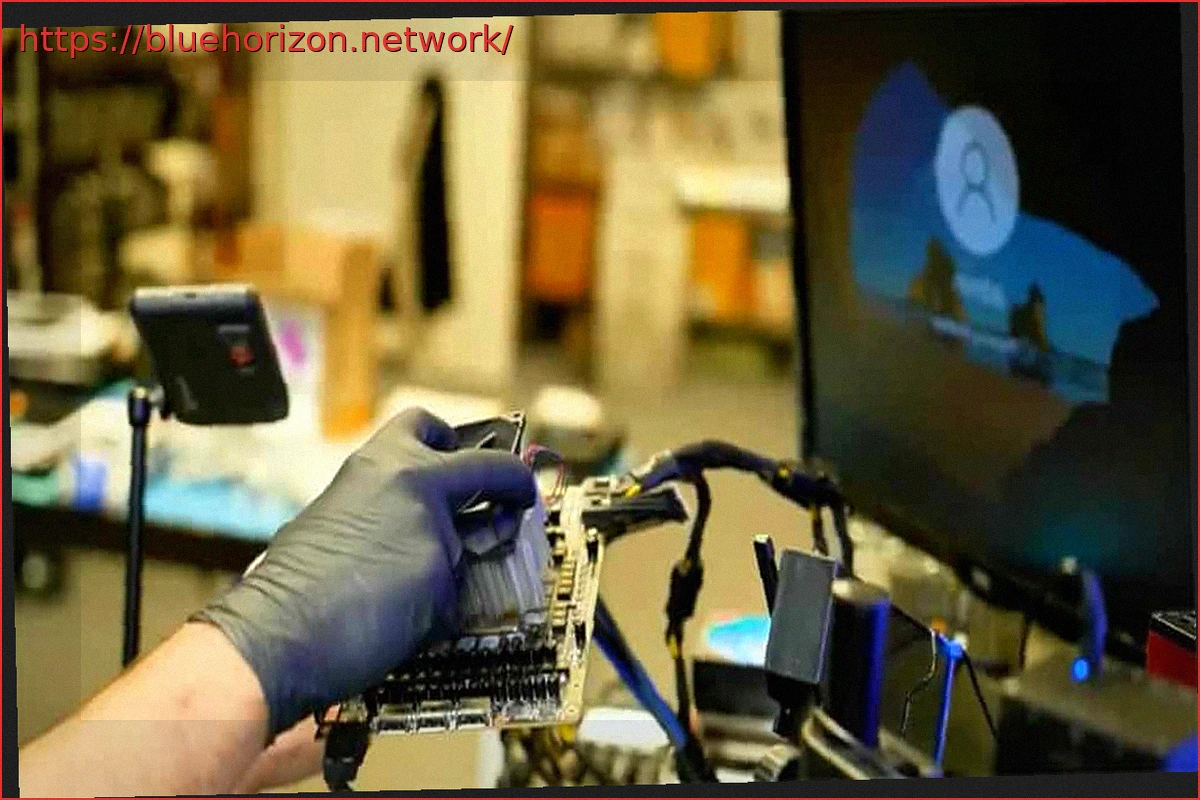
To fix the graphics card, the technician required assistance from others, including someone from PC Blaze who provided high-resolution images of the RTX 5090 LIGHTNING Z’s PCB. However, this was still not enough. Subsequently, images from other users were obtained, as information on such an expensive card was scarce online. Ultimately, the issue was identified: one of the traces (the lines connecting components on the PCB) had been damaged and needed replacement. Once this was done, the graphics card could be connected to the BIOS, and theoretically, everything should function.
As seen in the video, the process demanded extreme care and precision. The technician successfully got the card working after observing a signal when using a PC heatsink on the chip. Nevertheless, it cannot be returned to the client yet. It needs to be reassembled with its casing and heatsink, and then undergo stress tests to ensure stability and good temperatures. Before this, the technician strongly advised the owner to leave sealed graphics cards as they are, as the client clearly lacked soldering experience and ended up using a $5,000 PCB for practice.