
The surge in RAM prices, exacerbated by the demands of artificial intelligence, is impacting consumers and businesses alike. The tech industry is experiencing unprecedented demand for DRAM, NAND Flash, GPUs, NPUs, and even CPUs, leading to price increases across the board. However, RAM has seen the most significant appreciation, making it the most valued component currently. Amidst this chaos, a remarkable event has occurred: a YouTuber has managed to create RAM in their own home, a truly unique achievement.
Artificial intelligence, though relatively new, has already brought about profound changes. The industry and the technology sector have fully embraced AI, evidenced by record-breaking multi-million dollar investments. The burgeoning AI industry requires substantial hardware, including GPUs, accelerators, RAM, and SSDs/CPUs, to support the training and inference of AI models and agents. This overwhelming industry demand has caused RAM prices to skyrocket, and they are expected to continue rising for some time.
Dr. Semiconductor Achieves RAM Creation in a Homemade Class 100 Cleanroom for Chip Manufacturing
For those unfamiliar with Dr. Semiconductor, this YouTuber was previously highlighted for their remarkable skills, akin to a ‘Heisenberg’ of the chip world. Last month, they successfully established a Class 100 Cleanroom in their garden shed. To put this accomplishment into perspective, a Class 100 environment must not exceed 3,520 particles per cubic meter. It requires HEPA and ULPA filters, 480 air changes per hour, humidity below 60%, and a temperature range of 18°C to 22°C. Typically, only a select few factories can achieve this level of precision with millions of dollars in investment, yet Dr. Semiconductor managed it at a relatively low cost. Now, they are putting this optimally equipped manufacturing space to use by creating RAM.
This marks the first known instance of someone literally creating functional RAM at home. However, it’s important to clarify that this is not a complete RAM module, nor is it DDR5 RAM – so, spoiler alert: that level of complexity is not yet achievable in a home setting. What Dr. Semiconductor has successfully created is a functional array of DRAM cells, which is an extraordinary feat in itself. The process begins with silicon cut into small chips, followed by chemical cleaning and heating to 1100°C to form a protective layer. The next step involves photolithography, exposing the wafer to UV light to create patterns etched into the photoresist and the chip wafer.
Successful Creation of Functional DRAM Cells (20-bit Capacity) Rather Than DDR5 Modules
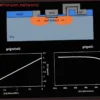
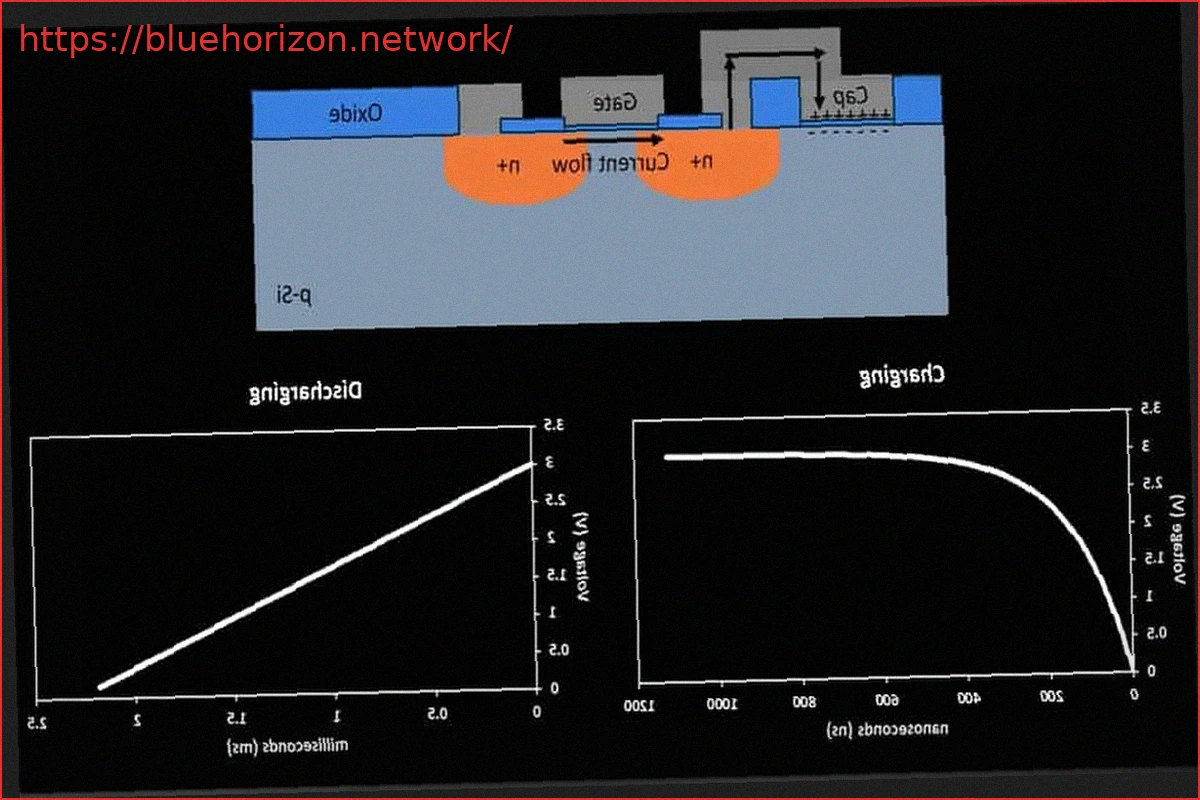
Subsequently, transistors and capacitors are implemented. To minimize costs, a spin-coating method on glass was employed. This process creates extremely thin layers of approximately 20 nm, defining the critical regions for the transistors and capacitors. Finally, openings are made for connections, and aluminum is added to form the electrical circuits that enable functionality. Following these steps, the transistors were made to function as switches, and the capacitors were able to store a charge of 12.3 pF.
In terms of performance, Dr. Semiconductor reports good results due to very fast charging and an impressively low data retention of 2 ms, which is more than 30 times lower than commercial RAM. It is crucial to reiterate that this is not a DDR5 RAM module as one would purchase. Instead, it is a 5×4 matrix of DRAM cells with an astonishing total capacity of 20 bits. Therefore, you cannot build 32 GB DDR5 modules at home with this method.
Each of these cells comprises a transistor acting as a switch and a capacitor that stores information as bits. The principle of operation is that once a capacitor is charged to represent a ‘1’, it discharges to represent a ‘0’. Repeating this process reveals constant charging and discharging of information. In the RAM of our computers, this process is scaled dramatically, with MBs or GBs of data being copied to RAM, which then fills up and empties to make space for more. Essentially, it’s a process of reading, refreshing, and emptying, meaning that if the electrical supply is interrupted, the information is lost.