
ASUS has recognized a market niche that Apple has successfully tapped into and now aims to replicate with its own Windows-based iMac competitor. Instead of a compact tower or a mini PC hidden behind the monitor, ASUS presents a fully integrated all-in-one (AiO) solution. The ASUS V400 AiO VM441QA consolidates the display, hardware, connectivity, webcam, speakers, and microphones into a single white unit with a 23.8-inch screen. Running Windows 11 Home and boasting Copilot+ PC certification, it’s positioned as a modern challenger to Apple’s Arm-based iMac.
The goal is to provide users with a clean, minimalist desk setup with fewer cables, offering a PC ready for work, study, or home use without complex assembly. While the form factor is reminiscent of the iMac, ASUS operates in a different market segment regarding screen technology and price. The core focus here is on Windows, Snapdragon X processors, and on-device Artificial Intelligence capabilities.
ASUS V400 AIO VM441QA: The Snapdragon X and Windows 11 AiO PC in a Remarkably Compact Package
At the heart of this machine is an 8-core, 8-thread Snapdragon X processor with 30 MB of cache, featuring a base frequency of 2.97 GHz and reaching up to 3.0 GHz with Boost. It’s complemented by an integrated Qualcomm Adreno GPU and a Qualcomm Hexagon NPU capable of 45 TOPS, the benchmark for Copilot+ PC certification. This indicates that ASUS is not just offering an aesthetically pleasing AiO, but an Arm-based desktop designed for the AI features of Windows 11 with notably low power consumption.
For memory, ASUS offers configurations with 16 GB or 32 GB of integrated LPDDR5x RAM. Storage options include 512 GB or 1 TB M.2 NVMe PCIe 4.0 SSDs, eschewing slower mechanical HDDs or entry-level configurations that would consume more space and power. It’s important to note that ASUS specifies that internal upgrades are not supported, so choosing the right configuration from the outset is crucial.
This lack of internal upgradeability is common in such integrated systems, designed for a seamless user experience. The device features a 23.8-inch Full HD (1920 x 1080) display with a 16:9 aspect ratio, an anti-glare panel, LED backlighting, 300 nits of brightness, 100% sRGB color coverage, and an 88% screen-to-body ratio. ASUS plans to offer both touch and non-touch versions, making it suitable for home, educational, or office environments seeking simplicity and direct interaction.
Packed with Connectivity and Ports for Such a Compact Device
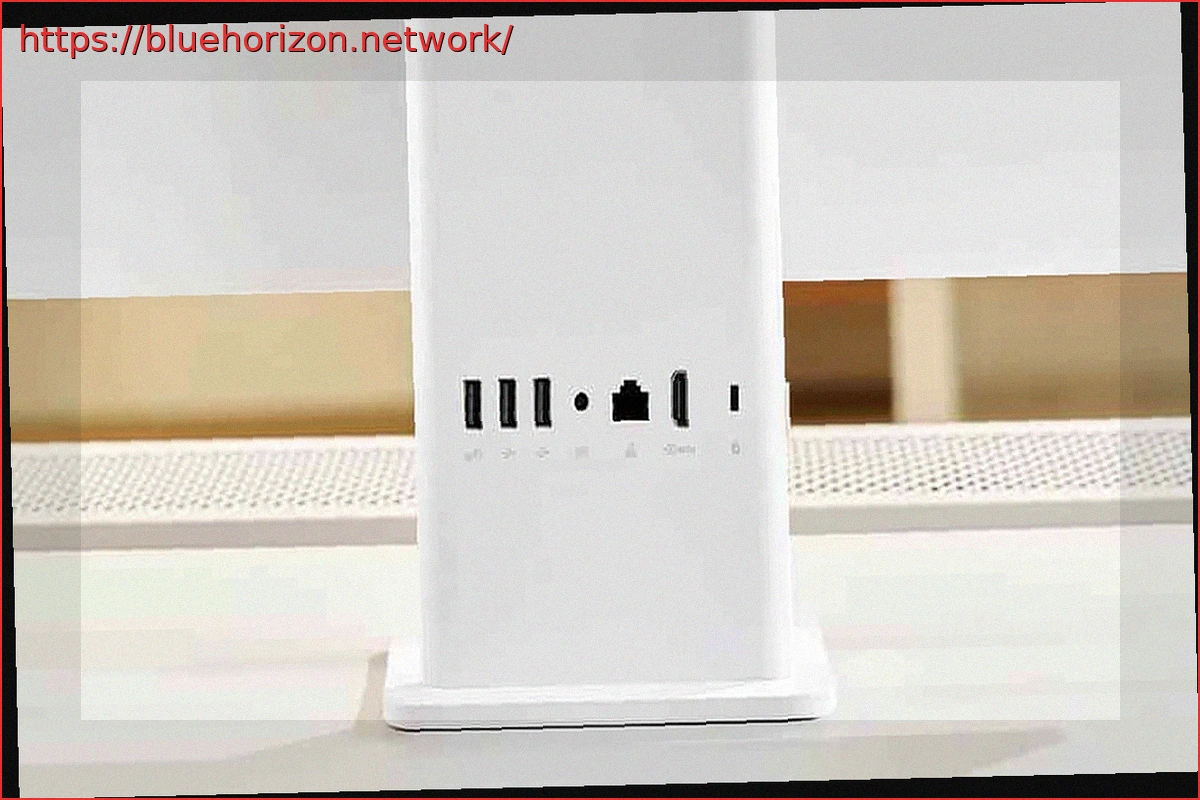
The connectivity suite is comprehensive. It includes triple-band Wi-Fi 6E, Bluetooth 5.3, and Gigabit Ethernet via RJ45. The side ports offer a USB 3.2 Gen 1 Type-C port, a microphone input, and a headphone output. On the rear, you’ll find 2 x USB 2.0 Type-A ports, 1 x USB 3.2 Gen 1 Type-A port, an HDMI 2.1b output, an RJ45 port, a Kensington lock slot, and the power input.
The package is rounded out with a 5 MP IR webcam for Windows Hello (or a 1080p FHD camera with IR and a privacy shutter, depending on the version), integrated speakers, a microphone array, an external 90W power adapter, a weight of 5.47 kg, and dimensions of 54.0 x 43.4 x 1.8 to 21.0 cm. ASUS states that the device is already available internationally, with prices starting at $899 for the 16 GB RAM and 512 GB SSD configuration, though pricing for the 32 GB RAM and 1 TB SSD version has not been specified.
In essence, ASUS has launched its iMac-inspired AiO with the V400, featuring Windows, Arm architecture, and Copilot+ as its key selling points. This move signifies Qualcomm’s gradual entry into the PC market with compelling products, while AMD and Intel face increasing pressure to compete in terms of performance, efficiency, and compact design.