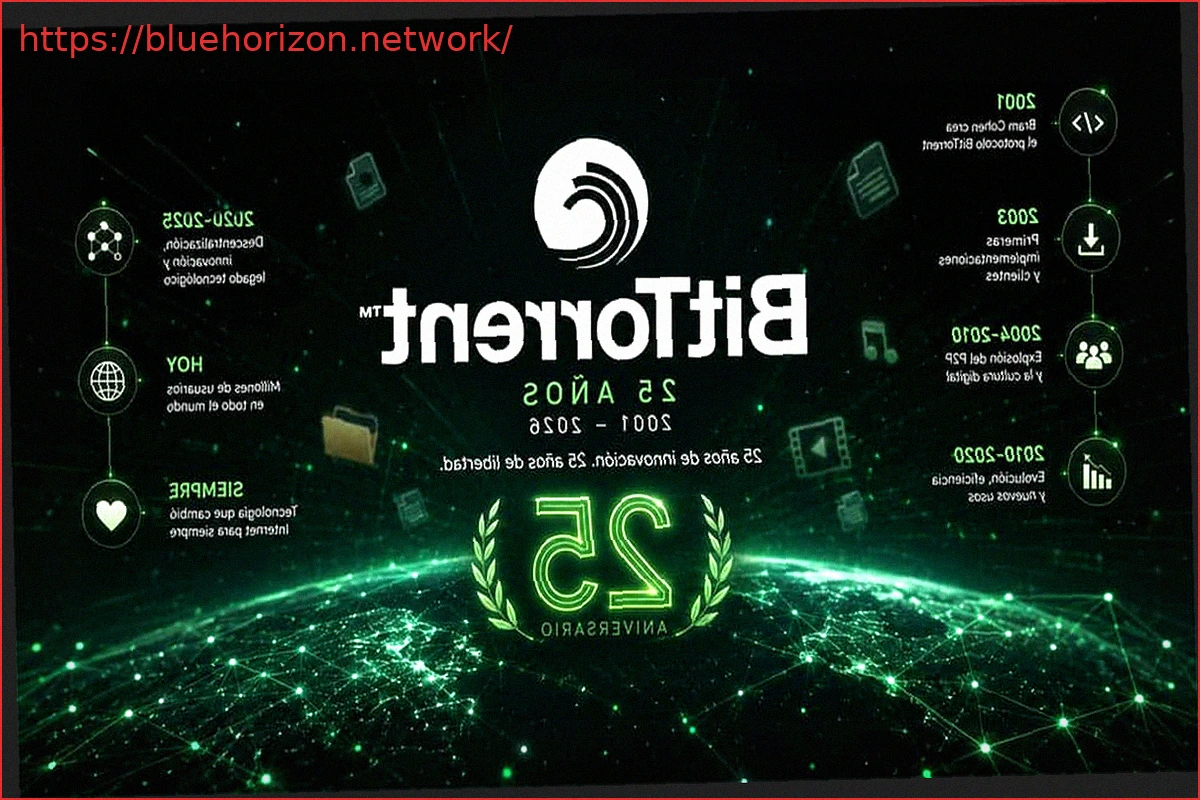
For those who navigated the internet in the late 90s and early 2000s, the experience of downloading files was often a slow and arduous process. Then came torrents, a revolutionary P2P (peer-to-peer) method for sharing files. While programs like eMule and Ares were highly popular in Spain, BitTorrent, launched in 2001, predated them and pioneered this new era of internet file exchange. Even as internet speeds have dramatically increased, torrenting remains a significant part of our digital landscape.
Bram Cohen, a young programmer, envisioned a new way to share files through P2P networks. This protocol connects two computers directly, enabling users to download files from each other. In this system, a ‘leecher’ downloads a file from a ‘seeder,’ who is the original source of the file on their PC.
BitTorrent quickly rose to become the world’s most popular file-sharing application, fundamentally altering the concept of downloads. Unlike previous methods where downloads were interrupted, torrenting allowed for continuous P2P traffic. This system inadvertently fueled piracy, escalating it to new heights and significantly impacting the entertainment industry, accounting for a staggering 33% of internet traffic by 2004.
Cohen’s initial goal wasn’t to build a business, but to revolutionize the downloading system. Having previously worked on Mojo Nation, a startup focused on distributing file fragments through user ‘swarms,’ Cohen found his true calling with BitTorrent. Since its inception in 2001, BitTorrent has maintained tens of millions of active users.
Unlike other P2P networks such as Napster, Kazaa, Grokster, and LimeWire, BitTorrent’s decentralized nature allowed it to circumvent many legal challenges. It functioned not as a centralized network with a server and search engine, but as a decentralized protocol. Crucially, it lacked an integrated torrent or file search function, acting solely as a file transmission intermediary. This design choice protected Cohen from the numerous lawsuits that plagued its contemporaries.
Users were responsible for finding torrent files on third-party websites, a system that kept Cohen well-protected. It was the first file-sharing program to avoid lawsuits from Hollywood and major record labels. While BitTorrent achieved immense popularity in terms of user numbers and file sharing volume, it did not translate into a successful business venture for Cohen. He has since moved on to focus on his new blockchain startup, Chia Network, which utilizes HDDs and SSDs for mining ChiaCoin.