
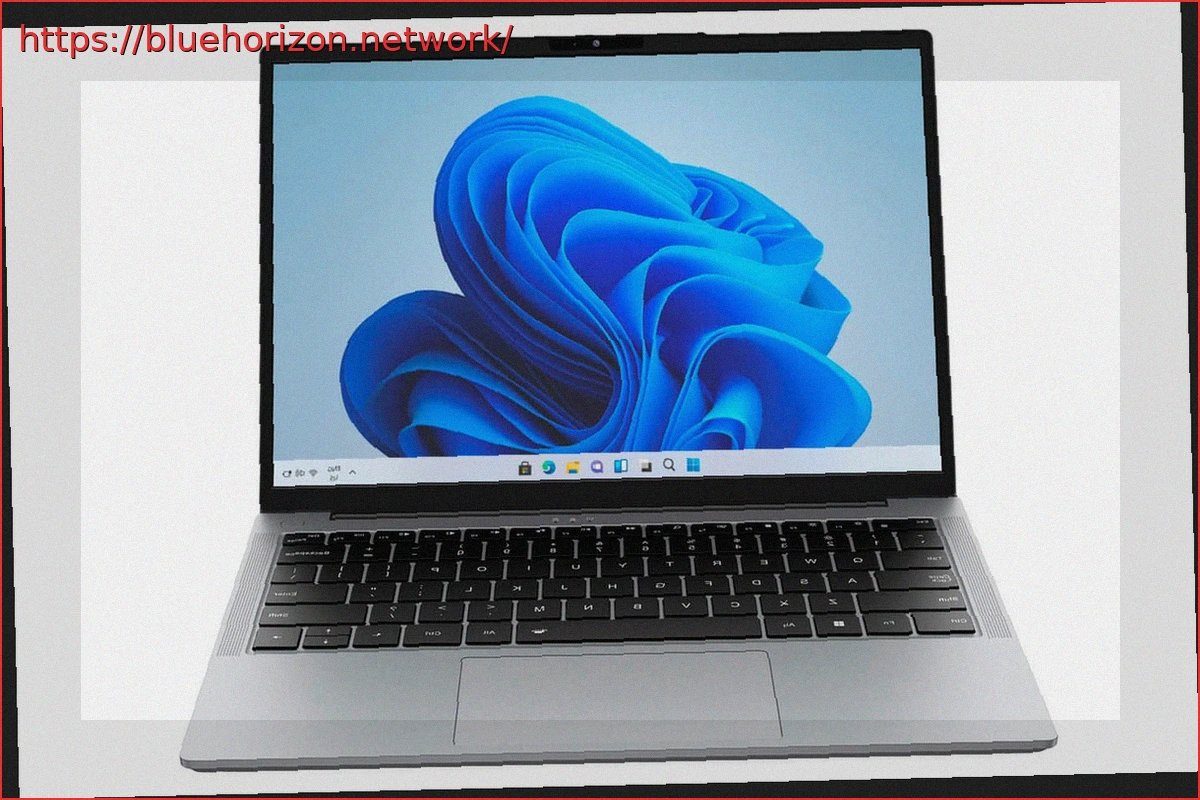
Intel’s new Wildcat Lake processors are entering the market, with manufacturers like ASUS, HP, and Honor launching new laptops. The CHUWI UniBook is one such offering, positioning itself as a direct competitor to Apple’s MacBook Neo in the low-cost segment. These new laptops are designed around Intel processors aimed at challenging the MacBook Neo, featuring SoCs that are intended to keep costs down. This strategy allows for the creation of affordable laptops with healthy profit margins, while offering specifications that avoid cannibalizing sales of higher-end models with limitations like RAM capacity.
The CHUWI UniBook, specifically designed for this market segment, utilizes the Intel Core 3 304, the most basic processor in the new family. Let’s examine what this device offers and if it can truly compete with the MacBook Neo equipped with Intel Core Series 3 processors.
Known Specifications of the CHUWI UniBook Laptop Based on the Intel Wildcat Lake Platform
The CHUWI UniBook is built around a 14-inch IPS display with a resolution of 1920 x 1200 pixels at 60 Hz, covering 100% of the sRGB color space. Powering this display is the aforementioned Intel Core 3 304 processor. This Intel-manufactured chip, built on an 18A lithography process, features a 5-core, 5-thread configuration. This includes 1 high-performance core (P-Core) using the Cougar Cove architecture, and 4 efficient cores (E-Core) based on the Darkmont architecture.
A notable compromise for cost reduction is the pairing of this SoC with 8 GB of LPDDR5X RAM and a 256 GB PCIe 3.0 SSD. Given current memory and SSD prices, CHUWI has adopted an aggressive approach to keep costs down. While this hardware significantly lowers the price of the device, it also introduces considerable limitations for users considering a laptop of this nature. Essentially, with this hardware, the aim is to directly challenge the MacBook Neo, targeting productivity tasks, multimedia consumption, and very light professional application use.
The CHUWI UniBook could potentially gain much more performance by replacing the pre-installed Windows 11 Pro with a lighter operating system like Windows 11 LTSC or IoT LTSC. It also presents an excellent option for users seeking high portability and battery life with Linux.
Additional Information and Estimated Price
The CHUWI UniBook differentiates itself from the MacBook Neo in terms of connectivity and features. Beyond its display, it includes a white LED-backlit keyboard. While both offer two USB-C ports, the CHUWI UniBook significantly expands connectivity with 3x USB 3.0 ports, an HDMI 2.0 video output, an Ethernet port, an SD card reader, and a 3.5 mm headphone jack – features notably absent from Apple’s device.
In terms of wireless connectivity, it slightly trails behind (Wi-Fi 6 + Bluetooth 5.2 compared to 6E + 6.0). However, it boasts a larger battery capacity of 53.38 Wh (versus 36.5 Wh). Nevertheless, the actual battery life will heavily depend on the efficiency of the processor and the operating system used.
Crucially, this entry-level version of the CHUWI UniBook is expected to launch with a starting price of approximately $449, making it a considerable $150 cheaper than the MacBook Neo.