
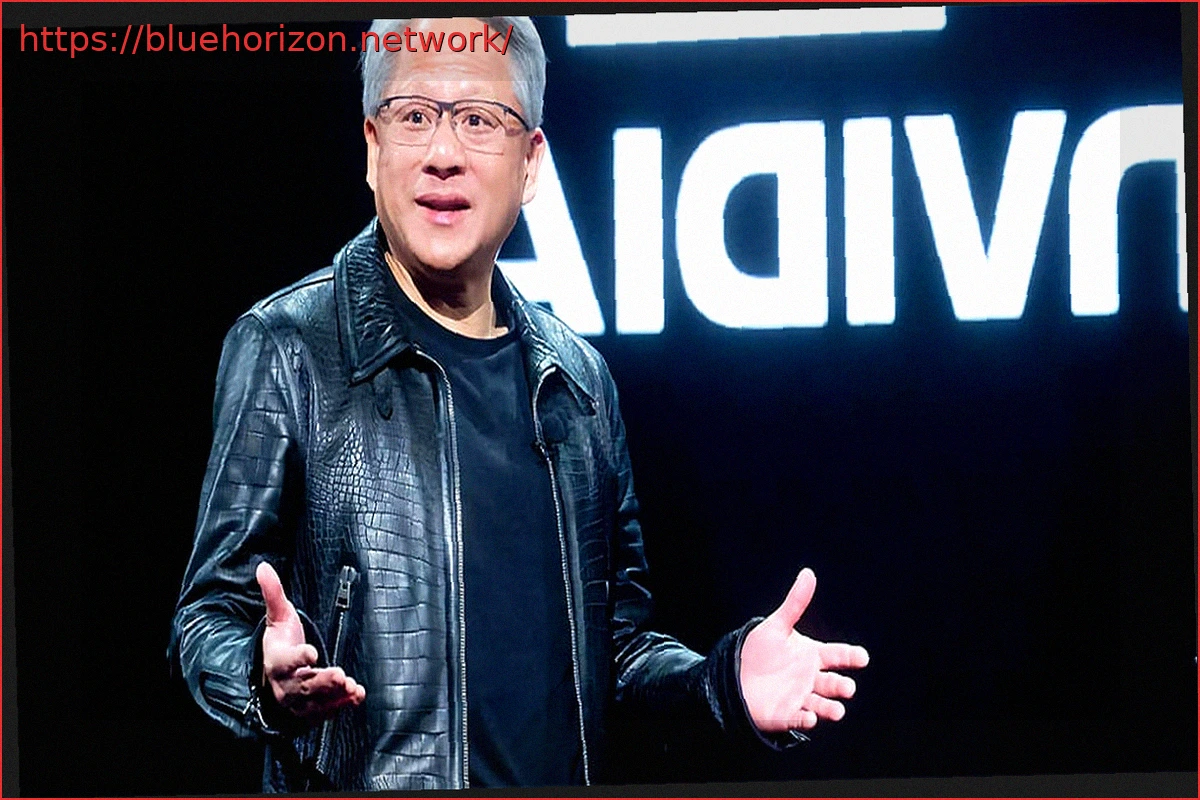
NVIDIA’s upcoming AI platform is poised to create a significant demand for LPDDR memory, a requirement that may be challenging to accommodate even within the current data center landscape. According to estimates from Citrini Research, the Vera Rubin platform alone could necessitate an astonishing 6.041 billion GB of LPDDR by 2027, specifically for its AI CPU components. This figure surpasses the projected combined demand from tech giants like Apple and Samsung for their smartphones, including iPhones and Galaxy devices, without even factoring in other products like iPads and tablets.
This data is particularly striking because it compares the Vera Rubin platform, a sophisticated and extensive product ecosystem, not with a smaller manufacturer, but with the iPhone and Galaxy families, which are among the largest consumers of memory in the mobile market annually. Even so, Vera Rubin is predicted to outstrip them in total LPDDR volume.
NVIDIA’s Vera Rubin poised to dominate LPDDR consumption, leaving little for others
Citrini Research’s graphical analysis, shared by Jukan, identifies Apple as the leading purchaser of LPDDR among smartphone manufacturers, with an estimated 2.966 billion GB in 2027, attributed to its extensive product line including iPhones, iPads, and MacBooks. Samsung follows closely, with a projected demand of 2.724 billion GB. Combined, these two companies are expected to reach 5.690 billion GB, while the AI CPU LPDDR demand for Rubin is forecasted to hit 6.041 billion GB. This represents a difference of 351 million GB, or approximately 6.17% more, than the combined demand from these two major consumer market powerhouses.
The scale of this demand becomes even clearer when examining the rest of Citrini’s chart. Xiaomi is projected to require 1.111 billion GB, Vivo 765 million GB, and OPPO 645 million GB. The collective demand from Apple, Samsung, Xiaomi, Vivo, and OPPO would amount to 8.211 billion GB. In this context, a single NVIDIA AI platform, Vera Rubin, would account for approximately 73.57% of the combined demand from these five major mobile manufacturers – a truly remarkable figure.
An important note regarding the research is that Citrini Research’s estimations are based on an assumption of 12 GB per device for Apple and Samsung, and 8 GB per device for Chinese manufacturers. This suggests that the projections are not based on unrealistically low configurations or inflated averages, but rather on capacities that are quite recognizable within the mid-range and high-end mobile market for 2027.
What about HBM? Why does NVIDIA need LPDDR in AI data center architectures and systems?
The key lies in how Rubin will utilize LPDDR. It won’t be employed in the same manner as in mobile devices. Instead, it will be integrated as part of an AI platform where low-power, high-density, and compact form-factor memory is becoming increasingly valuable in servers, complementing the well-known HBM (High Bandwidth Memory). The industry is already preparing for this shift with the development of LPDDR5X SOCIMM2 modules, featuring examples like Micron’s 256 GB and SK Hynix’s 192 GB modules, which are linked to Vera Rubin.
The challenge for the mobile market extends beyond just NVIDIA. AMD is also moving in a similar direction with its MI400, Verano, and MI455X products for Helios racks, also incorporating LPDDR5X. Consequently, the pressure on memory manufacturers like Samsung, SK Hynix, and Micron will not stem from a single client but from an entire generation of AI hardware that is beginning to directly compete for a type of memory that was previously more closely associated with smartphones, tablets, and ultra-thin laptops.
If these projections hold true, 2027 could present a challenging, if not critical, scenario for the mobile market. The memory that historically flowed primarily to iPhones and Galaxies will now also need to power entire AI racks. NVIDIA’s Vera Rubin platform is set to consume more LPDDR than Apple and Samsung combined, even with potential limitations. It is highly probable that the price of smartphones will increase in 2028, or manufacturers and designers will see reduced profit margins, as there appears to be no other outcome.