Google has been a dominant force in the tech world for years, consistently ranking among the top five companies globally by market capitalization. When we think of Google, we invariably link it to the internet, given its absolute dominance with its search engine, Chrome browser, and advertising platform, Google Ads. In a recent interview, Google CEO Sundar Pichai revealed the company’s plans, suggesting that AI will ultimately reshape web searches.
Alphabet, Google’s parent company, has experienced significant growth recently, with its shares more than doubling in value since May 2025. Currently valued at $385, Google is undergoing massive expansion, simultaneously sparking increasing questions about its future trajectory. While widely known for its internet services, Google is also a leader in AI development, rapidly closing the gap with OpenAI in terms of user base.
Sundar Pichai, Google CEO, Interviewed on the Company’s Future, AI, and the Web
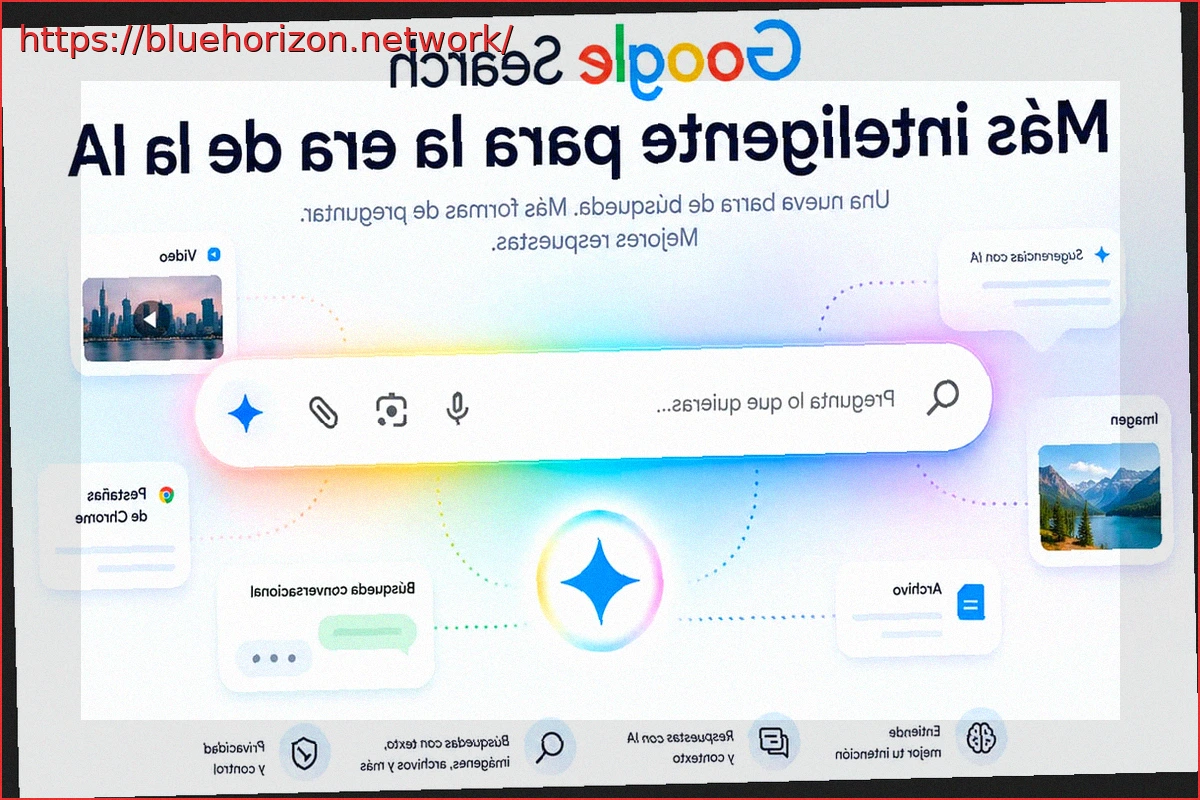
During the recent Google I/O 2026 event, the company unveiled a suite of AI innovations. These included the Gemini 3.5 Flash model for mobile and devices requiring rapid responses, the new Gemini Omni model capable of generating video from text, images, or even audio, Gemini Spark as an agent, and AI-powered internet search functionalities, among other advancements. Complementing these announcements, an interview with the CEO of Google and Alphabet delved into the company’s present and future. This interview, available as a 50-minute podcast or a 46-minute video, explored various topics, all revolving around the intersection of AI and the internet.
Sundar Pichai acknowledged Google’s long-standing interest in artificial intelligence, predating the current era of generative AI. Following the immense popularity of OpenAI’s ChatGPT, Google set its sights on matching or surpassing it. To achieve this, Pichai restructured the company, prioritizing AI development with DeepMind while simultaneously advancing Gemini. Gemini has since become Google’s flagship AI, integrated not only into Android but also across the company’s broader services. This integration extends to web browsing, with features like AI Overviews and Gemini Summaries providing concise answers to user searches.
This development raises a pertinent question: is Google “killing” its own search function with AI? Pichai’s response clarifies that one technology does not necessarily replace another but rather represents an evolution. He envisions internet search evolving from presenting lists of results to becoming intelligent assistants that deliver precisely the information users seek.
Google CEO Believes AI Won’t End the Internet and That Humans Will ‘Always Create Content’
The potential impact of AI on web browsing is already evident. The current system of AI-generated summaries can diminish the perceived need to navigate directly to websites. If AI provides immediate answers, users may spend less time browsing, leading to reduced traffic for many websites, primarily only receiving visits from bots for scraping purposes. This concern is significant, but the CEO offers a clear perspective: humans will continue to create content. The internet is a marketplace, a business, and it will not cease to exist with predetermined information.
Furthermore, the Google CEO suggests that the implemented changes are fostering a “healthier web” populated by quality content. AI systems, in their current form, aim to extract information from the most relevant sources, filtering out unclear or irrelevant data. Pichai posits that this process will highlight valuable content, while other websites will receive minimal traffic.
Additionally, for users loyal to specific websites, information from those sources will be prioritized, contingent on individual preferences. Continuing the discussion, the Google CEO noted that current AI models are not infallible; they make mistakes, offer excessive personal opinions, and lack sufficient neutrality. He believes that as AI progresses, it will approach near perfection, marking a technological advancement comparable to the internet itself. He concluded by stating that Artificial General Intelligence (AGI) is likely only a few years away and its achievement will fundamentally alter our society, not just the internet.